
Fly fishing has a rhythm that feels different from any other type of angling. Instead of casting heavy lures, you’re presenting lightweight flies with precision and finesse. If you’ve ever wondered how to fly fish, this guide breaks everything down into simple, practical steps — from choosing gear to catching trout, bass, and even fishing lakes.
Whether you’re learning how to fly fish for beginners or refining your technique, this article covers the essentials in a clear, friendly, and actionable way.
What Is Fly Fishing? And Why It’s Different
Fly fishing uses a weighted line rather than a heavy lure to cast lightweight artificial flies. The technique mimics insects, baitfish, and other prey that fish naturally feed on.
Key differences from traditional fishing:
- Precision casting instead of long-distance power
- Lightweight artificial flies instead of heavy lures
- Focus on presentation and drift
- More technique-based approach
Essential Fly Fishing Gear for Beginners
Before you learn how to fly fish, you’ll need a few basics:
Fly Fishing Setup Checklist
- Fly rod (8–9 feet is ideal for beginners)
- Fly reel with matching line weight
- Fly line (floating line recommended)
- Leader and tippet
- Assorted flies (dry flies, nymphs, streamers)
- Polarized sunglasses
- Waders (optional but helpful)
Tip: A 5-weight rod is the most versatile option for beginners.
How to Fly Fish for Beginners: Step-by-Step
Step 1: Learn the Basic Fly Cast
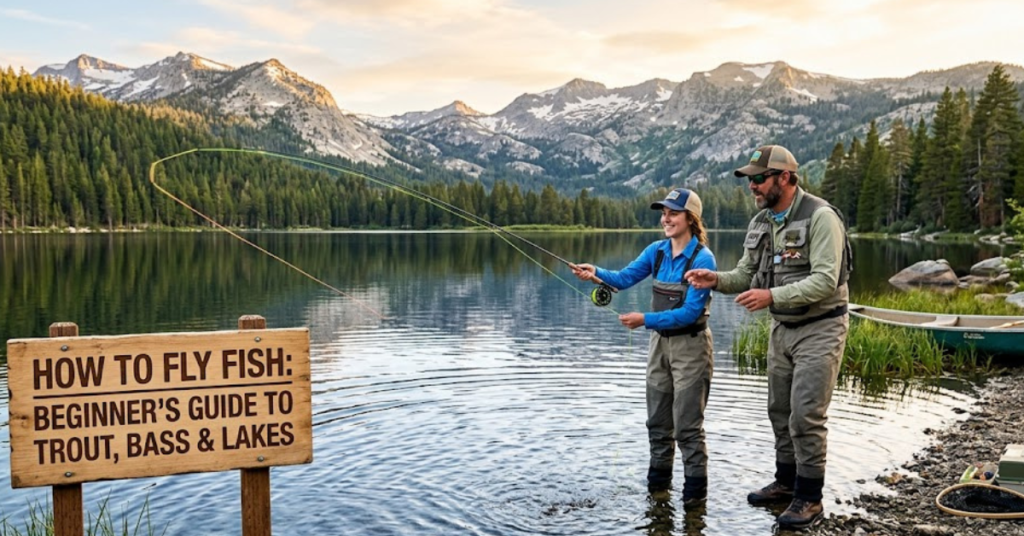
The foundation of how to fly fish is the overhead cast.
- Start with about 20 feet of line.
- Lift the rod smoothly.
- Pause at the backcast.
- Move forward gently.
- Let the line roll out.
Avoid snapping your wrist — smooth movements work best.
Step 2: Understand the Drift
Fish usually bite when the fly drifts naturally. This is called a “drag-free drift.”
- Keep your rod tip high
- Mend your line upstream
- Watch for subtle strikes
Step 3: Set the Hook Properly
Instead of jerking upward:
- Gently lift the rod
- Keep tension on the line
- Let the rod absorb the fight
How to Fly Fish for Trout
Trout are the most popular species for fly anglers. They often feed on insects near the surface.
Best tips for trout:
- Use dry flies during insect hatches
- Try nymphs in deeper water
- Focus on seams and riffles
- Cast upstream for natural presentation
Popular trout flies:
- Elk Hair Caddis
- Adams Dry Fly
- Pheasant Tail Nymph
- Woolly Bugger
How to Fly Fish for Bass
Bass fly fishing is exciting and beginner-friendly.
Best techniques:
- Use larger flies (poppers and streamers)
- Cast near structure (logs, weeds, docks)
- Strip retrieve to mimic baitfish
- Fish early morning or evening
Top bass flies:
- Foam poppers
- Clouser Minnow
- Woolly Bugger
- Deer Hair Bugs
How to Fly Fish a Lake
Lakes require a slightly different approach compared to rivers.
Lake Fly Fishing Tips
- Look for drop-offs
- Fish near weed beds
- Use slow retrieves
- Try floating or sinking lines
Best flies for lakes:
- Streamers
- Chironomids
- Leeches
- Damselfly patterns
How to Fly Fish Streamers
Streamers imitate baitfish and trigger aggressive strikes.
How to fish streamers:
- Cast across current
- Strip line in short bursts
- Vary retrieve speed
- Target deeper water
Streamers work great for both trout and bass.
How to Fly Fish With a Spinning Rod
You can still learn how to fly fish without a fly rod.
Options include:
- Casting bubble with fly
- Fly-and-bubble rig
- Light spinning rod setup
Steps:
- Attach casting bubble
- Add leader and fly
- Cast like normal spinning gear
- Retrieve slowly
This is perfect for beginners testing the waters.
Common Fly Fishing Mistakes to Avoid
- Casting too hard
- Ignoring line management
- Using the wrong fly size
- Moving too quickly between spots
- Not watching the drift
Focus on presentation over distance.
Best Places to Practice Fly Fishing
- Small rivers
- Calm lakes
- Stocked ponds
- Slow-moving streams
These environments help beginners build confidence.
FAQs About How to Fly Fish
Is fly fishing hard for beginners?
Not really. Learning the basic cast takes practice, but most beginners can catch fish within a few outings.
What fish are best for learning how to fly fish?
Trout, bass, and panfish are ideal beginner species.
Can I fly fish without waders?
Yes. Shore fishing works fine, especially in lakes and ponds.
What’s the best time of day for fly fishing?
Early morning and late evening usually produce the best results.
How long does it take to learn how to fly fish?
Most people feel comfortable after 2–3 practice sessions.
Do I need expensive gear?
No. Budget starter kits work perfectly for beginners.
Conclusion: Start Learning How to Fly Fish Today
Learning how to fly fish opens the door to a more relaxed and rewarding fishing experience. With the right gear, basic casting technique, and understanding of fish behavior, you’ll be catching trout, bass, and lake species in no time.
Start simple:
- Practice your cast
- Choose beginner-friendly locations
- Experiment with different flies
- Focus on presentation