

Have you ever stopped mid-sentence and wondered, is it make do or make due? It’s one of those phrases that sounds right either way, which is exactly why so many people get it wrong.
The confusion around make do or make due is incredibly common in everyday writing and speech. In this article, we’ll clear up the correct expression, explain what it actually means, and show you how to use it confidently without second-guessing yourself.
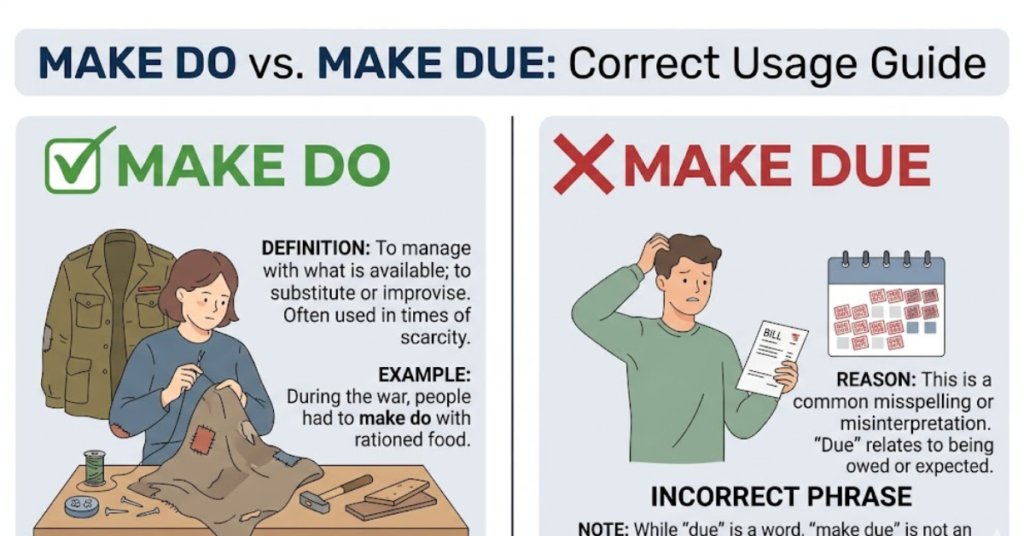
Make Do or Make Due: Which Is Correct?
Let’s get straight to the point:
- Correct phrase: make do
- Incorrect phrase: make due
If you’ve been using “make due,” you’re not alone—but it’s not the standard expression.
What Does “Make Do” Mean?
To understand which is correct make do or make due, you need to look at the meaning behind the phrase.
“Make do” means:
- To manage with what you already have
- To cope without something better
- To get by in less-than-ideal circumstances
Example Sentences
- We didn’t have enough chairs, so we had to make do.
- I’ll make do with this old phone for now.
The phrase reflects resourcefulness—making the best out of a situation.
Why “Make Due” Is Incorrect
So why do people say “make due”?
Common Reasons for the Confusion
- The word “due” is more familiar in everyday English
- It sounds similar when spoken quickly
- People associate “due” with something owed or expected
However, “due” doesn’t make sense in this context. The phrase is rooted in the verb “do,” meaning to perform or manage.
This is why is the expression make do or make due has a clear answer: it’s always “make do.”
Is It Make Do or Make Due in Everyday Use?
If you’re still asking, is it make do or make due?, here’s the simple rule:
- Use make do in all standard English contexts
- Avoid “make due” in formal or professional writing
Practical Examples
Correct:
- I can make do with what I have.
Incorrect:
- I can make due with what I have.
So if you’ve ever written i can make do or make due, now you know the right choice.
The Origin of “Make Do”
Understanding the history can make the phrase easier to remember.
“Make do” dates back several centuries and comes from the idea of:
- “Making” something work
- “Doing” what you can with limited resources
It reflects practicality and adaptability—qualities valued in everyday life.
Tips to Remember the Correct Phrase
If you often mix up to make do or make due, these tips can help:
- Think action, not obligation — “do” involves action, “due” suggests something owed
- Replace it mentally — “manage” or “cope” fits better than “due”
- Practice common phrases — repetition builds habit
Quick Memory Trick
If the sentence implies “getting by,” the correct choice is always make do.
Common Mistakes to Avoid
Here are a few frequent errors people make:
- Writing “make due” in emails or professional documents
- Assuming both versions are interchangeable
- Mishearing the phrase in conversation
Correct vs Incorrect Usage
Correct:
- We’ll have to make do until we can afford better equipment.
Incorrect:
- We’ll have to make due until we can afford better equipment.
Why This Small Detail Matters
You might think this is a minor issue, but it can have a real impact.
- Improves clarity and precision in writing
- Builds credibility in professional communication
- Helps avoid confusion in formal contexts
- Strengthens your overall language skills
Even small distinctions like these words can elevate your writing quality.
Read also<<< “How Wide Is a 55 Inch TV“
FAQs
Is it make do or make due?
The correct phrase is make do. “Make due” is incorrect in standard English.
What does “make do” mean?
It means to manage or cope with what you have, especially in a difficult situation.
Why do people say “make due”?
This usually happens بسبب mishearing the phrase or confusing “do” with the more familiar word “due.”
Can I use “make due” informally?
It’s best to avoid it, even informally, as it’s widely considered incorrect.
Which is correct make do or make due in writing?
Always use make do, especially in formal or professional writing.
Conclusion
The debate on both words is easier to settle than it seems. The correct phrase is make do, meaning to manage with what you have. “Make due,” while common, is simply a mistake rooted in sound and familiarity.
Getting this right may seem small, but it’s part of writing clearly and confidently. Keep an eye on these subtle differences, and you’ll continue to improve your language skills with every sentence you write.