
There’s something timeless about watching a kite climb into the sky. Whether you’re at the park, the beach, or just outside your home, learning how to fly a kite is a fun and relaxing activity for both kids and adults. The good news? You don’t need much experience to get started. With the right setup, a little patience, and a few helpful techniques, anyone can master it.
This guide explains how to fly a kite step by step, including tips for beginners, kids, low wind conditions, and even how to fly a kite without wind.
What You Need Before You Fly a Kite
Before you start, gather these essentials:
- A kite (diamond kites are best for beginners)
- Kite string or line
- Open space (park, beach, or field)
- Light to moderate wind
- Optional: gloves for better grip
Choosing the right location makes a huge difference. Avoid areas with trees, power lines, or heavy traffic.
How to Fly a Kite Step by Step Beginner Friendly
Follow these simple steps if you’re learning how to fly a kite for beginners:
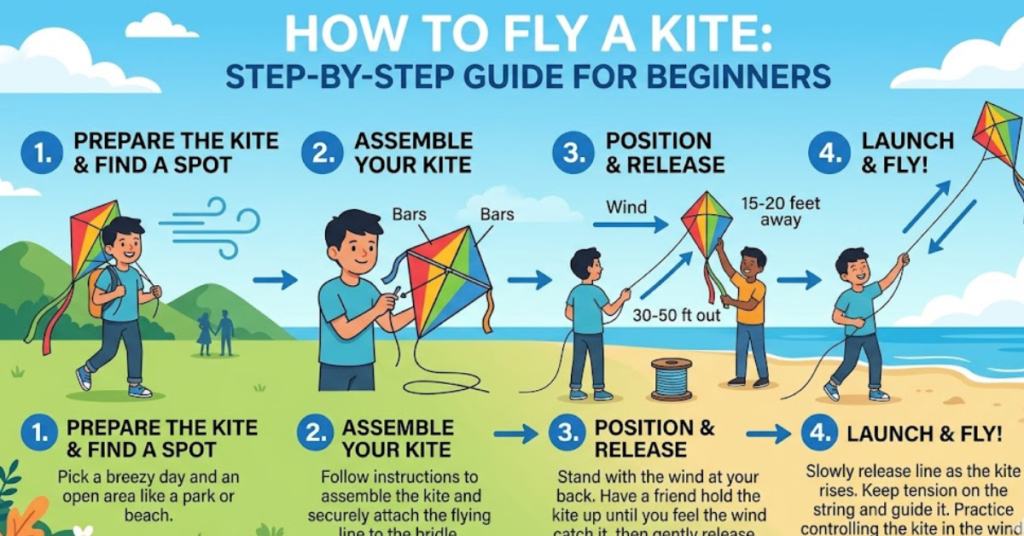
1. Check Wind Direction
Stand with your back to the wind. The wind should hit your back and push the kite forward.
2. Hold the Kite Properly
Have someone hold the kite upright, or place it on the ground facing the wind.
3. Let Out Some String
Unwind about 10–20 meters (30–60 feet) of string before launching.
4. Launch the Kite
- If someone is helping: ask them to release the kite.
- If alone: gently toss the kite upward.
5. Slowly Release the String
Let the line out gradually as the kite rises. Don’t release too quickly.
6. Adjust for Stability
Pull slightly when the kite dips, and release when it climbs. This helps maintain balance.
How to Fly a Kite for Kids
Flying a kite is one of the easiest outdoor activities for children. Here’s how to make it fun and safe:
- Choose a small, lightweight kite
- Pick a wide open space
- Use shorter string lengths
- Supervise children at all times
- Avoid strong winds
Kids often enjoy running with the kite — it helps create lift and makes learning easier.
How to Fly a Kite in Low Wind
Low wind doesn’t mean you can’t fly. Try these techniques:
- Use a lightweight kite
- Run gently to create airflow
- Keep the string shorter
- Avoid heavy tails
- Fly during early morning or evening
Learning how to fly a kite in low wind is all about creating lift manually.
How to Fly a Kite Without Wind
Yes, it’s possible! Here’s how to fly a kite with no wind:
- Hold the kite and start walking backward
- Increase your pace slowly
- Let the string out gradually
- Maintain tension on the line
- Continue moving to keep the kite airborne
This method works best with lightweight kites and open fields.
How to Fly a Kite at the Beach
The beach is one of the best places for kite flying because of steady winds.
Tips for beach kite flying:
- Fly early morning or late afternoon
- Use stronger string (wind can be powerful)
- Watch for sudden gusts
- Keep distance from people
- Anchor the line when resting
Beaches provide consistent airflow, making it easier for beginners.
Common Mistakes to Avoid
When learning how to fly a kite, avoid these common issues:
- Flying in no wind with a heavy kite
- Standing near obstacles
- Releasing too much string too fast
- Using damaged kite lines
- Flying in stormy weather
Best Wind Speed for Flying a Kite
Ideal wind speed: 5–15 mph (8–24 km/h)
- Too low: kite won’t lift
- Too strong: kite may crash
- Just right: smooth, steady flight
FAQ: How to Fly a Kite
What is the easiest kite for beginners?
Diamond-shaped kites or delta kites are easiest to control.
Can you fly a kite without running?
Yes, if there’s enough wind. Running helps only in low-wind conditions.
Why does my kite keep falling?
Possible reasons:
- Not enough wind
- String too loose
- Kite not balanced
- Wind direction incorrect
How long should kite string be?
Start with 30–60 feet. Increase gradually as you gain control.
Is kite flying safe for kids?
Yes, with supervision and safe locations away from power lines.
Can I fly a kite in low wind?
Yes, use lightweight kites and gentle movement techniques.
Conclusion
Learning how to fly a kite is simple, relaxing, and rewarding. With the right kite, a bit of wind, and a good open space, anyone can get started. Whether you’re teaching kids, flying at the beach, or trying to fly a kite without wind, the key is patience and practice.
Grab a kite, head outdoors, and watch it soar. Once you master the basics, you can experiment with different kite styles, longer lines, and even kite tricks. The sky is literally the limit.