
Have you ever typed “puddy” and paused, wondering if it should actually be “putty”? You’re not alone. The confusion around puddy or putty is more common than you might think, especially in casual writing or quick messages.
In this article, we’ll break down is it puddy or putty, explain the correct meaning, and help you avoid this simple but frequent mistake. By the end, you’ll know exactly which word to use—and why it matters.
Puddy or Putty: Which One Is Correct?
Let’s clear things up right away:
- Correct spelling: putty
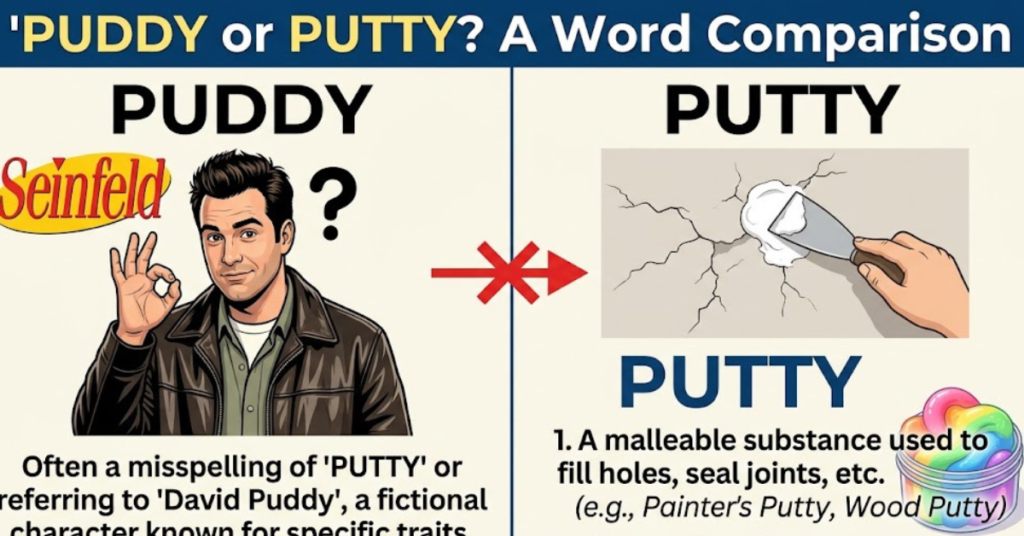
- Incorrect spelling (in standard English): puddy
If you’ve been using “puddy,” it’s likely a typo or a phonetic guess. The standard English word you’re looking for is putty.
What Does “Putty” Mean?
Understanding the puddy or putty meaning starts with knowing what “putty” actually refers to.
Common Definitions of Putty
“Putty” is a soft, moldable substance used for:
- Sealing gaps, especially around windows
- Filling cracks in wood or walls
- Crafting or modeling in DIY projects
It’s typically made from a mixture of materials like clay, chalk, or linseed oil.
Example Sentences
- He used putty to seal the window frame.
- The cracks were filled with wood putty before painting.
Why Do People Say “Puddy”?
The confusion between puddy or putty usually comes down to pronunciation.
Common Reasons for the Mistake
- The “t” sound in “putty” can sound like a “d” in casual speech
- Regional accents may soften the pronunciation
- Fast typing leads to phonetic spelling
So while “puddy” might sound similar, it’s not considered correct in formal writing.
Is It Puddy or Putty in Everyday Use?
If you’re asking is it puddy or putty, the answer depends on context—but in standard English, it’s almost always “putty.”
When to Use “Putty”
Use “putty” when referring to:
- Construction or repair materials
- Art and craft supplies
- Metaphorical expressions (e.g., “like putty in your hands”)
When “Puddy” Might Appear
“Puddy” may show up in:
- Informal dialogue or slang
- Fictional character names
- Intentional stylized writing
However, it’s not accepted as a standard dictionary spelling.
Easy Ways to Remember the Correct Spelling
If you often mix up puddy or putty, these tips can help:
- Think of tools and repairs — “putty” is used in practical work
- Double ‘t’ = correct — most standard forms use “tt”
- Say it slowly — pu-tty, not pu-ddy
Practicing these small checks can make a big difference in your writing accuracy.
Common Mistakes to Avoid
Here are a few errors people often make:
- Writing “puddy knife” instead of “putty knife”
- Using “puddy” in formal or professional documents
- Assuming both spellings are interchangeable
Correct vs Incorrect
Correct:
- Apply putty to fill the hole.
Incorrect:
- Apply puddy to fill the hole.
Why Correct Spelling Matters
You might wonder if this small detail really matters. It does.
- Enhances clarity in communication
- Improves credibility in writing
- Helps with SEO and search accuracy
- Avoids confusion in technical contexts
Even simple mistakes like two mixer words can affect how your message is understood.
FAQs
Is it puddy or putty?
The correct spelling is putty. “Puddy” is not standard in English.
What is the meaning of putty?
Putty is a soft material used for sealing, filling, or crafting.
Why do people spell putty as puddy?
This usually happens بسبب pronunciation differences or fast, phonetic typing.
Is “puddy” ever correct?
Not in standard English. It may appear in informal or creative contexts but is generally considered incorrect.
How can I remember the correct spelling?
Focus on the double “t” in putty and associate it with tools and repairs.
Conclusion
The confusion between puddy or putty is easy to understand but even easier to fix. “Putty” is the correct spelling and refers to a useful material for sealing and repairs, while “puddy” is simply a common mistake.
By paying attention to pronunciation, spelling patterns, and context, you can avoid this error and write with more confidence. If you’re looking to improve further, exploring other commonly confused words is a smart next step.