
It’s a surprisingly common mistake: naive or nieve—which one should you use? If you’ve ever paused before typing it, you’re definitely not alone.
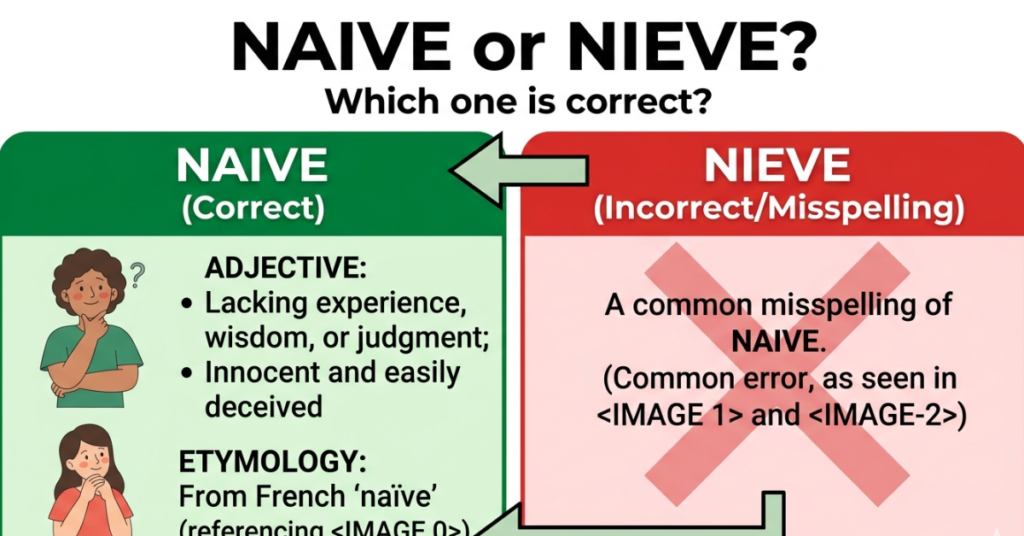
Let’s clear it up right away: “naive” is the correct spelling, while “nieve” is incorrect in English. But there’s a bit more to the story, especially when it comes to meaning and pronunciation.
Naive or Nieve: The Correct Answer
If you’re wondering is it naive or nieve, here’s the simple breakdown:
Correct:
- naive (or naïve with accents)
Incorrect:
- nieve
So, when asking how do you spell naive or nieve, always go with naive.
What Does “Naive” Mean?
Understanding the meaning helps you use the word confidently.
Naive definition:
“Naive” describes someone who:
- Lacks experience
- Is innocent or trusting
- May be overly simple in thinking
Examples:
- “He was naive to trust everyone so quickly.”
- “Her naive view of the world changed over time.”
So when people search naive or nieve meaning, they’re usually referring to this idea of innocence or lack of experience.
Why “Nieve” Is Incorrect
You might see “nieve” occasionally, but it’s not standard English.
Why the confusion happens:
- The spelling looks similar to “naive”
- English pronunciation doesn’t always match spelling
- It may be influenced by other languages
Interestingly, “nieve” is actually a word in Spanish, meaning “snow”—but in English, it’s simply a misspelling.
Naive vs Naïve: What’s the Difference?
You might also see “naïve” with two dots over the “i” (called a diaeresis).
Both are correct:
- naive (common in modern English)
- naïve (more traditional or formal)
Why the dots?
They show that the letters are pronounced separately:
- na-ïve (two syllables)
Pronunciation Made Simple
One reason people get confused between naive or nieve is pronunciation.
Correct pronunciation:
- nah-eev (two syllables)
Not:
- “nayv”
- “neev”
Once you hear it correctly, the spelling makes more sense.
Common Examples of “Naive” in Sentences
Here are some natural examples to help you use the word confidently:
- “It was naive to believe the deal had no risks.”
- “She gave a naive answer during the interview.”
- “Don’t be too naive—always double-check facts.”
These show how the word fits into everyday conversation.
Synonyms for “Naive”
If you want to vary your vocabulary, here are some alternatives:
- Innocent
- Trusting
- Unaware
- Unsophisticated
- Gullible (stronger tone)
Each has a slightly different nuance, so choose carefully.
Quick Spelling Tips to Remember
Struggling to remember naive or nieve? Try this:
Easy trick:
- Think: “ai” comes before “ve” → nai-ve
Or remember:
- “Naive” has the same “ai” as “rain” or “paint”
Small memory tricks like this can make a big difference.
Common Mistakes to Avoid
Incorrect:
- nieve person
- he is nieve
Correct:
- naive person
- he is naive
Even a small spelling mistake can affect clarity and credibility.
FAQs About Naive or Nieve
1. Is it naive or nieve?
The correct spelling is naive.
2. What does “naive” mean?
It means lacking experience, being innocent, or overly trusting.
3. Is “naïve” also correct?
Yes, it’s a more traditional spelling with accents.
4. Why do people write “nieve”?
Usually due to spelling confusion or influence from other languages.
5. How do you pronounce “naive”?
It’s pronounced nah-eev.
Final Thoughts: Stick With “Naive”
So, naive or nieve—what’s the final answer? It’s always “naive.” Once you understand the spelling and meaning, the confusion disappears.
English can be tricky, but mastering small details like this makes your writing clearer and more professional. The next time you use the word, you’ll get it right without hesitation.
Want to improve your grammar even more? Keep practicing these small distinctions—they quickly add up to stronger, more confident writing.