
Have you ever bought something just because it was labeled “limited time offer” or chose a product because everyone else seemed to love it? That’s not a coincidence — it’s psychology at work.
Understanding how might businesses use cognitive biases to their advantage helps explain why certain marketing strategies feel so persuasive. Cognitive biases are mental shortcuts our brains use to make quick decisions. Businesses leverage these predictable patterns to influence customer behavior, boost sales, and improve engagement.
In this article, we’ll explore the most common cognitive biases used in business, real-world examples, and how companies ethically apply them to shape consumer decisions.
What Are Cognitive Biases in Business?
Cognitive biases are systematic patterns of thinking that affect decision-making. In business and marketing, these biases influence:
- Purchasing decisions
- Brand perception
- Pricing acceptance
- Customer loyalty
- Conversion rates
Companies don’t manipulate minds — they simply align their messaging with how people naturally think.
Why Businesses Use Cognitive Biases
Understanding how might businesses use cognitive biases to their advantage provides several benefits:
- Improve marketing effectiveness
- Increase conversions and sales
- Reduce decision friction
- Build trust and credibility
- Enhance user experience
When used ethically, these strategies help customers make quicker and more confident decisions.
Common Cognitive Biases Businesses Use
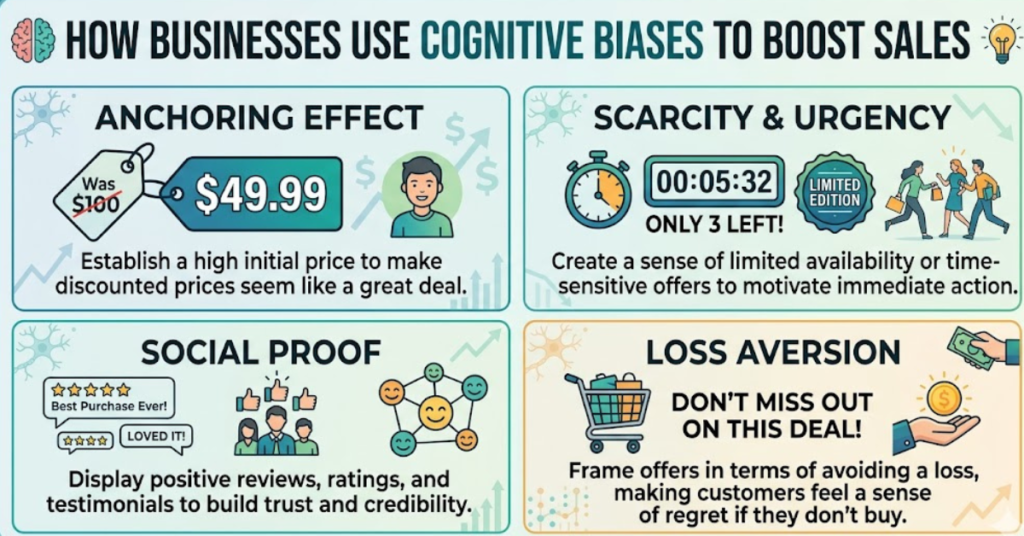
1. Social Proof Bias
People tend to follow the crowd. If others approve of something, it must be good.
How businesses use it:
- Customer reviews
- Testimonials
- “Best seller” labels
- Influencer endorsements
- User-generated content
Example:
Amazon highlights “Customers also bought” to encourage purchases.
2. Scarcity Bias
We value things more when they are limited. Urgency increases desire.
How businesses use it:
- “Only 3 items left”
- Limited-time discounts
- Flash sales
- Countdown timers
Example:
Booking websites show “Only 2 rooms left at this price.”
3. Anchoring Bias
People rely heavily on the first piece of information they see.
How businesses use it:
- Showing original price vs discounted price
- Premium pricing tiers
- “Was $199, now $99”
Example:
A $300 jacket marked down to $150 feels like a great deal.
4. Authority Bias
Consumers trust experts, certifications, and recognized figures.
How businesses use it:
- Expert endorsements
- Certifications (“Dermatologist approved”)
- Awards and badges
- Professional branding
Example:
Toothpaste brands featuring dentists increase credibility.
5. Loss Aversion
People prefer avoiding losses more than gaining rewards.
How businesses use it:
- Free trials with expiration
- “Don’t miss out”
- Subscription reminders
- Abandoned cart emails
Example:
“You’ll lose access to premium features tomorrow.”
6. Decoy Effect
Adding a third option can influence decision-making.
How businesses use it:
- Pricing tiers (Basic, Standard, Premium)
- Feature comparisons
- Bundle offers
Example:
- Basic: $9
- Standard: $15
- Premium: $16 → Most choose Premium
7. Reciprocity Bias
People feel obligated to return favors.
How businesses use it:
- Free samples
- Free ebooks
- Bonus content
- Discounts for signing up
Example:
A free trial increases likelihood of paid conversion.
8. Framing Effect
The way information is presented influences perception.
How businesses use it:
- “90% fat-free” vs “10% fat”
- “Save $50” vs “Spend $150”
- Positive vs negative wording
Ethical Use of Cognitive Biases
While understanding how might businesses use cognitive biases to their advantage is powerful, ethical application matters.
Responsible businesses:
- Avoid misleading claims
- Provide transparent pricing
- Use real testimonials
- Offer genuine value
Ethical marketing builds long-term trust and customer loyalty.
Benefits of Using Cognitive Biases in Marketing
Businesses that strategically apply cognitive psychology can:
- Increase conversion rates
- Improve customer experience
- Strengthen brand trust
- Boost average order value
- Reduce decision fatigue
These techniques work because they align with natural human behavior.
How Small Businesses Can Apply Cognitive Biases
You don’t need a big budget. Try these simple tactics:
- Add customer reviews to your website
- Use limited-time offers
- Highlight best-selling products
- Offer free resources
- Show before-and-after pricing
- Include expert endorsements
Even small changes can improve engagement.
FAQs
What are cognitive biases in marketing?
Cognitive biases are mental shortcuts that influence consumer decisions. Businesses use them to shape behavior and improve conversions.
Is using cognitive biases ethical?
Yes, when used transparently and honestly. Ethical use helps customers make informed decisions without manipulation.
Which cognitive bias is most effective for sales?
Social proof and scarcity are among the most effective because they trigger urgency and trust.
Do cognitive biases really work?
Yes. Studies in behavioral psychology show they significantly influence decision-making and purchasing behavior.
Can small businesses use cognitive biases?
Absolutely. Techniques like testimonials, limited offers, and pricing strategies work for businesses of all sizes.
Conclusion
Understanding how might businesses use cognitive biases to their advantage reveals why certain marketing tactics are so effective. From social proof and scarcity to anchoring and reciprocity, these psychological principles help guide customer decisions naturally.
When used ethically, cognitive biases don’t manipulate — they simplify choices and enhance user experience. Businesses that apply these insights thoughtfully can boost engagement, improve conversions, and build lasting customer relationships.