
Imagine waking up one day to learn that a factory is emitting larger amounts of CFCs into the atmosphere. How might this affect people? At first, it might sound like a distant environmental issue, but the consequences can directly impact your health, safety, and daily life. Chlorofluorocarbons (CFCs) are harmful chemicals known for damaging the ozone layer and contributing to climate change.
When large quantities are released, the effects ripple through the environment, eventually reaching humans in ways that many don’t immediately recognize. From increased UV radiation to respiratory problems, the risks are real and measurable. Let’s break down what this means and why it matters.
What Are CFCs and Why Are They Dangerous?
CFCs (chlorofluorocarbons) are synthetic chemicals once widely used in:
- Refrigerators and air conditioners
- Aerosol sprays
- Foam insulation
- Industrial solvents
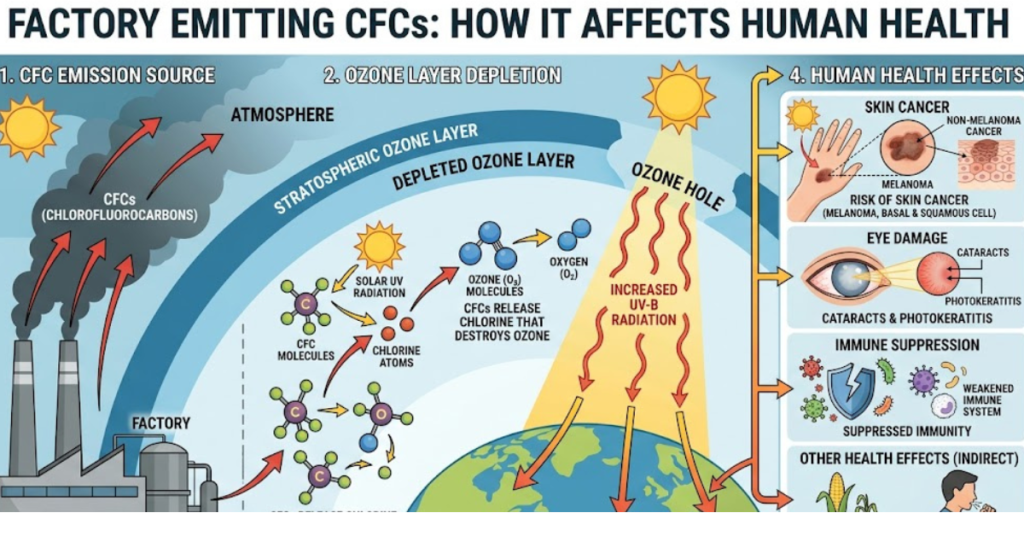
Although many countries have restricted them, illegal or outdated industrial use still occurs. The biggest problem? CFCs break down ozone molecules in the upper atmosphere, weakening Earth’s protective shield against harmful ultraviolet (UV) radiation.
How CFC Emissions Affect People Directly
If a factory is emitting large amounts of CFCs into the atmosphere, people nearby and even far away may experience several health risks.
1. Increased UV Radiation Exposure
When the ozone layer thins, more UV rays reach the Earth’s surface. This can lead to:
- Higher rates of skin cancer
- Increased risk of cataracts
- Premature aging of skin
- Weakened immune system
Even people who rarely spend time outdoors may still be affected over time.
2. Respiratory and Breathing Issues
Although CFCs are mostly stable, exposure at ground level in high concentrations can cause:
- Shortness of breath
- Dizziness
- Headaches
- Irritation of the nose and throat
Workers in or near the emitting factory are particularly at risk.
3. Impact on Children and Elderly
Certain groups are more vulnerable:
- Children (developing immune systems)
- Elderly individuals (weaker lungs)
- People with asthma or allergies
- Pregnant women
These populations may experience more severe symptoms even with limited exposure.
Long-Term Environmental Effects That Indirectly Harm People
Even if immediate symptoms are not noticeable, the long-term impact can be serious.
Ozone Layer Depletion
The most significant consequence of CFC emissions is ozone depletion. This leads to:
- More UV radiation reaching crops
- Damage to marine ecosystems
- Reduced food supply
- Increased global health risks
Climate Change Contribution
CFCs are potent greenhouse gases. They trap heat more effectively than carbon dioxide, contributing to:
- Rising global temperatures
- Extreme weather events
- Heatwaves affecting public health
- Increased risk of drought and food shortages
Economic and Social Impacts on Communities
When a factory emits large amounts of CFCs, communities may face:
- Increased healthcare costs
- Reduced agricultural productivity
- Damage to fisheries
- Loss of outdoor tourism
- Lower property values
These impacts can affect livelihoods and quality of life.
Signs That CFC Emissions May Be Affecting Your Area
You might notice:
- Unusual increase in skin sensitivity to sunlight
- Rising respiratory complaints in the community
- Reports of ozone layer thinning
- Environmental warnings from authorities
- Strong chemical odors near industrial zones
If these occur, local environmental agencies should be notified.
How Governments and Organizations Respond
Authorities typically take steps such as:
- Investigating emission sources
- Enforcing environmental regulations
- Imposing fines or shutdowns
- Monitoring air quality
- Promoting safer alternatives
International agreements like the Montreal Protocol aim to eliminate CFC production worldwide.
How Individuals Can Protect Themselves
If you suspect CFC emissions nearby:
- Use sunscreen regularly
- Wear protective clothing outdoors
- Avoid peak sun hours
- Install air purifiers indoors
- Stay informed about air quality reports
Small steps can reduce health risks.
FAQs
What happens if a factory releases CFCs?
A factory releasing CFCs can damage the ozone layer, increase UV radiation, and cause health issues such as skin cancer, eye damage, and respiratory problems.
Are CFCs harmful to breathe?
In high concentrations, CFCs can cause dizziness, headaches, and breathing difficulties, especially in enclosed or poorly ventilated areas.
How do CFCs affect the ozone layer?
CFCs break down ozone molecules, thinning the ozone layer and allowing harmful UV radiation to reach Earth’s surface.
Can CFC emissions affect people far away?
Yes. Because CFCs rise into the upper atmosphere, their impact spreads globally, not just near the factory.
Are CFCs still banned?
Most countries have banned CFCs, but illegal production or improper disposal can still lead to emissions.
Conclusion
So, if a factory is emitting larger amounts of CFCs into the atmospher, how might this affect people? The answer is clear: it can impact health, increase UV exposure, worsen respiratory conditions, and contribute to climate change. These effects may be immediate for nearby communities and long-term for the global population.
Understanding the risks helps individuals take precautions and encourages communities to demand stronger environmental protections. If you found this helpful, consider exploring related topics like ozone depletion, air pollution health risks, or climate change solutions to stay informed and protected.