
sScroll through social media long enough, and you’ll eventually stumble upon the debate: plandid or candid—which one is it, and what do they actually mean? If you’ve ever wondered what does plandid or candid mean, you’re not alone. These terms are everywhere, especially on platforms like Instagram and dating apps.
At first glance, they seem similar. Both describe natural-looking photos. But once you dig deeper into plandid or candid meaning, the difference becomes surprisingly clear—and pretty interesting.
What Is Candid?
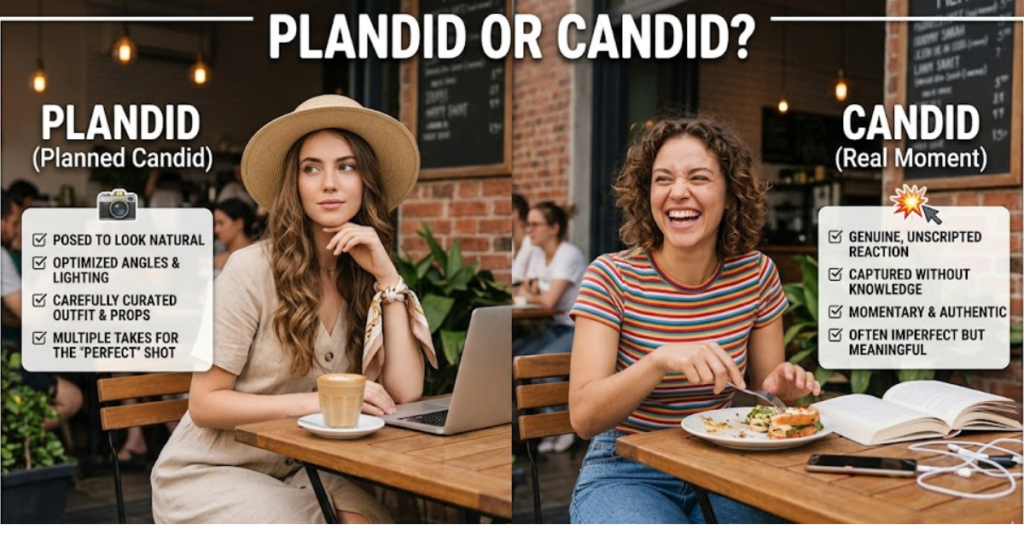
A candid photo is completely natural and unplanned. The subject usually doesn’t know the photo is being taken, which makes the moment feel authentic and spontaneous.
Key features of candid shots:
- No posing or preparation
- Captures real emotions
- Often taken without the subject’s awareness
Example:
A friend laughing during a conversation, captured without them noticing the camera.
Candid photography has long been popular because it reflects genuine moments. It’s raw, unfiltered, and often more emotionally engaging.
What Is Plandid?
Now let’s talk about plandid, a newer term that blends “planned” and “candid.”
A plandid photo is carefully staged to look like a candid moment. The subject may appear relaxed or unaware, but the shot is actually intentional.
Key features of plandid shots:
- Planned and directed
- Designed to look effortless
- Often used for social media aesthetics
Example:
Someone pretending to look away from the camera while walking, even though the pose was set up in advance.
Plandid or Candid Meaning Explained
Understanding plandid or candid meaning comes down to one simple idea: authenticity versus illusion.
- Candid: Truly spontaneous
- Plandid: Intentionally staged to appear spontaneous
If you’re asking what is plandid or candid, think of it this way: one captures reality, while the other recreates it.
Plandid or Candid Difference
Let’s break down the plandid or candid difference more clearly.
1. Planning
- Candid: No planning involved
- Plandid: Carefully planned
2. Awareness
- Candid: Subject is unaware
- Plandid: Subject knows and participates
3. Purpose
- Candid: Capture real-life moments
- Plandid: Create visually appealing, “natural-looking” content
4. Usage
- Candid: Photography, journalism, personal memories
- Plandid: Social media, influencer content, dating profiles
Plandid or Candid on Hinge and Social Media
The phrase plandids or candids hinge often appears on dating apps like Hinge, where users describe their photos or preferences.
What it means in this context:
- Candids: A genuine, unposed picture
- Plandids: A posed photo that looks natural and effortless
Many people prefer plandid shots on dating profiles because they strike a balance between authenticity and attractiveness.
Why Plandid Photos Are So Popular
You might wonder why plandid has become such a trend.
Here’s why:
- People want to look natural—but still their best
- Social media rewards polished yet “effortless” content
- It gives control over lighting, angles, and expressions
In short, plandid photos offer the best of both worlds: realism with a touch of strategy.
Plandids or Candids Meaning in Hindi
If you’re searching for plandids or candids meaning in Hindi, here’s a simple explanation:
- Candid (कैंडिड): बिना तैयारी या स्वाभाविक फोटो
- Plandid (प्लैंडिड): योजनाबद्ध लेकिन स्वाभाविक दिखने वाली फोटो
This distinction helps clarify how both terms are used in everyday conversations, especially online.
Plandids or Candids Definition in Simple Terms
If you want a quick plandids or candids definition, here it is:
- Candid: A real, unplanned moment captured naturally
- Plandid: A staged moment designed to look natural
This answers common questions like what does plandid or candid means or define plandid or candid in the simplest way possible.
How to Choose Between Plandid and Candid
Not sure which style to use? Here’s a quick guide:
Choose candids if you want:
- Authentic storytelling
- Real emotions
- Unfiltered memories
Choose plandids if you want:
- Aesthetic social media photos
- Better control over your appearance
- A natural yet polished look
Common Misconceptions
1. Plandid Is Fake
Not exactly. It’s staged, but the goal is still to appear genuine—not deceptive.
2. Candid Is Always Better
It depends on the context. For social media, plandid often performs better.
3. They Mean the Same Thing
They don’t. The difference lies in intention and execution.
Read also <<<“How to Clear Cache on iPhone Step‑by‑Step Guide“
FAQs
What does plandids or candids mean?
It refers to two types of photos: candid (natural and unplanned) and plandid (planned but made to look natural).
What is plandids or candids?
It’s a comparison between two photography styles—one spontaneous, the other staged.
What’s plandids or candids on Hinge?
It describes the type of photos users post—either genuine candid shots or posed images that look casual.
Plandids or candids—what does it mean in simple words?
Candid is real and unplanned; plandid is planned but looks real.
Which is better: plandids or candids?
Neither is better universally. It depends on your goal—authenticity or presentation.
Conclusion
The debate around plandid or candid isn’t about right or wrong—it’s about intention. Candid photos capture life as it happens, while plandid photos recreate that natural feel with a bit of planning.
Understanding plandid or candid meaning helps you choose the right style for your needs, whether it’s for social media, photography, or even dating apps. The key takeaway is simple: both styles have value, and knowing when to use each one can make all the difference.
If you’re looking to improve your photos, try experimenting with both styles and see which one fits your personality and goals best.