
Ever paused mid-sentence and wondered whether it’s “useing or using”? You’re not alone. This is one of the most common spelling mistakes people make in English writing, especially online.
The correct form is “using”, not “useing.” In this guide, we’ll break down why that is, how the word is used correctly, and how you can avoid this mistake in the future.
Let’s clear up the confusion once and for all.
What is the Correct Spelling: Using or Useing?
The correct spelling is using.
“Useing” is incorrect and does not exist in standard English grammar rules. It is a common error caused by the assumption that adding “-ing” to “use” requires keeping the “e.”
Why “Useing” is Wrong
English spelling rules usually drop the final “e” when adding “-ing” to a verb.
For example:
- make → making
- drive → driving
- use → using
So, the correct transformation is:
use → using NOT useing
Meaning of “Using” in English Grammar
The word using is the present participle form of the verb “use.” It means:
- To apply something for a purpose
- To operate a tool, method, or idea
- To take advantage of something in a practical way
Example Sentences:
- I am using my laptop to write an article.
- She is using a new learning method.
- They are using social media for marketing.
Common Mistakes with “Using or Useing”
Many learners confuse spelling due to pronunciation or writing habits. Here are common errors:
1. Adding unnecessary “e”
useing
using
2. Confusing verb forms
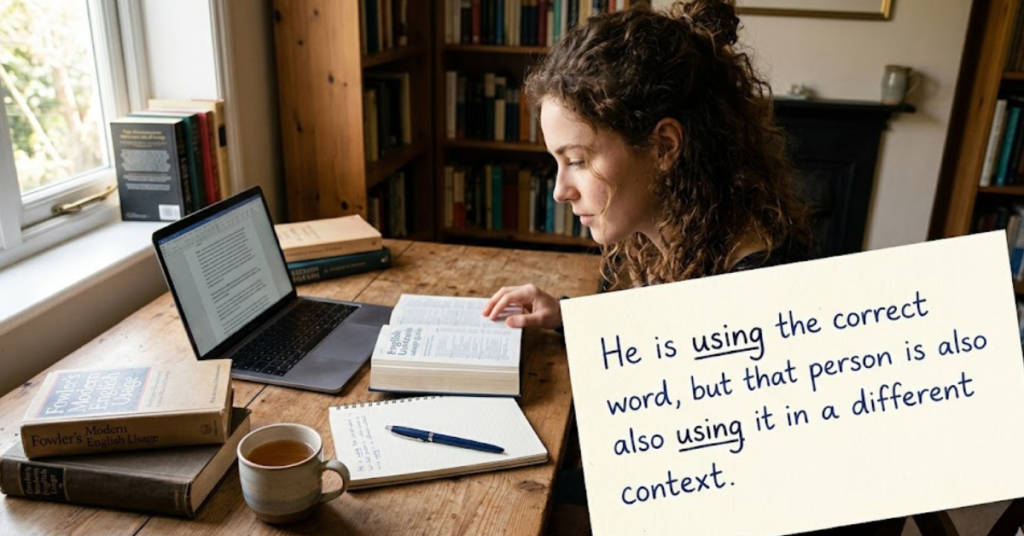
He is useing the phone
He is using the phone
3. Overthinking grammar rules
People sometimes assume English follows one fixed pattern, but spelling rules have exceptions.
Why People Search “Useing or Using”
The keyword useing or using is commonly searched because:
- English learners are unsure about spelling rules
- Auto-correct mistakes in typing
- Confusion from phonetic writing
- Lack of grammar practice
Grammar Rule Behind “Using”
To understand it better, here’s a simple rule:
Drop the “e” before adding “-ing” if the verb ends in silent “e”
Rule:
Verb ending in “e” → remove “e” + add “ing”
| Base Verb | Correct Form |
| use | using |
| write | writing |
| make | making |
How to Remember the Correct Spelling
Here are simple tricks to never confuse using or useing again:
Memory Tip 1:
“If it ends with silent E, let it flee before -ing.”
Memory Tip 2:
Think of “use” as a clean base word. No extra letters needed.
Memory Tip 3:
Practice with sentences daily:
- I am using English correctly.
Real-Life Usage of “Using”
The word using is extremely common in everyday communication.
Technology:
- Using a smartphone
- Using apps for learning
Education:
- Using notes for revision
- Using online resources
Business:
- Using data to make decisions
- Using marketing strategies
Why correct spelling helps SEO:
- Improves readability
- Builds trust with readers
- Helps search engines understand content
- Reduces bounce rate
FAQs About “Using or Useing”
1. Is “useing” a correct word?
No, “useing” is incorrect. The correct form is “using.”
2. Why do people write “useing” instead of “using”?
It happens due to confusion about English spelling rules and pronunciation.
3. What is the correct grammar rule for “using”?
You drop the silent “e” before adding “-ing” to verbs like “use.”
4. Can “using” be used in past tense?
No, “using” is present participle. The past tense of “use” is “used.”
5. How can I improve my English spelling?
Practice regularly, read more content, and use grammar-check tools when writing.
Conclusion: Using vs Useing Made Simple
To sum it up, the correct spelling is always using, not “useing.” The mistake happens due to misunderstanding English spelling rules, but once you learn the “drop the e” rule, it becomes easy to remember.
Whether you’re writing essays, emails, or SEO content, using the correct form improves clarity and professionalism. Keep practicing, and soon it will feel natural.
If you want to improve further, explore more grammar guides and spelling rules to strengthen your English writing skills.