
Hidden pipe leaks behind walls can create damage long before water becomes visible. A small drip may soak insulation, soften drywall, stain paint, loosen flooring, or create a damp smell that keeps returning after cleaning. Because the leak is covered by finished surfaces, homeowners may only notice higher water bills, bubbling paint, or a faint sound of running water. Plumbing services help by finding the source without tearing into every wall. Careful testing, leak location tools, and repair planning make it easier to stop the water early and protect the structure from deeper damage.
What Happens Next
- Reading the Warning Signs Inside the Home
Plumbers begin by studying the signs that appear inside the home. A hidden leak may show as yellow or brown wall stains, peeling paint, warped baseboards, soft drywall, or a musty odor near bathrooms, kitchens, laundry rooms, or utility areas. Sometimes the first warning is not visual at all. A homeowner may hear a faint dripping sound when all fixtures are off, or the water meter may continue moving when no water is being used. Plumbing services connect these signs to the nearest supply lines, drain lines, or fixture connections so the search starts in the right area. Portland plumbing services by Sarkinen Plumbing can help locate hidden wall leaks by checking moisture patterns, nearby fixtures, water pressure behavior, and access points before repair work begins. This careful first step reduces unnecessary wall damage and helps identify whether the leak is active, slow, or connected to certain times of use.
- Locating the Leak Without Guesswork
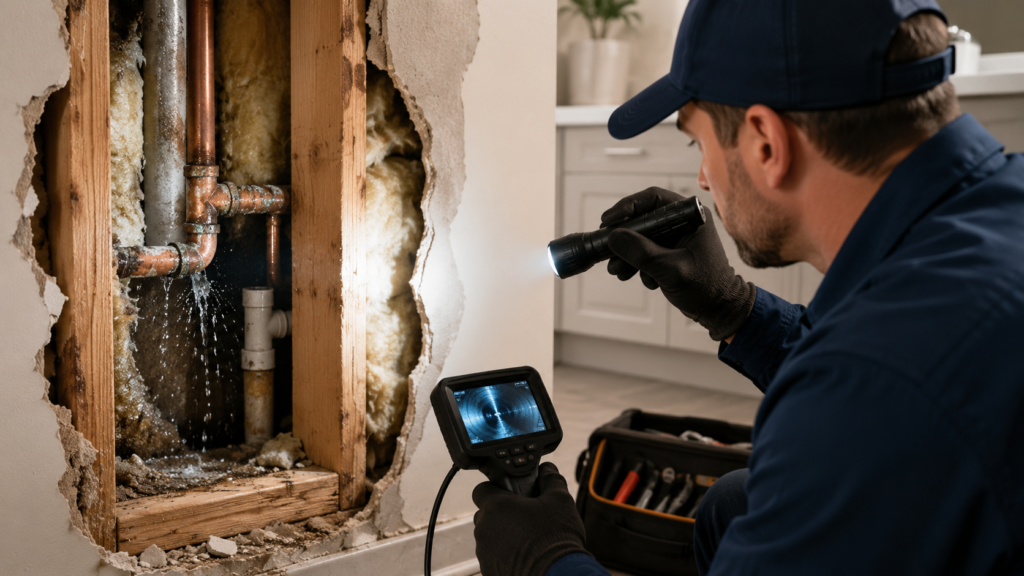
Once the warning signs are reviewed, plumbers use tools that help narrow down the leak location. Moisture meters can show how far water has spread behind drywall. Thermal imaging may reveal cooler damp areas where water is sitting inside the wall. Listening equipment can help detect pressurized pipe leaks that make a faint sound behind finished surfaces. Pressure testing can show whether a supply line is losing water, while drain testing can reveal leaks that happen only when sinks, tubs, showers, or washing machines are used. These methods matter because water does not always appear directly below the leak. It can travel along pipes, framing, insulation, or wall cavities before showing up in another room. By comparing test results with fixture placement and pipe routes, plumbers can make a smaller, more accurate opening when the wall must be accessed. This approach helps protect tile, cabinets, flooring, and finished surfaces from extra removal.
- Opening the Wall and Making the Repair
After the leak area is identified, plumbers decide the safest way to reach the damaged pipe or fitting. In many homes, the repair may involve cutting a small access opening in drywall, removing a damaged pipe section, tightening or replacing a loose connection, or changing a worn valve or fitting. If the leak is near a shower, sink, toilet, refrigerator line, or washing machine box, the repair may focus on the connection point rather than the full pipe run. Older homes may have corroded pipes that need a longer section replaced so the same problem does not return nearby. Plumbers also look at water pressure, pipe movement, and support brackets because a repaired pipe can leak again if vibration or pressure remains too high. Once the new section or fitting is installed, the line is tested before the wall is closed. This testing helps confirm that the leak has stopped and that water is moving as it should.
- Protecting the Wall After the Water Stops
Fixing the pipe is only part of solving a hidden wall leak. The wet area must also be handled properly so moisture does not remain trapped inside the structure. Plumbers may advise drying the wall cavity, removing soaked insulation, checking nearby flooring, and watching for signs of mold growth. If the leak affected framing, cabinets, or ceiling areas below, additional cleanup may be needed before repairs are covered. A wall that is closed too soon can trap damp material, leading to odors, stains, and surface damage later. Plumbing services can also help prevent future leaks by checking nearby pipe joints, shut-off valves, appliance hoses, and older pipe sections during the same visit. In some cases, a single visible leak is only one part of a wider plumbing issue. By checking the surrounding system, plumbers help homeowners avoid repeat wall damage and reduce the chance of another hidden leak forming in the same area.
Stopping Damage Before It Spreads
Hidden pipe leaks behind walls can be stressful because the source is not easy to see. Plumbing services make the repair process more controlled by reading symptoms, using leak location tools, opening only the needed area, repairing the damaged pipe, and testing the system afterward. They also help homeowners understand what must be dried, replaced, or watched after the water stops. Acting early can protect drywall, flooring, framing, insulation, and indoor air quality. When small clues are taken seriously, a hidden leak can be handled before it becomes a larger repair problem.