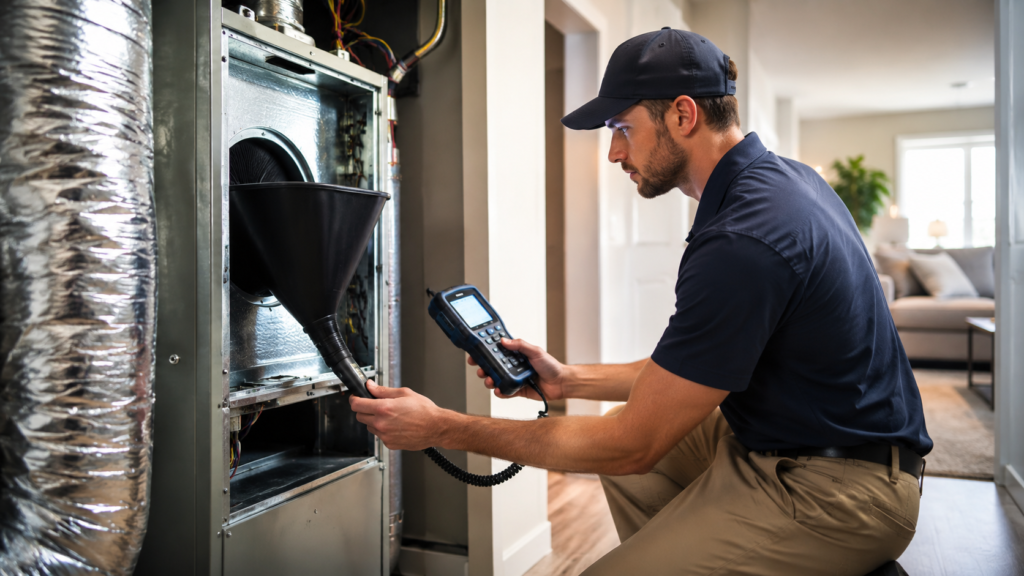

Heating and cooling systems depend on steady airflow to move conditioned air through every room. When airflow is weak, uneven, noisy, or restricted, the system may still run but fail to deliver proper comfort. Homeowners may notice hot rooms, cold rooms, long cycles, rising energy bills, or vents that barely push air. Professional airflow testing helps identify where air is being lost, blocked, or poorly balanced. Instead of guessing, technicians measure system performance and identify the cause of comfort problems before they lead to greater strain on equipment.
Airflow Testing Signs
- When Rooms Never Reach the Right Temperature
Professional airflow testing is needed when certain rooms never reach the thermostat setting even though the heating or cooling system runs often. One room may stay warm during summer, while another feels too cold in winter, creating frustration throughout the home. This problem can happen when duct runs are too long, vents are blocked, dampers are poorly adjusted, or return airflow is too weak. Testing helps measure how much air each room receives and whether that amount matches the home’s needs. Homeowners reviewing https://www.semperfiheatingcooling.com/heating-cooling-glendale-az/ may find that airflow concerns often require more than a simple filter change or thermostat adjustment. A technician can compare supply airflow, return pressure, and room temperature patterns to locate the imbalance. Once the weak areas are identified, the right repair or adjustment can improve comfort without forcing the system to run longer than necessary.
- When Utility Bills Rise Without Clear Reason
Heating and cooling systems may need airflow testing when energy bills increase even though thermostat habits have not changed. Restricted airflow forces the equipment to work harder to move air through the home, which can lead to longer cycles and higher energy use. A clogged filter, dirty coil, undersized duct, damaged duct connection, or weak blower motor can all reduce airflow. The system may keep running to satisfy the thermostat, but comfort may not improve at the same pace. Airflow testing helps reveal whether the system is wasting energy due to improper airflow. Technicians may check static pressure, blower performance, duct leakage, vent output, and temperature changes across the equipment. These readings help separate airflow problems from refrigerant issues, thermostat faults, or equipment wear. When airflow is corrected, the system can often heat or cool more efficiently and reduce unnecessary strain.
- When Vents Feel Weak or Noisy
Weak or noisy vents are another reason to schedule airflow testing. A vent that barely pushes air may point to duct restrictions, closed dampers, loose connections, crushed ducts, blocked registers, or blower trouble. On the other hand, loud rushing air may suggest ducts that are too small, excessive pressure, or poorly balanced airflow between rooms. These symptoms should not be ignored because they can affect comfort and equipment health. Professional testing gives technicians measurable data rather than relying solely on sound or feel. They can determine whether airflow is too low, too high, or uneven across the home. This matters because both restricted airflow and excessive pressure can place stress on motors, filters, coils, and duct joints. Once the cause is found, repairs may include duct sealing, vent adjustment, damper balancing, blower correction, or the removal of obstructions that limit proper air movement.
- When New Equipment Still Feels Uneven
Airflow testing is useful after new heating or cooling equipment is installed if comfort problems remain. A new furnace, air conditioner, or heat pump may be working correctly, but it cannot perform well if the duct system cannot move air properly. Older ductwork may not match the new equipment’s airflow needs, especially if the home has been remodeled, expanded, or changed over time. Testing helps confirm whether the new unit is delivering the right amount of air through the existing system. A technician can check static pressure, duct sizing, return capacity, and supply output to see whether the equipment and ductwork are working together. If rooms still feel uneven after installation, the issue may be poor air distribution rather than the new unit itself. Airflow testing helps prevent frustration by identifying whether duct changes, additional returns, zoning, or balancing adjustments are needed to improve performance.
- When System Strain Keeps Returning
Repeated heating and cooling problems can indicate the need for airflow testing. Frozen coils, overheating furnaces, frequent filter problems, short cycling, weak blower performance, and repeated service calls may all connect to poor air movement. When airflow is restricted, the system operates outside normal conditions and parts may wear faster. A cooling system may freeze because not enough warm air passes over the coil. A heating system may overheat because warm air cannot move away from the equipment quickly enough. Professional airflow testing helps identify whether airflow is causing repeated strain. Technicians can use the results to guide practical repairs rather than treating each symptom separately. This approach can protect major components, improve comfort, and reduce recurring breakdowns. When the system can breathe properly, it usually runs more smoothly, maintains steadier temperatures, and avoids many problems caused by hidden restrictions.
Heating and cooling systems need professional airflow testing when rooms feel uneven, vents seem weak or noisy, bills rise unexpectedly, new equipment does not solve comfort issues, or system strain keeps returning. Airflow affects every part of HVAC performance, from comfort and efficiency to equipment life. Testing provides technicians with the measurements needed to identify restrictions, leaks, pressure problems, and delivery issues. Instead of relying on guesswork, homeowners receive a clearer explanation of why the system is not performing correctly. With proper airflow corrections, the home can feel more balanced, efficient, and comfortable.