
If you’ve ever looked closely at your hairbrush and thought, “When did this get so dirty?” — you’re not alone. Over time, hairbrushes collect oil, dandruff, dust, product buildup, and loose hair. That’s where how to clean a hairbrush with baking soda becomes a simple, budget-friendly solution that actually works.
Baking soda is a natural cleaning agent that helps break down grease and remove odor without harsh chemicals. In this guide, you’ll learn an easy, step-by-step method to restore your brush to a clean, fresh condition using everyday ingredients.
Why Clean Your Hairbrush Regularly?
A dirty hairbrush doesn’t just look unpleasant—it can actually affect your hair and scalp health.
Here’s what builds up over time:
- Natural oils from your scalp (sebum)
- Dead skin cells and dandruff
- Hair styling product residue (gel, spray, serum)
- Dust and lint from the environment
If you don’t clean your brush, you’re basically redistributing dirt and oil back into freshly washed hair.
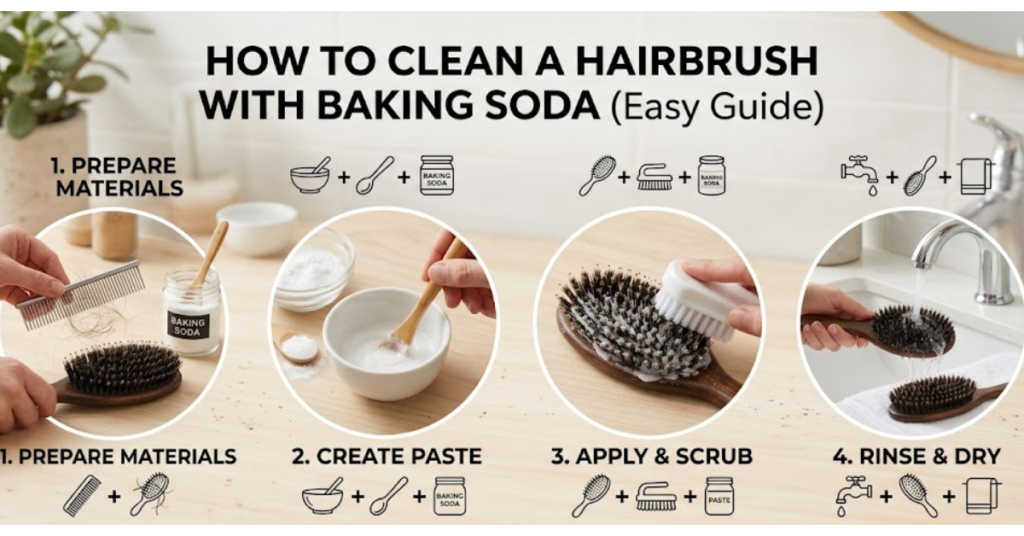
How to Clean a Hairbrush with Baking Soda (Step-by-Step)
This method works for plastic, rubber, and most paddle brushes. Just avoid soaking wooden brushes for too long.
Step 1: Remove Hair from the Brush
Start by pulling out all trapped hair using:
- A comb or tail comb
- A pair of scissors (carefully cut through tangled hair)
- Your fingers for loose strands
The cleaner the brush is at this stage, the better the baking soda will work.
Step 2: Prepare the Baking Soda Solution
Mix the following in a bowl or sink:
- 1 tablespoon baking soda
- 1 cup warm water
Stir until the baking soda dissolves. You can increase the amount if you’re cleaning multiple brushes.
Step 3: Soak and Scrub the Hairbrush
Place the brush in the solution and let it soak for 10–20 minutes.
Then:
- Use an old toothbrush to scrub between bristles
- Focus on base areas where buildup is heavy
- Gently loosen grime and residue
Baking soda works as a mild abrasive, helping lift stubborn dirt without damaging the brush.
Step 4: Rinse Thoroughly
Rinse the brush under warm running water to remove all baking soda residue.
Make sure:
- No white powder remains
- Water runs clear from the bristles
Step 5: Dry Properly
Shake off excess water and place the brush bristle-side down on a towel.
Let it air dry completely before using it again. This prevents mold and odor buildup.
Extra Tips for Best Results
To get even better cleaning results when using baking soda:
- Add a few drops of mild shampoo for extra grease removal
- Clean your hairbrush every 1–2 weeks
- Avoid soaking wooden handles for long periods
- Use a comb daily to reduce heavy buildup
Common Mistakes to Avoid
Even a simple cleaning method can go wrong if you’re not careful:
- Soaking wooden brushes too long (can damage wood)
- Skipping hair removal before cleaning
- Not drying properly (leads to mildew)
- Using boiling water (can weaken glue in some brushes)
FAQs: Cleaning Hairbrush with Baking Soda
1. How often should I clean my hairbrush with baking soda?
Ideally, once every 1–2 weeks depending on how often you use styling products.
2. Can baking soda damage my hairbrush?
No, baking soda is safe for most plastic and rubber brushes when used properly.
3. Can I use baking soda on wooden hairbrushes?
Yes, but avoid soaking them. Instead, lightly scrub with a baking soda solution and wipe dry quickly.
4. What removes sticky buildup from hairbrushes?
Baking soda combined with warm water or mild shampoo is highly effective for sticky residue.
5. Is vinegar better than baking soda for cleaning hairbrushes?
Both work well. Baking soda removes grime, while vinegar helps disinfect. You can even combine them for deep cleaning.
Conclusion
Knowing how to clean a hairbrush with baking soda is a simple yet powerful way to maintain healthier hair and a cleaner grooming routine. With just a few household ingredients, you can remove buildup, improve hygiene, and extend the life of your brush.
Make it a habit, and your hair—and scalp—will definitely thank you. If you found this helpful, you might also want to explore natural ways to clean other beauty tools like combs, makeup brushes, and hair accessories.