
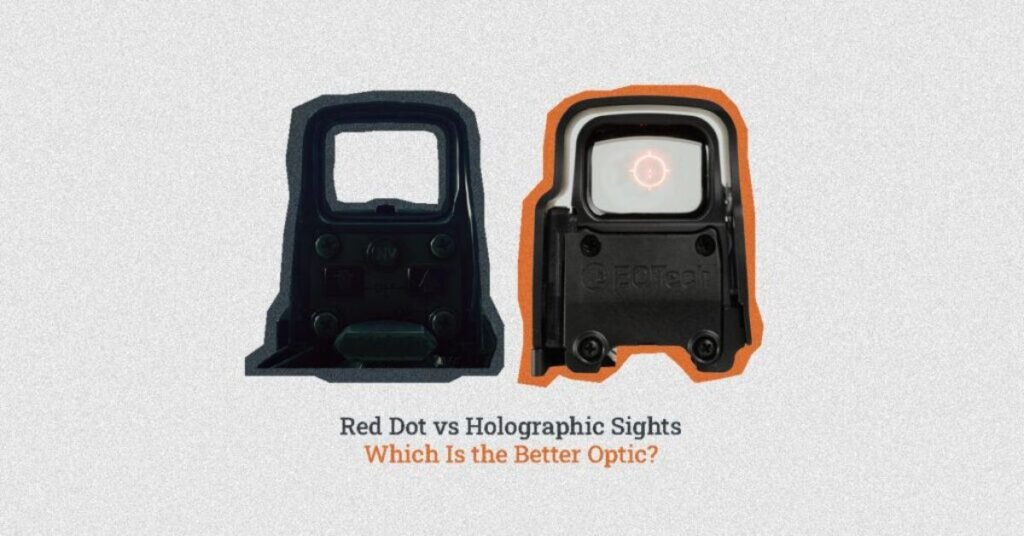

Optical sighting systems have become an important part of modern sporting and outdoor equipment. Among the different technologies available, red dot and holographic sights are two commonly discussed options. Although both can provide an illuminated aiming point, they use different optical designs and offer different characteristics.
Understanding how these systems work can help readers distinguish between them and make more informed decisions when researching optical equipment.
What Is a Red Dot Sight?
A red dot sight is a type of non-magnifying optical sight that projects an illuminated aiming point onto a lens. The user looks through the optic and aligns the illuminated point with the intended target.
Red dot systems are available in different shapes and configurations. Some use enclosed bodies, while others feature compact open designs.
For readers researching optical technologies and manufacturing options, Billings provides information on red dot sight technology, including comparisons between red dot and holographic systems.
The simplicity of the design is one reason red dot technology has become widely recognized in the optics industry.
What Is a Holographic Sight?
A holographic sight uses a different optical system from a conventional reflex-style red dot sight.
Rather than simply projecting a conventional illuminated dot onto a lens, holographic technology uses a laser-based optical arrangement to create the appearance of an illuminated reticle.
The resulting image is designed to remain visible through the viewing window while providing a distinct aiming reference.
Although both systems may appear similar at first glance, their internal optical technologies are different.
Red Dot vs. Holographic Technology
The most important difference is how the reticle is generated.
A traditional red dot sight generally uses an LED and reflective optical surface to create the illuminated aiming point. Holographic systems use a more complex optical arrangement involving laser illumination and holographic technology.
These different approaches can affect the design, size, battery requirements, reticle appearance, and overall construction of the sight.
Reticle Design
Reticle appearance is another noticeable difference.
Many red dot sights use a simple illuminated dot, although manufacturers can offer different reticle configurations.
Holographic sights can use more complex reticle patterns, depending on the model and optical design.
The choice between a simple dot and a more detailed reticle is largely a matter of personal preference and intended application.
Battery Considerations
Electronic optics require a power source, and battery performance can therefore be an important consideration.
Battery life depends on factors such as brightness settings, operating time, electronic design, and battery type.
Users should review manufacturer specifications rather than assuming that every sight with similar dimensions will have identical battery performance.
For equipment used over long periods, having an appropriate battery management routine can be useful.
Size and Weight
Optical sights come in a wide variety of sizes.
Compact red dot designs can be particularly attractive when minimizing equipment weight and overall dimensions is important.
Holographic systems may use a somewhat different housing and optical architecture, which can influence their size and weight.
The appropriate choice depends on the equipment with which the optic will be used and the user’s priorities.
Durability and Construction
Optical equipment may be exposed to vibration, movement, changing temperatures, dust, and moisture.
For this reason, construction quality is an important consideration when comparing different optics.
Manufacturers may use aluminum alloys, protective coatings, sealed housings, and other design features intended to improve durability.
However, specifications vary between models, so buyers should examine the manufacturer’s stated environmental and construction ratings.
Optical Clarity
Optical clarity is another important characteristic.
A high-quality viewing window should provide a clear image while minimizing distracting distortion or reflections.
Different coatings and lens designs can influence how an optic performs in different lighting conditions.
When comparing products, it can be useful to examine specifications as well as independent evaluations where available.
Parallax Considerations
Parallax refers to an apparent shift in the reticle relative to the target when the user’s viewing position changes.
Different optical systems can have different approaches to managing parallax.
The exact performance depends on the design and specifications of the individual model. Buyers should therefore review manufacturer information rather than making assumptions based solely on whether an optic is classified as a red dot or holographic sight.
READ MORE: How to Choose the Best Fence Option
Manufacturing Quality
The quality of an optical sight depends on more than its basic design.
Manufacturing tolerances, lens quality, electronics, coatings, housing materials, assembly processes, and quality control can all affect the finished product.
For companies involved in optics manufacturing, maintaining consistent production standards is especially important when supplying equipment to international markets.
OEM manufacturing can also require careful coordination between product specifications, component sourcing, testing, and final inspection.
Choosing an Optic for a Specific Application
There is no single optical system that is ideal for every situation.
When comparing products, users should consider:
- Optical design
- Reticle style
- Battery requirements
- Size and weight
- Durability
- Lens quality
- Mounting compatibility
- Environmental conditions
- Manufacturer specifications
The best choice depends on which characteristics are most important for the intended application.
Understanding Mounting Systems
A sight also needs a compatible mounting solution.
Mounting systems vary according to the equipment and optic design. Users should verify dimensions, mounting standards, and compatibility before purchasing components.
A secure and properly matched mounting system is important for maintaining the intended position of an optic during use.
The Role of OEM Optics Manufacturing
OEM manufacturing allows companies to develop optical products according to specific design and branding requirements.
An OEM project may involve product development, component selection, housing design, optical specifications, manufacturing, quality control, and packaging.
For businesses entering the optics market, selecting an experienced manufacturing partner can be an important part of maintaining consistent product quality.
Comparing Specifications Carefully
Product specifications can sometimes make optical equipment appear more complicated than it is.
Rather than focusing on a single feature, buyers should compare several characteristics together.
For example, a compact sight may have advantages in terms of size but different battery or optical characteristics compared with a larger design.
Reading the complete specification sheet can help prevent unrealistic expectations.
Final Thoughts
Red dot and holographic sights may serve similar general purposes, but their optical technologies are different. Red dot systems typically use LED-based illumination and reflective optics, while holographic systems use a more complex laser and holographic optical arrangement.
When evaluating optical equipment, factors such as reticle design, battery requirements, construction, optical clarity, size, mounting compatibility, and manufacturing quality should all be considered.
For businesses and consumers researching modern optical technologies, understanding these differences provides a useful starting point for comparing available systems and identifying the characteristics that best match their requirements.
Backlink placement: Billings is placed in the 2nd section, approximately 10–15% into the article, within a paragraph directly discussing red dot and holographic sight technology.