
A tiny splinter can feel like a big problem. Whether it’s lodged in your finger, buried in your foot, or hiding just under the skin, knowing how to remove a splinter properly can save you from pain, infection, and frustration.
In this guide, you’ll learn safe, proven techniques—including how to remove a splinter without tweezers, how to deal with deep or invisible splinters, and when it’s time to seek medical help.
Why Removing a Splinter Quickly Matters
Splinters may seem harmless, but leaving one in your skin can lead to:
- Pain and swelling
- Infection (redness, pus, warmth)
- Difficulty using the affected area
- Deeper embedding under the skin
The sooner you act, the easier it is to remove a splinter safely.
How to Remove a Splinter Step-by-Step
Basic Method Best for Visible Splinters
If the splinter is sticking out:
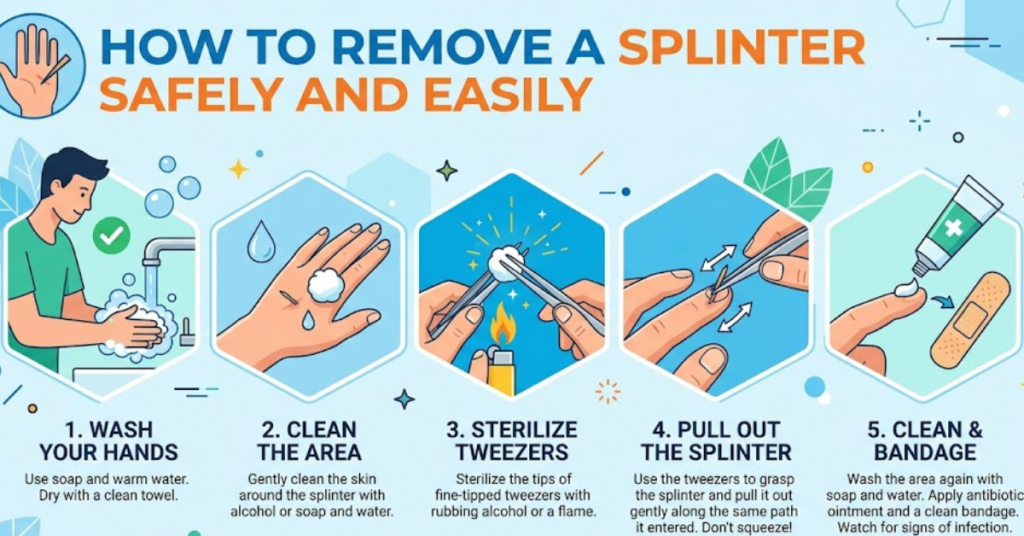
- Wash your hands and the area with soap and warm water
- Sterilize tweezers using alcohol or heat
- Gently pull the splinter out in the same direction it entered
- Clean the wound again and apply antiseptic
- Cover with a bandage if needed
This is the simplest and most effective method for most cases.
How to Remove a Splinter Without Tweezers
No tweezers? No problem.
Try These Alternatives:
- Adhesive Tape: Press tape over the splinter and pull it off gently
- Glue Method: Apply a thin layer of white glue, let it dry, and peel it off
- Baking Soda Paste: Mix baking soda with water, apply, and cover overnight to draw it out
These methods work especially well for small or shallow splinters.
How to Remove a Splinter You Can’t See
Invisible splinters are tricky but manageable.
What to Do:
- Soak the area in warm water for 10–15 minutes to soften skin
- Look closely under bright light or use a magnifying glass
- Gently press around the area to locate the entry point
- Use a sterilized needle to carefully lift the skin and expose the splinter
Avoid digging too deep—you can make it worse.
How to Remove a Splinter Under the Skin
When a splinter is fully embedded:
- Clean and sterilize a needle and tweezers
- Gently break the skin surface above the splinter
- Lift it enough to grab with tweezers
- Pull it out slowly and steadily
If it’s too deep or painful, don’t force it—medical help may be safer.
How to Remove a Splinter from Finger
Fingers are the most common spot for splinters.
Tips:
- Soak your finger in warm water first
- Keep your hand steady to avoid pushing it deeper
- Use fine-tip tweezers for precision
- Apply antibiotic ointment after removal
How to Remove a Splinter from Under a Fingernail
This is one of the most painful types.
Safe Approach:
- Soak your finger to soften the nail and skin
- Use sterilized tweezers or a needle to gently access the splinter
- In some cases, trimming a small part of the nail may help expose it
If the splinter is deep under the nail, see a healthcare provider.
How to Remove a Splinter from Foot
Splinters in the foot can go deeper due to pressure from walking.
Best Method:
- Soak your foot in warm, soapy water
- Use a clean needle to expose the splinter
- Pull it out with tweezers
- Avoid walking barefoot until healed
Keep the area clean to prevent infection.
Signs You Should See a Doctor
Don’t try to handle every splinter yourself. Seek medical help if:
- The splinter is deeply embedded
- You see signs of infection (redness, pus, swelling)
- It’s under your nail and painful
- You can’t remove it after several attempts
- The splinter is made of glass or metal
Tips to Prevent Splinters
A little prevention goes a long way:
- Wear gloves when handling wood or rough materials
- Avoid walking barefoot outdoors
- Sand down rough wooden surfaces
- Keep skin moisturized to reduce cracking
FAQs
How do you remove a splinter that won’t come out?
Try soaking the area and using a needle to gently expose it. If it still won’t come out, it’s best to see a doctor.
Can a splinter come out on its own?
Yes, small splinters may naturally work their way out as skin sheds, but this can take time and risks infection.
How to remove a splinter without pain?
Soak the area in warm water first and work slowly with sterilized tools to minimize discomfort.
What happens if you leave a splinter in your skin?
It can cause infection, inflammation, or form a small bump as your body reacts to it.
Is it safe to use a needle to remove a splinter?
Yes, as long as it’s sterilized and used gently. Avoid digging too deep.
Conclusion
Knowing how to remove a splinter properly can turn a painful nuisance into a quick fix. Whether it’s in your finger, foot, or hidden under the skin, the key is to stay clean, gentle, and patient.
If simple methods don’t work—or the splinter is deep—don’t push your luck. Getting professional help is always the safer option.