
Have you ever paused mid-sentence, wondering whether it’s “greatly or grately appreciated”? You’re not alone. This small spelling confusion pops up often in emails, formal writing, and even social media posts.
The truth is simple—but important. Using the correct form can instantly make your writing look more polished and professional. In this guide, we’ll break down the difference, explain why one is correct, and show you how to use it naturally in everyday communication.
Greatly or Grately Appreciated: What’s Correct?
Let’s clear it up right away:
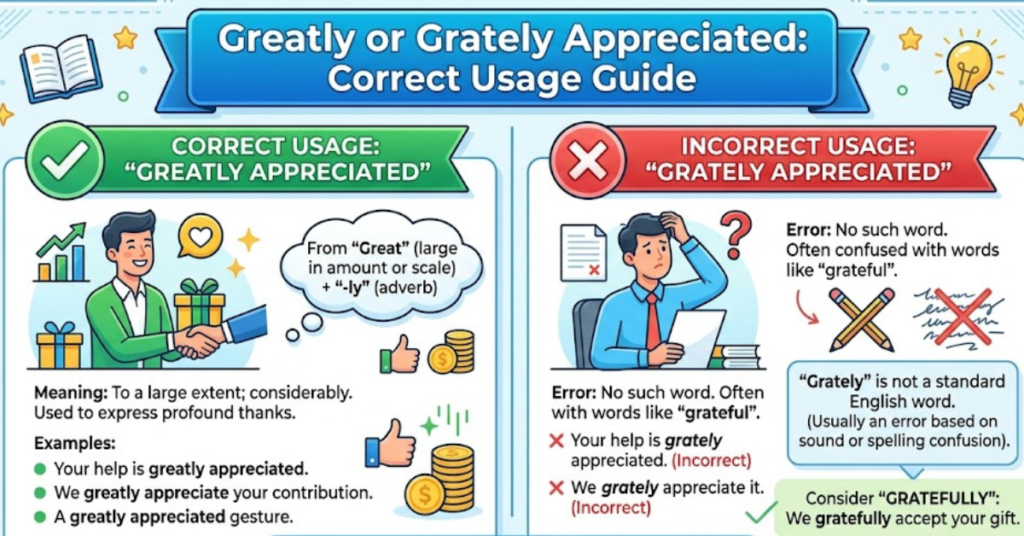
- Correct: Greatly appreciated
- Incorrect: Grately appreciated
The word “grately” does not exist in standard English. It’s a common misspelling of “greatly,” which is the correct adverb form of great.
What Does “Greatly Appreciated” Mean?
The phrase “greatly appreciated” means that you are very thankful or highly grateful for something. It adds emphasis to your appreciation, making your message feel more sincere and meaningful.
Example Sentences:
- Your help is greatly appreciated.
- Any feedback would be greatly appreciated.
- Your support during this project is greatly appreciated.
In each case, “greatly” intensifies the level of appreciation.
Why Do People Confuse “Greatly” and “Grately”?
This mistake usually happens because:
- Phonetic similarity: Both words sound similar when spoken.
- Typing errors: Fast typing leads to dropped or swapped letters.
- Lack of familiarity: Some people assume “grately” is a valid variation.
Quick Tip
If you remember the root word “great,” you’ll never misspell “greatly.”
How to Use “Greatly Appreciated” Correctly
Using this phrase is straightforward, but context matters. It works best in polite, formal, or semi-formal communication.
Common Situations:
- Professional emails:
Your prompt response is greatly appreciated. - Customer service messages:
Your patience is greatly appreciated. - Requests:
Any assistance would be greatly appreciated.
Alternatives to “Greatly Appreciated”
If you want to avoid repetition, here are some natural alternatives:
Formal Alternatives:
- Much appreciated
- Highly valued
- Deeply appreciated
Casual Alternatives:
- Thanks a lot
- Really appreciate it
- Big thanks
Using variety keeps your writing fresh and engaging.
Grammar Breakdown: Why “Greatly” Works
“Greatly” is an adverb, meaning it modifies a verb—in this case, appreciated.
- Appreciated (verb)
- Greatly (adverb describing how much)
This is why “greatly appreciated” is grammatically correct, while “grately appreciated” fails—because “grately” isn’t a recognized word.
Common Mistakes to Avoid
Here are a few errors to watch out for:
- Your help is grately appreciated
- I would be grately thankful
- This is grately helpful
Correct Versions:
- Your help is greatly appreciated
- I would be greatly thankful
- This is greatly helpful
FAQs
1. Is “grately appreciated” ever correct?
No, “grately” is not a real English word. Always use “greatly appreciated.”
2. What does “greatly appreciated” mean?
It means you are expressing strong or sincere gratitude for something.
3. Can I use “much appreciated” instead?
Yes, “much appreciated” is a perfectly acceptable alternative, especially in casual or semi-formal contexts.
4. Is “greatly appreciated” formal?
Yes, it’s commonly used in professional and polite communication, such as emails and requests.
5. How can I avoid spelling mistakes like this?
Focus on the root word (great) and double-check your writing, especially in formal communication.
Conclusion
When it comes to “greatly or grately appreciated,” the correct choice is clear: “greatly appreciated.” It’s a simple distinction, but one that makes a big difference in how your writing is perceived.
By understanding the correct spelling, meaning, and usage, you can communicate more confidently and professionally. The next time you want to express gratitude, you’ll know exactly which phrase to use.
If you found this helpful, consider exploring more grammar guides to sharpen your writing skills even further.