
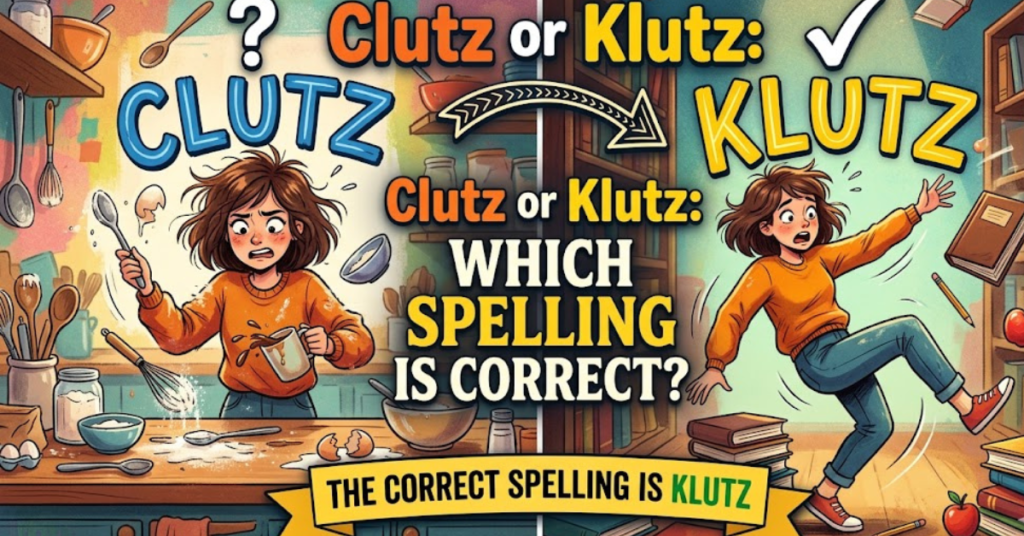

Have you ever typed clutz or klutz and paused, wondering which one is actually correct? You’re not alone. It’s one of those words that people often hear in conversation long before they see it written down, which makes spelling confusing.
The short answer is simple: “klutz” is the correct standard spelling, while “clutz” is considered a common misspelling. But there’s more to the story than just spelling. The word has an interesting origin, cultural history, and everyday usage that makes it worth understanding.
In this guide, we’ll break down the difference between clutz or klutz, explain where the word comes from, and show you how to use it correctly in writing and conversation.
What Does Klutz Mean?
A klutz is a person who is awkward, clumsy, or frequently drops things, trips, or bumps into objects. It’s usually used in a lighthearted or humorous way rather than as a serious insult.
Example Sentences
- I spilled coffee on my shirt again—I’m such a klutz.
- Jake tripped over absolutely nothing. Total klutz moment.
- She laughed and called herself a klutz after dropping her phone.
The term often describes someone who lacks coordination, but it’s generally playful rather than harsh.
Clutz or Klutz: Which One Is Correct?
The Correct Spelling Is “Klutz”
If you’re choosing between clutz or klutz, the accepted spelling in dictionaries is klutz.
Major dictionaries like:
- Merriam-Webster
- Oxford English Dictionary
- Cambridge Dictionary
- Collins Dictionary
all list klutz as the standard spelling.
Why Do People Write “Clutz”?
“Clutz” appears because English speakers often assume the word starts with a “C” since the pronunciation sounds similar. Since many English words begin with “cl,” it feels more natural to some people.
However, “clutz” is not the preferred formal spelling and is generally considered incorrect in professional writing.
The Origin of the Word “Klutz”
The word klutz comes from Yiddish, a historical language spoken by Ashkenazi Jewish communities.
It originated from the Yiddish word klots, meaning:
- block of wood
- awkward person
- clumsy fool
Over time, the word entered American English and became widely used to describe someone physically awkward.
This is why the spelling begins with a K rather than a C—it reflects its original linguistic roots.
Is “Clutz” Ever Acceptable?
Informally, You May See It
In casual writing, text messages, social media posts, or user-generated content, “clutz” does appear. Some people use it intentionally because it feels more intuitive.
For example:
- “I’m such a clutz today lol”
Even so, if you’re writing for:
- school assignments
- professional emails
- blog posts
- published content
- SEO articles
you should always use klutz.
How to Remember the Correct Spelling
If you struggle with clutz or klutz, here are easy memory tricks.
Quick Memory Tip
Think of:
K = Klumsy
Yes, “klumsy” isn’t a real word—but the fake spelling helps you remember that klutz starts with K.
Another Trick
Remember its Yiddish origin. Since it comes from klots, the “K” makes more sense.
Similar Words People Often Misspell
The confusion around clutz or klutz is similar to other spelling mistakes where pronunciation causes problems.
Common Examples
| Incorrect | Correct |
| definately | definitely |
| seperate | separate |
| alot | a lot |
| clutz | klutz |
| occured | occurred |
English is full of these tricky words, so this one is definitely not unusual.
When to Use the Word Klutz
Everyday Conversations
“Klutz” is commonly used when talking casually with friends or family.
Example:
- Don’t let me carry that vase—I’m a total klutz.
Writing and Humor
Writers often use it to create relatable, funny moments in stories or personal essays.
Example:
- The main character is lovable because she’s a bit of a klutz.
Self-Description
People often use it to describe themselves in a humorous, self-aware way.
Example:
- I can’t walk in heels. I’m a complete klutz.
Is Klutz an Offensive Word?
Usually, no. It’s generally considered mild and playful.
However, tone matters. Calling someone a klutz jokingly is very different from saying it critically or repeatedly.
Friendly Use
- You dropped your keys again? You’re such a klutz.
Rude Use
- You’re always messing things up because you’re a klutz.
Context changes everything.
Clutz or Klutz in Pop Culture
The word “klutz” has become popular in books, TV shows, and even brand names.
For example, the well-known publishing brand Klutz Press used the word to reflect creativity, playfulness, and learning through mistakes.
This helped make the spelling even more recognizable in mainstream English.
Quick Summary: Clutz vs Klutz
Here’s the Final Verdict
- Klutz = correct spelling
- Clutz = common misspelling
- Origin = Yiddish word klots
- Meaning = awkward, clumsy person
If you’re writing for clarity and correctness, always choose klutz.
FAQs About Clutz or Klutz
Is clutz a real word?
“Clutz” appears in informal usage, but it is generally considered a misspelling of klutz, which is the correct standard form.
Why is klutz spelled with a K?
Because it comes from the Yiddish word klots, which uses the “K” sound and spelling tradition.
Can I use clutz in casual writing?
You can, but it’s not recommended if you want proper spelling. For blogs, professional writing, or academic work, use klutz.
Is klutz rude or offensive?
Usually no. It’s often playful and humorous, especially when used casually or about yourself.
What part of speech is klutz?
“Klutz” is a noun. It refers to a person who is awkward or clumsy.
Example:
- He’s a klutz.
Conclusion
When it comes to clutz or klutz, the answer is clear: klutz is the correct spelling. While “clutz” may appear in casual writing, it doesn’t hold up in formal English or dictionary standards.
Understanding the meaning, origin, and proper usage of the word helps you write with more confidence—and avoid a very common spelling mistake. Whether you’re describing yourself after dropping your phone or writing polished content online, choosing klutz keeps your language accurate and professional.
Want to improve more tricky English spellings? Explore related language guides and sharpen your writing one word at a time.