
A breakroom or break room might seem like a simple corner of an office, but it plays a much bigger role than most people realize. It’s where employees recharge, connect, and step away from work pressure—ultimately shaping productivity and workplace culture.
In modern workplaces, the breakroom or break room has evolved from just a “tea corner” into a well-designed employee wellness space. Whether you call it a staff room, employee lounge, or lunch room, its purpose remains the same: giving people a place to rest, reset, and return to work refreshed.
Let’s break down everything you need to know about this essential workplace feature.
What Is a Breakroom or Break Room?
A breakroom or break room is a designated space in a workplace where employees can take breaks from their tasks. It is commonly equipped with seating, refreshments, and sometimes entertainment or relaxation tools.
Depending on the company, it may also be called:
- Staff room
- Employee lounge
- Lunch room
- Rest area
- Kitchenette or pantry area
At its core, the breakroom or break room is designed to help employees disconnect briefly from work responsibilities.
Why the Breakroom or Break Room Matters in the Workplace
A well-designed breakroom or break room is not just a “nice-to-have”—it directly impacts employee performance and satisfaction.
1. Boosts Productivity
Short breaks help the brain reset. Employees who use a breakroom or break room regularly tend to return to tasks with better focus and creativity.
2. Improves Mental Well-being
Work stress is real. A calm, comfortable breakroom or break room gives employees a mental pause, reducing burnout and fatigue.
3. Encourages Social Interaction
Informal conversations in the breakroom or break room help build stronger team relationships and improve communication at work.
4. Enhances Workplace Culture
A welcoming break area signals that the company values employee comfort and balance.
Key Features of a Modern Breakroom or Break Room
Today’s workplaces are upgrading their breakroom or break room spaces beyond basic chairs and a kettle. Here’s what a well-designed one often includes:
Comfortable Seating
Soft chairs, sofas, or even bean bags make a big difference in relaxation.
Food and Beverage Station
- Coffee machine
- Water dispenser
- Refrigerator
- Microwave or heating station
Entertainment Options
- TV or music system
- Board games or books
- Free Wi-Fi access
Clean and Hygienic Setup
Cleanliness is essential for any breakroom or break room to stay inviting and safe.
Natural Light and Greenery
Plants and sunlight improve mood and make the space feel less corporate and more refreshing.
Breakrooms or Break Room Design Ideas
A good breakroom or break room should match the company’s culture and employee needs. Here are a few popular design styles:
1. Minimalist Breakroom
Clean, simple design with neutral colors and functional furniture. Ideal for professional environments.
2. Cozy Lounge Style
Soft lighting, couches, and warm décor to create a home-like atmosphere.
3. Modern Tech-Friendly Space
Includes charging stations, smart screens, and ergonomic seating.
4. Creative Zone Breakrooms
Designed for brainstorming with whiteboards, colorful seating, and open layouts.
Benefits of a Well-Designed Breakrooms or Break Rooms
Companies that invest in a proper breakroom or break room often notice real improvements:
- Reduced employee turnover
- Higher job satisfaction
- Better teamwork
- Fewer burnout-related absences
- Improved overall morale
Even small upgrades like better lighting or comfortable seating can make a noticeable difference.
Common Mistakes to Avoid in Breakrooms or Break Room Design
Not every breakrooms or break room automatically becomes effective. Here are some mistakes companies make:
- Overcrowding the space with too much furniture
- Poor ventilation or lighting
- Lack of cleanliness maintenance
- No clear separation between work and relaxation zones
- Ignoring employee feedback
A breakroom should feel like a pause button—not an extension of the work desk.
How Breakrooms or Break Rooms Culture Is Changing
Modern workplaces are redefining how a breakrooms or break room is used. It’s no longer just for eating lunch.
Today, it often supports:
- Mental health breaks
- Informal team meetings
- Creative brainstorming sessions
- Short power naps in some progressive companies
This shift shows how employee well-being is becoming a priority in workplace design.
FAQs About Breakroom or Break Room
1. What is the purpose of a breakrooms or break room?
The main purpose is to provide employees with a space to rest, eat, and recharge during work hours.
2. What should be in a breakrooms or break room?
A good breakroom or break room includes seating, refreshments, appliances like microwaves, and a clean, comfortable environment.
3. Is breakrooms or break room the correct spelling?
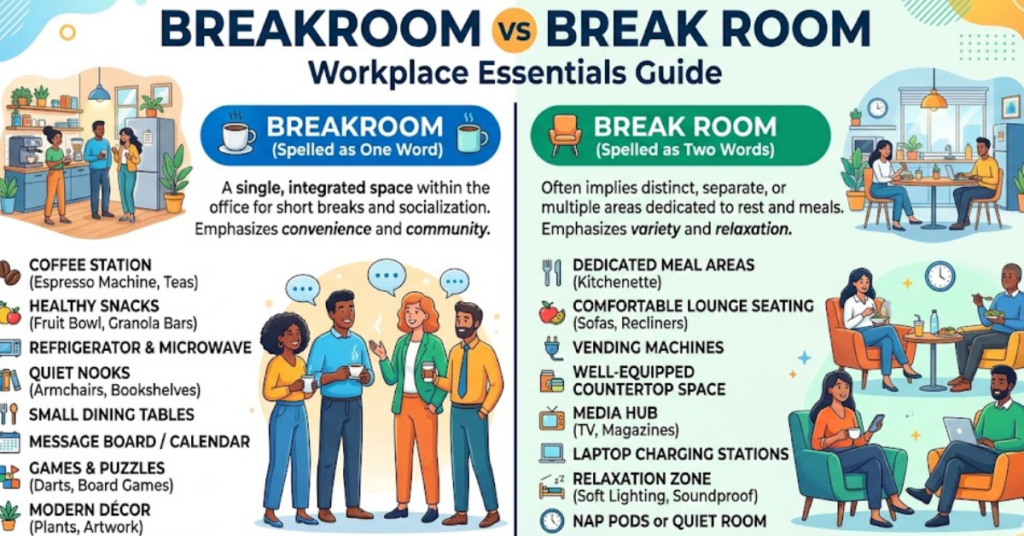
Both are correct. “Breakroom” is commonly used in American English, while “break room” is the spaced version.
4. How does a breakroom or break rooms improve productivity?
It helps employees take mental breaks, reducing stress and improving focus when they return to work.
5. Can small offices have a breakrooms or break rooms?
Yes, even small offices can create a simple breakroom or break room using compact furniture and a designated corner.
Conclusion
A breakroom or break room is more than just a workplace perk—it’s an essential part of a healthy work environment. When designed thoughtfully, it improves productivity, strengthens team relationships, and supports employee well-being.
Whether you’re planning a new office or upgrading an existing space, investing in a better breakroom or break room is always worth it. Even small improvements can lead to a more motivated and happier workforce.
If you’re interested in workplace design ideas, employee wellness strategies, or office productivity tips, exploring related topics can help you create a more effective and engaging work environment.