
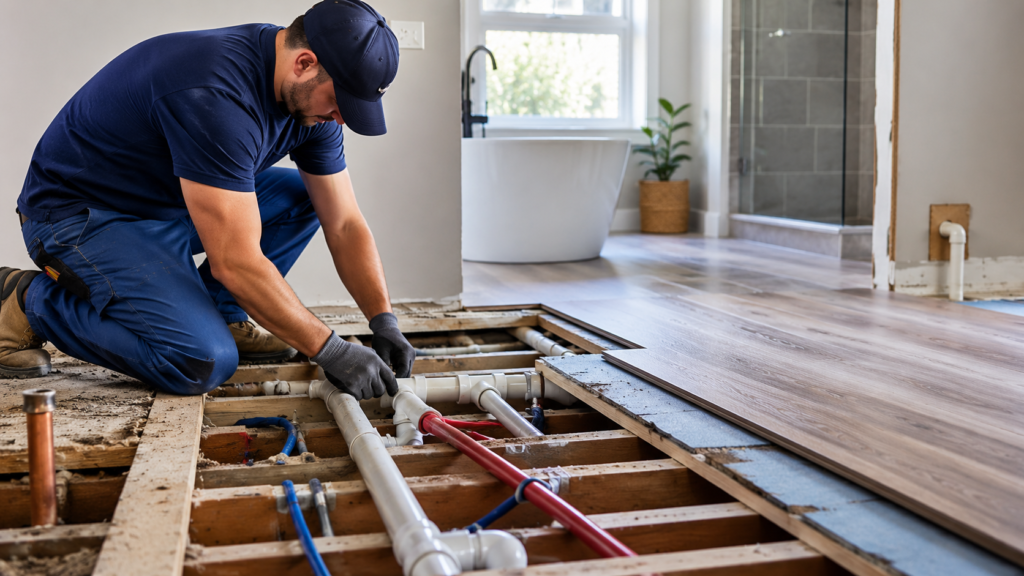

New flooring can change the look and feel of a room, but plumbing conditions beneath and around that floor can affect the whole project. Kitchens, bathrooms, laundry rooms, basements, and utility spaces often have pipes, drains, shutoff valves, toilets, sinks, water heaters, or appliances connected near the flooring area. Plumbing services help prepare these systems before flooring begins so leaks, loose fittings, old valves, and hidden moisture do not damage new materials. Checking plumbing early also helps prevent delays once installers arrive and keeps the finished floor protected from avoidable water problems.
What Preparation Covers
- Leak Checks Protect New Flooring Materials
Plumbing services help protect new flooring by checking for leaks before old flooring is removed or new material is installed. A small drip under a sink, around a toilet base, behind a dishwasher, or near a washing machine may not seem serious at first. Still, it can ruin wood, laminate, vinyl, tile backing, grout, or underlayment after installation. Moisture can also remain hidden beneath the surface and lead to swelling, odors, soft spots, or mold issues. A plumber can inspect supply lines, drain connections, shutoff valves, fixture seals, and exposed pipes to make sure the area is dry and ready. Homeowners planning larger home upgrades may also compare related support such as HVAC and Air Conditioning Services in San Clemente while coordinating work that affects comfort, flooring, and utility spaces. Finding plumbing issues early keeps the flooring project from covering up a problem that should be repaired first.
- Fixtures May Need Careful Removal and Resetting
Many flooring projects require toilets, vanities, appliances, or laundry equipment to be moved before the floor can be installed correctly. Plumbing services help with this step by safely disconnecting fixtures, protecting supply lines, capping connections as needed, and reinstalling everything after the floor is finished. This is important because forcing flooring around a toilet or vanity can leave awkward cuts, gaps, or weak edges that may collect water later. Toilets are especially important because the wax ring or seal must sit properly after the new floor height changes. If the finished floor is higher or lower than before, the flange may need adjustment to prevent leaks at the base. Dishwashers, refrigerators with water lines, and washing machines also need careful handling to prevent hoses from being kinked, crushed, or left loose behind the finished surface. Proper plumbing preparation helps the flooring installer work more cleanly and yields a more secure finished room.
- Pipe and Valve Conditions Should Be Reviewed
New flooring is a good time to review the plumbing parts that are often ignored until something fails. Shutoff valves under sinks, behind toilets, and near appliances can become stiff, corroded, or unreliable over time. If a valve does not close fully, a future repair may become harder and may risk water damage to the new floor. Plumbing services can test these valves, replace weak parts, and check visible pipe sections before flooring limits access. In some homes, old supply lines or drain fittings may also need replacement because they show wear, mineral buildup, or signs of seepage. This review is especially helpful in older bathrooms, laundry areas, and kitchens where flooring work may expose areas that are usually hidden. Addressing worn plumbing during the project prevents the homeowner from having to disturb the new floor later. It also creates a stronger connection between the finished surface and the surrounding water systems.
- Floor Height Changes Can Affect Plumbing Connections
Different flooring materials have varying thicknesses, and even a small change in height can affect plumbing connections. Tile with backer board may raise the floor, while removing old layers may lower it. Plumbing services can help make sure toilets, floor drains, appliance lines, and fixture connections still fit properly after these changes. A toilet flange that sits too low may not seal well, while one that sits too high can make the toilet unstable. Floor drains may need to be extended or adjusted so water flows properly without pooling near the surface. Appliances may also need room for hoses and drain lines after the new floor is installed. A plumber can coordinate with flooring installers so plumbing parts are not buried, blocked, or left uneven. This planning helps avoid leaks, rocking fixtures, slow drainage, and difficult future repairs. When floor height and plumbing are planned together, the finished project works better and looks cleaner.
Early Plumbing Work Prevents Later Damage
Plumbing services help prepare the plumbing for new flooring projects by locating leaks, removing fixtures, checking valves, and adjusting connections before the finished surface is installed. This preparation matters because water problems can quickly damage flooring materials and create costly repairs. It also helps installers work without cutting corners around toilets, sinks, drains, and appliances. A new floor should not hide weak plumbing beneath it. When the plumbing is reviewed first, the project has a safer foundation, fewer surprises, and a stronger chance of lasting results. Careful preparation keeps the new floor protected from the systems running around and beneath it.