
Long-lasting wall coverage depends on more than applying paint to a surface. Walls need cleaning, repair, priming, proper product selection, and careful application before the finish can hold up well. Without the right preparation, paint may peel, fade, crack, stain, or look uneven sooner than expected. Painting contractors help achieve better results by evaluating wall conditions, correcting surface flaws, and applying coatings to support durability. Their work helps homeowners protect interiors, improve appearance, and reduce the need for frequent repainting.
Coverage That Lasts
Preparing Walls Before Paint Is Applied
Painting contractors matter because wall coverage begins with preparation, not with the first coat of paint. Dust, grease, old paint, nail holes, cracks, water marks, and uneven patches can all affect how paint bonds to the wall. If these problems are ignored, the finished surface may look uneven or begin failing earlier than expected. Contractors can clean walls, sand rough areas, patch damaged spots, caulk gaps, and remove loose material before painting begins. Homeowners reviewing https://highfillpainting.com/service-areas/chesterfield/ may better understand how local painting support can help create smoother, more durable wall coverage. Preparation also helps paint absorb evenly, which reduces streaks, dull patches, and visible roller marks. When the wall surface is stable and clean, paint can hold better and look more polished. This early work may take time, but it is one of the main reasons a painted wall stays attractive longer.
Choosing the Right Paint for Each Room
Different rooms place different demands on painted walls, so product choice matters. A hallway may need paint that handles scuffs and frequent contact, while a bathroom may need a finish that tolerates moisture and regular cleaning. Kitchens often face cooking residue, steam, and fingerprints, while bedrooms may need a softer look with less shine. Painting contractors can help match paint type, sheen, and primer to the room’s use, lighting, and wall condition. Choosing the wrong product can lead to early fading, poor coverage, staining, or difficulty cleaning the surface later. Contractors also understand how darker colors, lighter colors, and existing wall shades affect coverage needs. Some walls require stain-blocking primer, while others may need multiple coats for a consistent result. When the correct materials are used from the start, the paint finish is more likely to resist wear, maintain color, and stay easier to care for over time.
Applying Coats With Even Technique
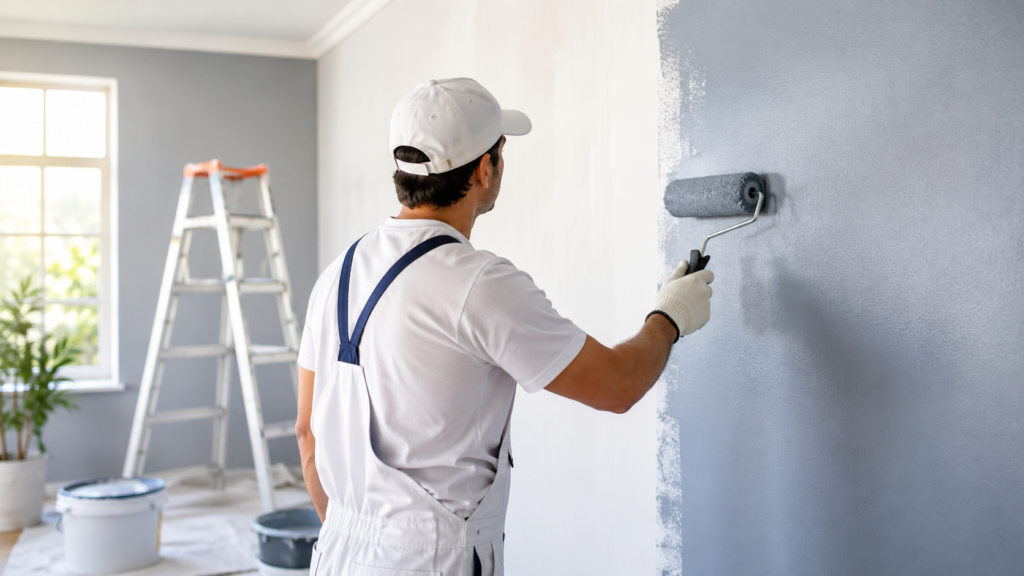
Long-lasting wall coverage depends heavily on how the paint is applied. Uneven rolling, thin coats, poor edge work, and rushed drying times can all affect the final result. Painting contractors use steady methods to apply paint at the right thickness and allow each coat to dry properly before the next layer is added. This helps prevent lap marks, patchy color, peeling, bubbling, and weak coverage. They also know how to cut clean lines around trim, ceilings, windows, outlets, and corners, which gives the room a more finished appearance. Proper technique matters because walls are viewed from different angles and under changing light throughout the day. A rushed job may look acceptable at first but reveal flaws later. Careful application helps the paint form a stronger, more uniform surface. This supports better durability and makes the room feel cleaner, brighter, and more carefully maintained.
Repairing Hidden Surface Problems
Painting contractors can also identify wall problems that may not be obvious before the project begins. Hairline cracks, loose joint compound, previous patchwork, stains, moisture marks, and weak drywall areas can affect how paint performs. If paint is applied over these issues without repair, the same flaws may return through the new finish. Contractors can address these concerns before painting, helping the surface become more stable. This is especially important in older homes, high-traffic areas, or rooms that have gone through repairs, leaks, furniture damage, or repeated repainting. Proper repair helps the new paint look consistent instead of highlighting old marks. It also reduces the chance of peeling or cracking caused by weak material beneath the surface. By treating the wall as a complete system, contractors help the paint last longer and protect the room from repeated touch-ups.
Saving Time and Reducing Repainting Needs
Hiring painting contractors can save time because the work is planned, prepared, and completed with fewer delays. Painting a room may seem simple, but moving furniture, protecting floors, taping edges, repairing walls, priming, painting, cleaning up, and waiting between coats can take longer than expected. Contractors manage these steps in an organized way, which reduces disruption inside the home. More importantly, proper work can reduce the need for frequent repainting. A poorly prepared or thinly painted wall may need touch-ups within a short time, while stronger coverage can hold up through daily use. This is valuable in homes with children, pets, guests, busy hallways, or rooms that see regular cleaning. Better coverage protects the homeowner’s time and budget because the finish stays attractive longer. A well-painted wall does not only improve the room today; it helps maintain that improvement over many seasons.
Conclusion
Hiring painting contractors matters for long-lasting wall coverage because durable results depend on preparation, product choice, wall repair, and even application. Paint that is applied over dirty, damaged, or poorly primed surfaces may fail quickly, even if the color looks good at first. Contractors help create a cleaner foundation, stronger adhesion, smoother coats, and better protection against daily wear. Their work can reduce peeling, fading, stains, patchiness, and early repainting. For homeowners who want walls that remain attractive and easier to maintain, careful painting support can make a lasting difference.