
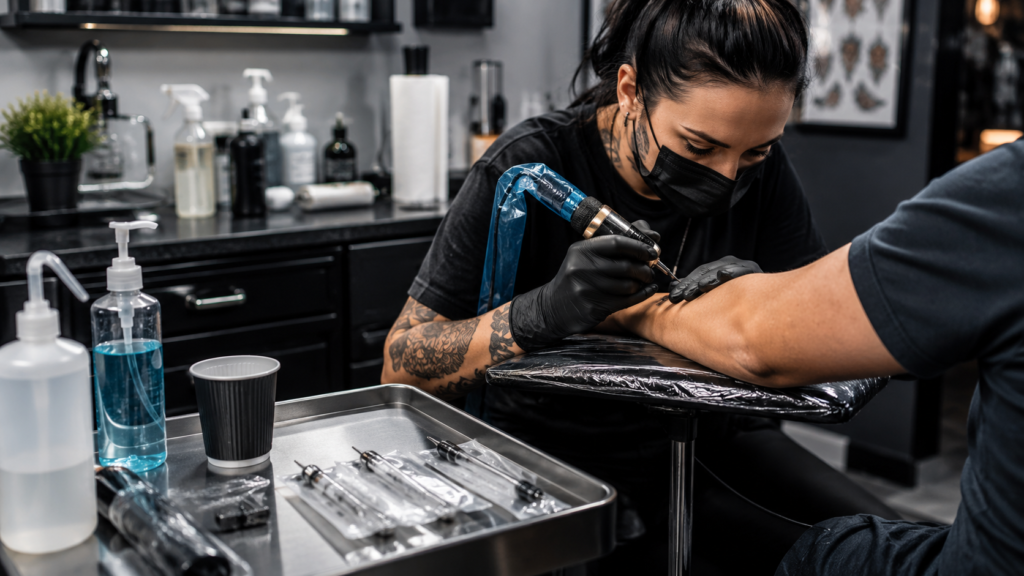

Maintaining hygiene and safety in tattoo and piercing shops is crucial because both services involve breaking the skin and exposing clients to potential infections. Unclean surfaces, improperly sterilized tools, or unsafe handling of needles can transmit bacteria, viruses, or other pathogens. Shops that prioritize sanitation build trust, ensure client safety, and protect staff from occupational hazards. Daily cleaning, use of disposable gloves, and properly managed waste disposal all contribute to maintaining a safe environment. Hygiene protocols help prevent complications, protect public health, and ensure that clients receive services in a clean, controlled, and professional setting.
Sterilization and Equipment Safety
- Ensuring Tools Are Safe and Sterile
Tattoo and piercing shops follow strict sterilization procedures to reduce the risk of infection. Needles, tubes, grips, and other instruments are either single-use or thoroughly sterilized using autoclaves or chemical disinfectants. Workstations and surfaces are disinfected regularly to eliminate bacteria or viral contaminants. Professionals often wear gloves and masks to prevent cross-contamination, changing them between clients or procedures. Homeowners and clients searching for reputable services might look to https://platinumink.net/ for an example of adherence to high hygiene standards. Staff are trained in the proper handling of equipment, ensuring that tools remain sterile until use. Proper sterilization procedures prevent the transmission of bloodborne pathogens and maintain the integrity of the services offered, which is critical for client safety and the shop’s compliance with regulations.
- Single-Use Items and Disposal
Many supplies in tattoo and piercing shops are designed for one-time use, including needles, ink caps, gloves, razors, and swabs. These items are disposed of in accordance with medical waste guidelines to prevent contamination and accidental exposure. Single-use items eliminate the risk of transmitting bacteria or viruses between clients, ensuring each procedure begins with fresh, sterile equipment. Disposal includes sealed containers for sharps, secure bags for contaminated materials, and compliance with local hazardous waste regulations. Adhering to these protocols is essential not only for client safety but also for compliance with health department inspections. Proper management of disposable materials protects both staff and visitors while maintaining a safe, professional environment.
- Surface Disinfection and Workstation Management
Workstations are high-contact areas that can harbor contaminants if not properly disinfected. Tattoo and piercing shops maintain rigorous cleaning schedules, wiping down tables, chairs, counters, and lighting fixtures with approved disinfectants. Items that are frequently handled, such as pens, clips, and tool trays, are sanitized after each client. Floors and waiting areas are cleaned regularly to minimize the accumulation of bacteria and dust. Maintaining organized and sanitized workstations ensures that procedures occur in a controlled environment, reducing the likelihood of accidental contamination. Staff training reinforces the importance of consistency, emphasizing that every surface in the shop should be clean and ready for the next client, contributing to a professional, safe experience.
- Hand Hygiene and Protective Gear
Staff in tattoo and piercing shops follow strict hand hygiene procedures, washing hands thoroughly before and after each procedure. Gloves are changed frequently, and masks may be worn to reduce the spread of respiratory droplets. Protective clothing, aprons, and sometimes face shields help prevent contact with fluids, ink, or other contaminants. Training on proper donning and doffing of protective gear ensures that items are used correctly and do not introduce contamination. Maintaining personal hygiene and wearing appropriate protective equipment reduce the risk of infection for both clients and technicians. Consistently following these measures is an essential component of hygiene standards, fostering a culture of safety and accountability within the shop.
- Ink and Material Safety
Tattoo inks, piercing jewelry, and other materials are sourced and handled carefully to avoid contamination. Inks are stored under sterile conditions, and caps are prepared individually for each client. Jewelry is sterilized before use or comes pre-packaged in sterile conditions. Staff check materials for expiration dates, damage, or signs of contamination before use. Proper material handling ensures that clients are not exposed to foreign pathogens or harmful substances. By maintaining meticulous standards for inks and jewelry, shops minimize the risk of adverse reactions or infections. This attention to detail also reassures clients that the products used in procedures meet safety standards and are handled responsibly.
- Client Preparation and Aftercare
Maintaining safety extends beyond the procedure itself. Tattoo and piercing shops educate clients on pre-procedure preparation, including cleaning the area and avoiding medications or substances that may affect healing. Aftercare instructions are provided to prevent infection and support proper healing, including keeping the area clean, avoiding water submersion, and recognizing signs of infection. Proper client education reduces complications and helps ensure a positive experience. By emphasizing aftercare and hygiene, technicians enhance the effectiveness of their sterilization and procedural efforts, supporting long-term client health and satisfaction. Guidance on aftercare reinforces the importance of maintaining safety standards outside of the shop environment.
Hygiene and Safety Are Central to Client Protection
Tattoo and piercing shops maintain hygiene and safety through a combination of sterilization, single-use items, surface disinfection, protective gear, careful material handling, client education, recordkeeping, and ongoing training. Each element plays a role in preventing infection, contamination, and complications during and after procedures. Consistently following these measures ensures that clients receive safe, reliable services while supporting regulatory compliance. Professional attention to cleanliness and safety protects both clients and staff, fosters trust, and maintains the integrity of the shop. For clients, this commitment creates confidence that every procedure is conducted under controlled, hygienic conditions.