
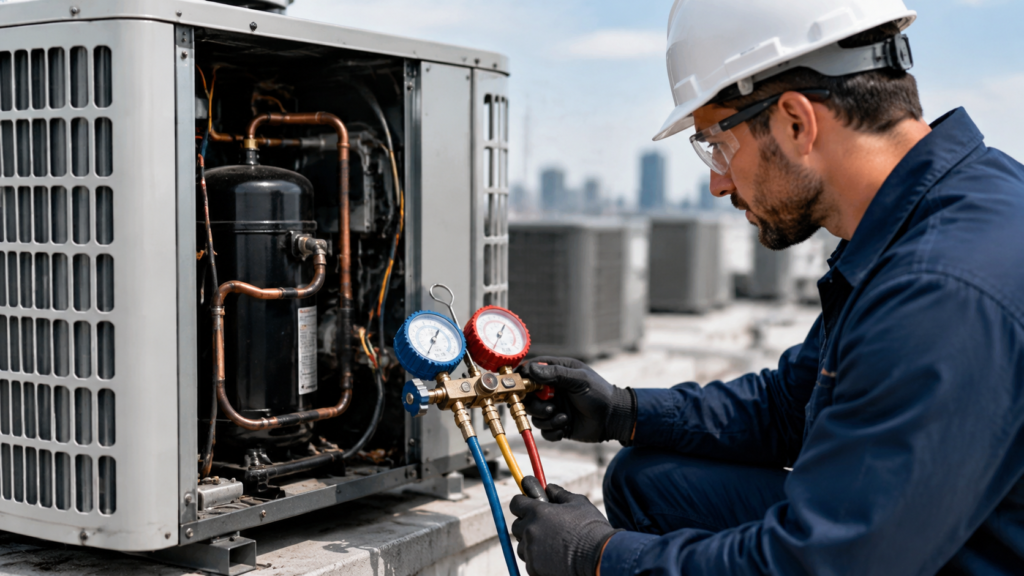

Refrigerant and compressor inspections are critical components of a comprehensive HVAC maintenance plan. These elements directly influence the cooling efficiency and overall performance of an air conditioning system. The refrigerant is the medium through which heat is absorbed and released, while the compressor serves as the mechanical pump that circulates the refrigerant through the system. Any loss of refrigerant, leakage, or compressor malfunction can reduce system performance, increase energy consumption, and lead to premature wear. Regularly scheduled inspections ensure these components function correctly, allowing for early detection of issues before they escalate into costly repairs or complete system failure. Technicians monitor pressure levels, check for leaks, and assess the compressor’s operational integrity to maintain optimal HVAC performance and efficiency. Preventive attention to these critical components prolongs the system’s life and safeguards indoor comfort.
Understanding the Role of Refrigerant and Compressors
- Timing and Frequency for Inspections
HVAC systems require periodic inspection to maintain optimal efficiency and prevent breakdowns, including the refrigerant and compressor. These inspections are particularly necessary before seasonal high-demand periods, such as the start of summer or winter, when air conditioning or heating systems are likely to be in peak use. Checking refrigerant levels ensures the system maintains proper cooling capacity, while inspecting the compressor verifies it is operating without strain or unusual wear. Homeowners in areas like Elk Grove, CA benefit from timely inspections because extreme weather can intensify system demands, making early maintenance crucial. Scheduling regular inspections also prevents the gradual accumulation of minor issues that could reduce efficiency or result in higher energy bills. Technicians can adjust refrigerant levels, replace worn components, and confirm proper system pressures, ensuring consistent operation throughout the season. Strategic planning for inspections saves homeowners time, money, and discomfort by preventing unexpected failures.
- Indicators Your System Needs Attention
Several signs indicate refrigerant or compressor issues may require attention. Homeowners might notice uneven cooling, longer run times, higher utility bills, or strange noises coming from the system. Reduced airflow or inconsistent indoor temperatures can signify low refrigerant levels or a struggling compressor. In some cases, visible leaks or ice formation on coils can further indicate a problem. When any of these signs appear, an HVAC contractor should conduct a thorough inspection to determine the cause and prevent further deterioration. Timely detection allows for quick repairs or adjustments, avoiding costly emergency service calls. Addressing issues early also preserves indoor air quality and comfort, as poorly performing systems can fail to maintain consistent humidity or temperature. Regular monitoring and professional inspection provide the preventative care necessary to maintain system reliability and efficiency.
- Preventive Benefits of Regular Maintenance
Including refrigerant and compressor checks in routine HVAC maintenance provides significant preventive advantages. By regularly assessing the system, technicians can identify leaks, worn parts, or inefficiencies before they compromise the unit’s performance. Proper refrigerant levels ensure the system does not overwork, which reduces stress on the compressor and other components. A healthy compressor operates efficiently, minimizing energy consumption and lowering utility costs. Preventive inspections also help avoid emergency breakdowns during periods of high demand, which can be disruptive and expensive. Technicians can provide guidance on when system components are nearing the end of their useful life, enabling proactive replacement or servicing. Consistent maintenance fosters reliable operation, extends the HVAC system’s lifespan, and safeguards the homeowner’s investment in comfort and energy efficiency over the long term.
- Technical Process of Inspections
The inspection process for refrigerant and compressors involves a combination of visual assessments, mechanical testing, and diagnostic evaluation. Technicians begin by examining the system for leaks, corrosion, or damaged components. Refrigerant pressures are measured to ensure they align with manufacturer specifications, while the compressor is evaluated for noise, vibration, and electrical performance. Advanced diagnostic tools may be employed to detect subtle inconsistencies that could indicate developing issues. During these inspections, contractors also check for correct airflow, proper temperature differentials, and overall system responsiveness. Any discrepancies are addressed promptly through adjustments, recharging refrigerant, or replacing malfunctioning components. Proper inspection and maintenance protect the system from failure, enhance energy efficiency, and ensure that both cooling and heating capacities meet the demands of the home or business consistently throughout the year.
- Cost-Effectiveness of Early Detection
Scheduling refrigerant and compressor inspections before problems worsen saves homeowners high costs in the long term. Catching minor leaks or mechanical irregularities early prevents extensive damage to the system that would otherwise require costly repairs or full replacement. Maintaining proper refrigerant levels allows the system to operate efficiently, reducing electricity usage and lowering energy bills. A well-maintained compressor experiences less wear and tear, reducing the likelihood of sudden failure and emergency service expenses. Preventive attention also helps avoid collateral damage, such as frozen coils or overheating components, which can further escalate repair costs. Investing in routine inspections is therefore a financially responsible strategy that protects both the homeowner’s comfort and the HVAC system’s durability, while enhancing long-term operational efficiency and reliability.
- Seasonal Planning and Preparedness
For homeowners, planning HVAC inspections around seasonal changes is critical. Before the summer or winter peak, systems face increased demand, making any underlying issue more likely to cause significant inconvenience. Contractors include refrigerant and compressor checks as part of this pre-season maintenance to ensure the system is ready to handle extreme temperatures. Proper planning also allows for scheduling repairs or part replacements without the stress of emergency calls. Technicians can recommend adjustments to improve efficiency and balance, ensuring consistent performance across all zones in a home or building. Seasonal inspections are a proactive approach to system management, preventing mid-season failures, maintaining a stable, comfortable environment, and reducing unexpected maintenance costs and energy consumption throughout the year.
- Extending System Lifespan
Refrigerant and compressor inspections directly contribute to the long-term durability of an HVAC system. Compressors are one of the most expensive components of an air conditioning unit, and overworking them due to low refrigerant or unnoticed mechanical issues can significantly reduce their operational lifespan. Regular inspections allow technicians to identify and correct these issues early, preserving the integrity of the system. Balanced refrigerant levels prevent stress on the compressor, while proper lubrication and alignment reduce wear. By addressing small problems before they escalate, homeowners can avoid premature system failure and maintain optimal performance over many years. Routine inspections therefore serve as both a protective measure and an investment in the longevity of the entire HVAC system.
Refrigerant and compressor inspections are essential components of proactive HVAC maintenance. Including these evaluations in routine servicing ensures that systems operate efficiently, maintain consistent performance, and prevent costly breakdowns. Early detection of leaks, worn components, or mechanical issues protects the compressor from excessive wear and reduces energy consumption. Scheduling inspections before seasonal demand ensures that systems are prepared for heavy use, maintaining comfort and reliability throughout the year. By working with HVAC contractors to prioritize these checks, homeowners safeguard the longevity of their systems, optimize operational efficiency, and reduce the likelihood of unexpected failures, ultimately protecting both their comfort and financial investment.