
Scroll through social media or watch any popular movie, and you’ll likely notice a certain “look” that keeps showing up. That’s where the idea of what does conventionally attractive mean comes into play. In simple terms, it refers to physical features that society widely considers appealing at a given time.
But there’s more to it than just looks. Beauty standards are shaped by culture, media, and even history. In this article, we’ll break down what “conventionally attractive” really means, why it matters, and how these standards continue to evolve.
What Does Conventionally Attractive Mean?
At its core, conventionally attractive describes a person whose appearance aligns with widely accepted beauty standards in a particular society.
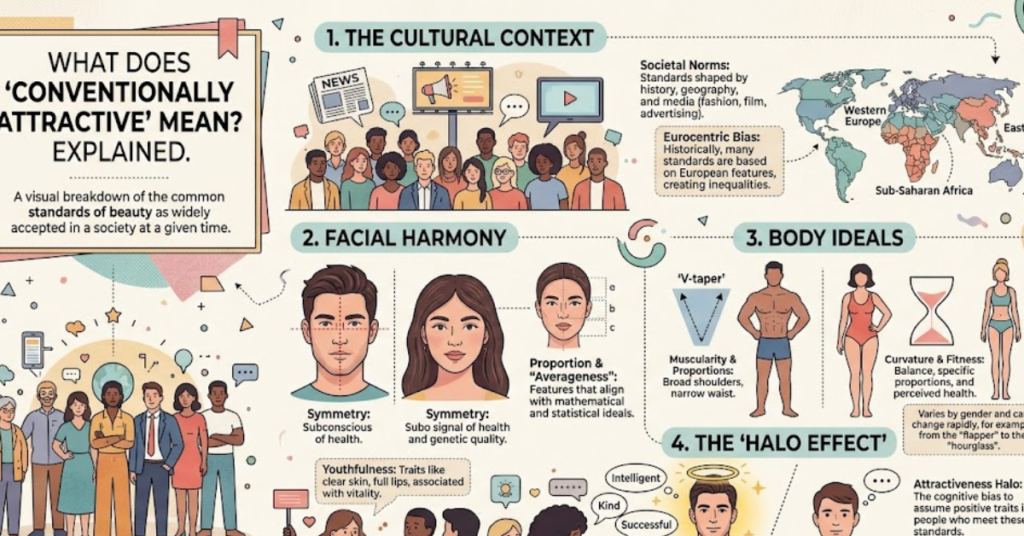
These standards aren’t universal—they vary depending on culture, era, and social influences. However, they often share common traits such as symmetry, clear skin, and features considered “balanced.”
Common Traits Associated with Conventional Attractiveness
While definitions differ, some commonly cited features include:
- Symmetrical facial structure
- Clear, smooth skin
- Proportionate body shape
- Well-groomed appearance
- Features that align with current fashion or beauty trends
These traits are often reinforced by media, advertising, and celebrity culture.
How Beauty Standards Are Formed
To fully understand what does conventionally attractive mean, it helps to look at how these standards develop.
1. Media Influence
Movies, TV shows, and social media platforms play a major role in shaping what people consider attractive. Repeated exposure to certain looks creates a sense of familiarity—and often preference.
2. Cultural Norms
Different cultures prioritize different features. For example:
- In some cultures, lighter skin is idealized
- In others, curvier body types are celebrated
- Certain facial features may be more valued in specific regions
3. Historical Trends
Beauty standards change over time. What was considered attractive in the 1920s may look completely different today.
4. Psychology and Biology
Humans are naturally drawn to certain features, such as symmetry, because they may signal health and genetic fitness.
Conventional Attractiveness vs. Personal Attractiveness
It’s important not to confuse societal standards with individual preferences.
Key Differences
- Conventional Attractiveness: Based on widely accepted norms
- Personal Attractiveness: Based on individual taste and emotional connection
Someone may not fit traditional beauty standards but still be incredibly attractive to others.
Why the Concept Matters
Understanding what does conventionally attractive mean isn’t just about appearance—it has real-world implications.
Social Advantages
Studies suggest that people considered conventionally attractive may experience:
- Better first impressions
- Increased confidence from positive feedback
- More opportunities in certain industries
The Downside
However, these standards can also:
- Create unrealistic expectations
- Lower self-esteem
- Promote comparison and insecurity
The Role of Social Media in Modern Beauty Standards
Platforms like Instagram and TikTok have amplified conventional beauty ideals—but they’ve also started to challenge them.
Positive Changes
- Greater representation of diverse body types
- Rise of “authentic” and unfiltered content
- Conversations around self-acceptance
Ongoing Challenges
- Filters and editing tools can distort reality
- Viral trends may reinforce narrow standards
Is Conventional Attractiveness Changing?
Yes—and faster than ever.
Today’s beauty standards are becoming more inclusive, embracing diversity in:
- Skin tones
- Body shapes
- Facial features
- Gender expression
While conventional attractiveness still exists, it’s no longer as rigid as it once was.
FAQs
1. What does conventionally attractive mean in simple terms?
It means having physical features that society generally considers good-looking or appealing.
2. Is being conventionally attractive important?
It can influence first impressions, but it’s not the only factor in relationships, success, or happiness.
3. Can someone be attractive without being conventionally attractive?
Absolutely. Personal attraction varies widely and often goes beyond physical appearance.
4. Do beauty standards change over time?
Yes, beauty standards evolve based on cultural shifts, media influence, and social values.
5. How can I feel confident if I don’t fit beauty standards?
Focus on self-care, personal style, and strengths beyond appearance. Confidence often comes from within, not external validation.
Conclusion
So, what does conventionally attractive mean? It refers to a set of physical traits that society tends to favor—but those standards are far from fixed. They shift with time, culture, and changing perspectives.
While conventional attractiveness can influence how people are perceived, it’s only one piece of a much bigger picture. Real attractiveness includes personality, confidence, and authenticity—qualities that no trend can define.