
When reconnecting with someone after a while, one common phrase you’ll hear is how have you been. It’s simple, friendly, and widely used in both casual and professional conversations. But many people still wonder about its exact meaning, when to use it, and the best way to respond.
This guide explains the phrase in plain language, offers natural replies, and shows how to use it confidently in everyday communication.
What Does This Phrase Mean?
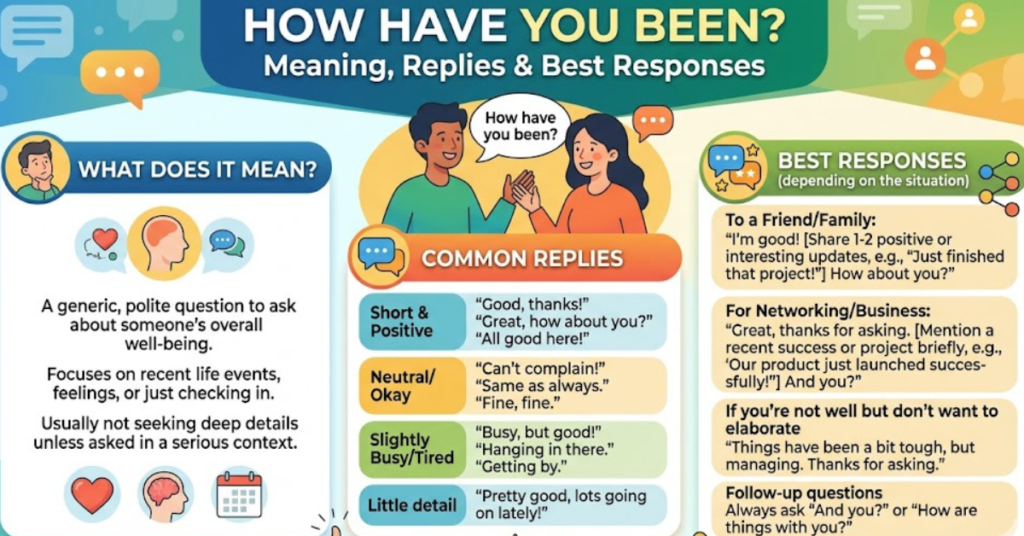
This expression is used to ask about someone’s well-being over a period of time. Unlike “How are you,” it focuses on what’s happened recently.
It usually implies:
- You haven’t spoken in a while
- You’re genuinely interested in updates
- The tone is friendly and conversational
Example:
- “Hey, it’s been a long time. How have you been?”
Difference Between “How Are You” and This Greeting
Understanding the difference helps you respond naturally.
| Phrase | Purpose | Usage |
| How are you | Present moment | Daily greeting |
| How have you been | Recent past to present | Reconnecting |
The longer version, “how have you been doing,” adds extra warmth and concern.
How to Answer Naturally
If someone asks you this question, keep your response short and friendly.
Positive Replies
- “I’ve been great, thanks!”
- “Doing well. Just busy with work.”
- “Pretty good lately.”
Neutral Replies
- “Not bad, just the usual.”
- “I’ve been okay.”
- “Same as always.”
Honest Replies
- “It’s been a bit hectic, but good.”
- “Busy few weeks, but I’m managing.”
Tip: Add “How about you?” to keep the conversation flowing.
Professional Response Examples
In workplace settings, keep it polite and concise.
- “I’ve been well, thank you.”
- “Doing well and staying busy.”
- “Everything’s going smoothly.”
These responses sound natural in meetings or emails.
Casual and Friendly Responses
When chatting with friends, you can be more relaxed:
- “Good! What’s new with you?”
- “Busy but happy.”
- “Life’s been treating me well.”
- “Can’t complain.”
These feel more conversational and warm.
Translation in Spanish
If you’re learning languages, here’s the equivalent in Spanish:
- ¿Cómo has estado? (informal)
- ¿Cómo ha estado? (formal)
Example:
“Hola, ¿cómo has estado?”
Translation: “Hi, how have you been?”
When to Use This Question
Use it when:
- Reconnecting after weeks or months
- Messaging someone you haven’t seen
- Starting a friendly conversation
- Catching up with colleagues
Avoid it when:
- You just spoke recently
- The situation is urgent
Real Conversation Examples
- Friend: “Hey! Long time.”
You: “I’ve been good, just working a lot.” - Colleague: “Nice to see you again.”
You: “Doing well, thanks.” - Text message:
“Hi! It’s been a while — hope you’re doing well.”
Tips to Sound More Natural
- Keep answers short
- Add one small detail
- Ask back
- Match the other person’s tone
Example:
“I’ve been good. Started a new project recently. You?”
FAQs
Is this phrase formal or informal?
It’s semi-formal and works in both casual and professional conversations.
What is the best response?
“I’ve been good, thanks! How about you?” is the safest option.
Can I use it in emails?
Yes, especially when reconnecting with someone.
Is it different from “How are you”?
Yes, it asks about recent experiences instead of the present moment.
What if I don’t want to share details?
A simple “I’ve been okay” works perfectly.
Conclusion
Understanding this common greeting helps you communicate more naturally and confidently. Whether you’re reconnecting with a friend, replying in a professional setting, or learning English, knowing how to respond makes conversations smoother.
Keep your reply short, friendly, and genuine — and always return the question to keep the discussion going. That’s the easiest way to sound natural and engaging.