
Ever seen someone post “LMS if you agree” or “LMS for a shoutout” and wondered what it actually means? You’re not alone. The phrase “what does LMS mean in text” is searched frequently because this short acronym pops up everywhere—from casual chats to Instagram captions.
In simple terms, LMS usually stands for “Like My Status.” But depending on context, it can carry slightly different meanings. This guide breaks down everything you need to know, including how it’s used in text messages, slang, and social media platforms like Instagram.
What Does LMS Mean in Text?
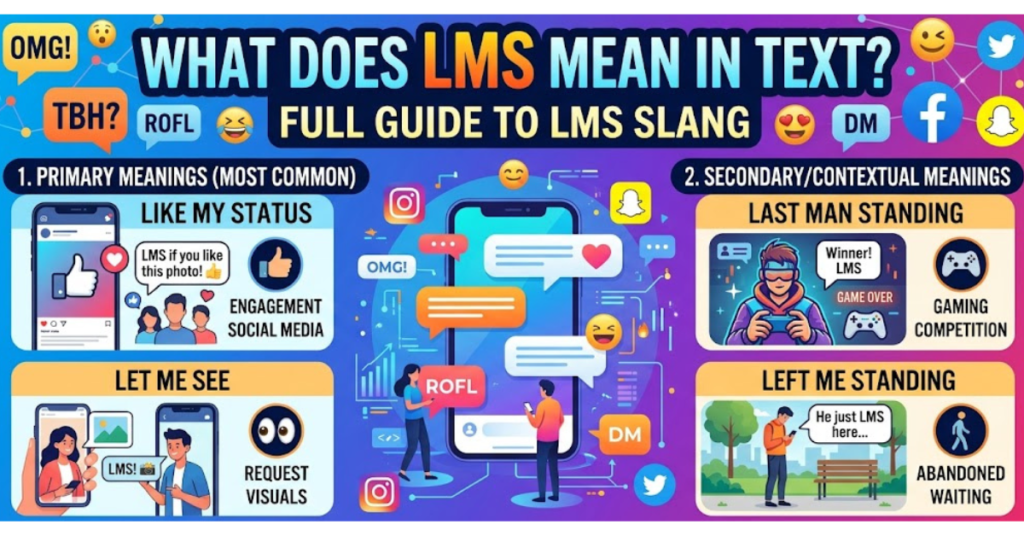
The most common meaning of LMS in text is:
LMS = Like My Status
It’s a quick way for someone to ask others to engage with their post, photo, or update. You’ll typically see it on social media platforms rather than in one-on-one conversations.
Example:
- “Feeling bored… LMS if you’re up!”
- “New pic! LMS”
In both cases, the person is encouraging others to like their post or interact with it.
What Does LMS Mean in Text Message?
When used in a text message, LMS still generally means “Like My Status,” but it can feel slightly out of place since texting doesn’t always involve “liking” posts.
In direct messages, it may instead imply:
- Asking for support or attention
- Encouraging interaction (similar to social media behavior)
Example:
- “Hey, I posted something important—LMS!”
Here, the sender wants you to go check and engage with their update.
What Does LMS Mean in Text Slang?
In text slang, LMS is part of a broader trend of short, engagement-driven acronyms. While “Like My Status” is the dominant meaning, slang can evolve, and occasionally LMS may mean:
- Let Me See (rare, context-specific)
- Love My Stuff (very uncommon)
Still, in 99% of cases, especially among younger users, LMS = Like My Status.
What Does LMS Mean in Text on Instagram?
On Instagram, LMS is widely used as a call-to-action. It’s often paired with offers, questions, or interactive posts.
Common Instagram Uses:
- “LMS for a follow back”
- “LMS if you agree”
- “LMS and I’ll DM you”
Why People Use LMS on Instagram:
- Boost engagement likes, visibility
- Connect with followers
- Promote posts or profiles
It’s essentially a quick way to increase interaction and reach.
How to Respond to LMS
If someone uses LMS, your response depends on your interest level.
You can:
- Like their post most common response
- Comment or engage further
- Ignore it if you’re not interested
Example Replies:
- “Liked it”
- “Done! Nice post”
- “What’s this for?”
When Should You Use LMS?
Using LMS can be effective—but only in the right context.
Best Situations:
- Promoting a new post
- Increasing engagement on social media
- Running informal polls or interactions
Avoid Using LMS:
- In professional or formal communication
- In serious conversations
- Overusing it (can feel spammy)
Related Slang Terms LSI Keywords
Understanding LMS becomes easier when you know similar slang:
- DM – Direct Message
- TBH – To Be Honest
- SMH – Shaking My Head
- FOMO – Fear of Missing Out
- ICYMI – In Case You Missed It
These acronyms often appear alongside LMS in social media conversations.
FAQs
1. What does LMS mean in text?
It usually means “Like My Status,” asking others to engage with a post.
2. What does LMS mean in text message?
In text messages, it still means “Like My Status,” though it’s more commonly used on social media.
3. What does LMS mean in text slang?
In slang, LMS almost always stands for “Like My Status.” Other meanings are rare.
4. What does LMS mean in text on Instagram?
On Instagram, LMS is used to boost engagement, like asking followers to like a post or interact.
5. Is LMS still popular?
Yes, especially among younger users and on platforms like Instagram, Snapchat, and Facebook.
Conclusion
So, what does LMS mean in text? In most cases, it simply stands for “Like My Status.” Whether it’s used in a casual message or an Instagram caption, the goal is the same: to encourage interaction.
Understanding acronyms like LMS helps you stay in the loop and communicate more naturally online. If you’re active on social media, you’ll likely see—and maybe even use—it regularly.