

Have you ever seen the terms signer and signor used in legal papers, bank forms, or contracts and wondered whether they mean the same thing? You’re not alone. The confusion around signer or signor is surprisingly common, especially in banking and legal documents where one letter can completely change the meaning.
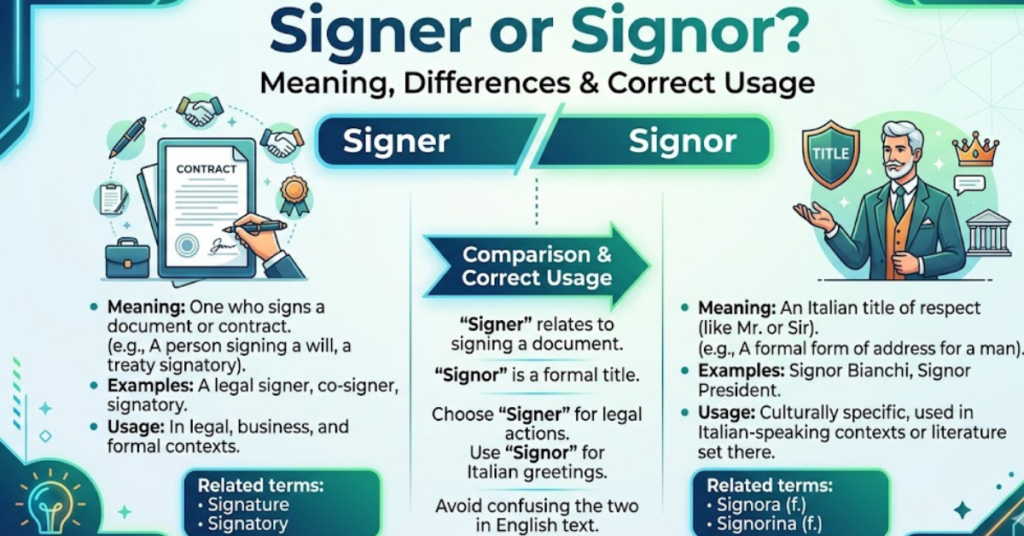
The truth is simple: “signer” and “signor” are different words with different purposes. One refers to a person who signs documents, while the other is an Italian title similar to “Mr.” Understanding the distinction can help you avoid mistakes in contracts, checks, account paperwork, and official communication.
In this guide, we’ll break down the meaning of each term, explain common banking and legal uses, and answer popular questions such as “is it signer or signor?” and “authorized signer or signor?”
What Does “Signer” Mean?
A signer is a person who signs a document, agreement, check, or legal form. The term is commonly used in business, finance, banking, and law.
Examples of “Signer” in Sentences
- The contract requires the signer’s full legal name.
- Every authorized signer must provide identification.
- The bank account signer approved the transaction.
In all these examples, the word refers to someone placing their signature on an official document.
Common Situations Where “Signer” Is Used
A signer may appear in:
- Bank account documents
- Legal agreements
- Loan applications
- Insurance paperwork
- Business contracts
- Checks and payment authorizations
Because signatures carry legal weight, the signer is often legally responsible for the contents of the document.
What Does “Signor” Mean?
The word signor comes from Italian. It is a respectful title used before a man’s name, much like “Mr.” in English.
Example of “Signor”
- Signor Rossi will attend the meeting tomorrow.
Here, “Signor” is simply a title and has nothing to do with signing documents.
Origin of the Word
“Signor” is derived from the Italian language and is related to the Latin word for “lord” or “sir.” You’ll mostly encounter it in:
- Italian culture
- Literature
- Formal Italian communication
- Names and titles
Signer or Signor: What’s the Difference?
The easiest way to remember the distinction is this:
| Word | Meaning | Usage |
| Signer | A person who signs documents | Legal, banking, contracts |
| Signor | Italian title meaning “Mr.” | Italian names and culture |
If you are dealing with contracts, bank forms, or checks, the correct word is almost always signer.
Is It Signer or Signor in Legal Documents?
In legal and financial contexts, the correct term is signer.
Many people mistakenly write “signor” because the words sound similar, but legal systems, banks, and businesses use “signer.”
Correct Legal Examples
- Authorized signer
- Contract signer
- Bank account signer
- Check signer
Incorrect Examples
- Authorized signor
- Contract signor
- Bank signor
These phrases are generally considered spelling mistakes unless referring to an Italian person’s title.
Authorized Signer or Signor?
The correct phrase is authorized signer.
An authorized signer is someone officially permitted to sign documents or make financial decisions on behalf of another person, company, or organization.
Responsibilities of an Authorized Signer
An authorized signer may be allowed to:
- Sign checks
- Approve bank transactions
- Execute contracts
- Access business accounts
- Authorize payments
This role is common in corporations, partnerships, nonprofits, and joint bank accounts.
Example
- The company added a second authorized signer to the account.
Using “authorized signor” would usually be incorrect.
Check Signer or Signor: Which One Is Correct?
When discussing checks, the correct term is check signer.
A check signer is the individual whose signature appears on the check or who has authority to sign checks for a business or account.
Why This Matters
Banks verify the identity and authorization of the check signer to prevent:
- Fraud
- Forgery
- Unauthorized withdrawals
If the signer’s signature doesn’t match bank records, the check may be rejected.
Bank Signer or Signor Explained
The proper banking term is bank signer or bank account signer.
A bank signer is a person approved to manage or authorize activity on a bank account.
Types of Bank Account Signers
1. Primary Signer
The main account holder responsible for the account.
2. Authorized Signer
Someone granted permission to use the account but who may not own it.
3. Joint Account Signer
A co-owner with equal access and responsibility.
Bank Account Signer or Signor?
The correct expression is bank account signer.
This term appears frequently on:
- Business account applications
- Joint account forms
- Corporate banking documents
- Signature authorization cards
Example
- Every bank account signer must submit valid identification.
Again, “signor” would not be appropriate unless referring to an Italian name or title.
Contract Signer or Signor?
The legally accurate term is contract signer.
A contract signer is the individual who agrees to the terms of a contract by signing it.
Importance of a Contract Signer
The signer may become legally bound to:
- Payment obligations
- Confidentiality agreements
- Service terms
- Employment conditions
Before signing any contract, it’s important to review the document carefully because the signer accepts legal responsibility.
Why People Confuse “Signer” and “Signor”
There are several reasons why people mix up these words.
Similar Pronunciation
The two words sound somewhat alike, especially in casual speech.
Autocorrect Errors
Spell-check tools sometimes replace “signer” with “signor,” particularly on phones and tablets.
Lack of Familiarity
Many people encounter “signor” in movies, books, or Italian culture and assume it’s related to signatures.
Quick Tips to Remember the Difference
Here’s a simple trick:
- Signer = Signs documents
- Signor = Italian “Mr.”
You can also associate the “e” in signer with “execute” or “electronic signature.”
Common Examples of Correct Usage
Correct
- Authorized signer
- Account signer
- Contract signer
- Check signer
- Bank account signer
Incorrect
- Authorized signor
- Check signor
- Contract signor
Unless you’re speaking Italian, “signor” usually does not belong in financial or legal writing.
Legal and Banking Importance of the Correct Term
Using the correct terminology matters because legal and financial documents rely on precise language.
Incorrect wording can:
- Cause confusion
- Delay processing
- Create legal misunderstandings
- Require document corrections
For businesses, especially, accurate terminology helps maintain professionalism and compliance.
FAQs About Signer or Signor
Is it signer or signor on a bank account?
The correct term is signer. A bank account signer is someone authorized to sign or manage the account.
What does authorized signer mean?
An authorized signer is a person legally allowed to sign documents or conduct transactions on behalf of another person or business.
Is “signor” ever correct in legal documents?
Only if it’s part of someone’s Italian title or name. Otherwise, legal documents generally use “signer.”
What is a contract signer?
A contract signer is the person who signs and agrees to the terms of a contract.
Is check signer or signor correct?
The correct phrase is check signer.
What does “Signor” mean in Italian?
“Signor” means “Mr.” or “Sir” in Italian.
Can a bank account have multiple signers?
Yes. Many business and joint accounts allow multiple authorized signers.
Conclusion
Understanding the difference between signer or signor is easier once you know their meanings. A signer is someone who signs documents, contracts, checks, or bank forms, while signor is simply an Italian title similar to “Mr.”
In banking, legal, and financial contexts, the correct term is almost always signer. Whether you’re dealing with an authorized signer, contract signer, or bank account signer, using the right word helps avoid confusion and keeps documents professional and accurate.