
If you’ve ever seen the npo medical abbreviation in a hospital chart or discharge note, it might have looked confusing at first. It’s one of those short medical codes that carries a very important instruction for patients.
The npo medical abbreviation meaning is actually quite simple once you break it down, but it plays a major role in medical safety—especially before surgery, scans, or certain procedures. In this guide, we’ll explain what it means, where it comes from, and why doctors use it so often.
What Does NPO Medical Abbreviation Mean?
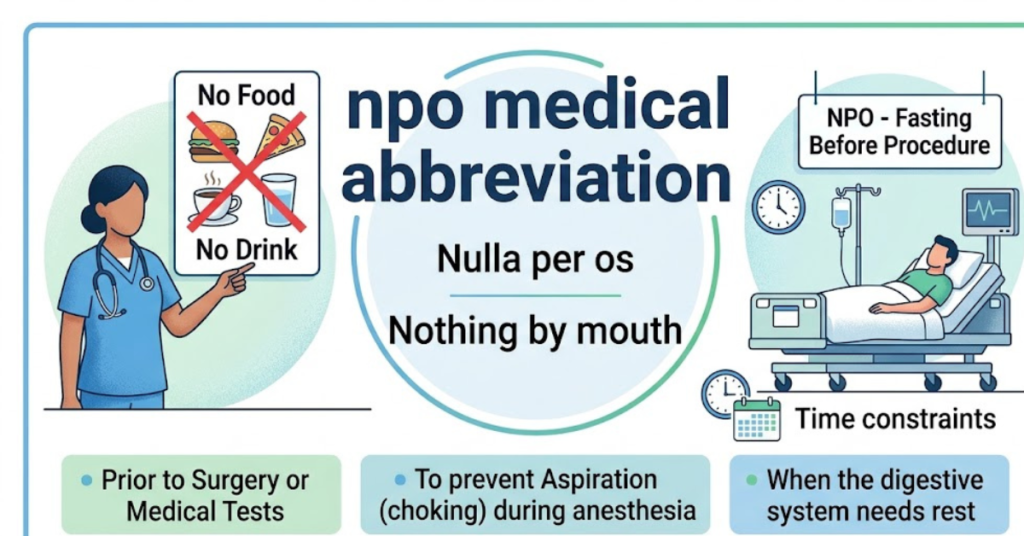
The npo medical abbreviation meaning comes from the Latin phrase “nil per os”, which translates to “nothing by mouth.”
In plain English, NPO means:
- No eating food
- No drinking liquids
- Sometimes even no gum or candy
Doctors use this instruction when a patient needs to avoid anything in the stomach.
What Is NPO Medical Abbreviation Used For?
The what is npo medical abbreviation question usually comes up before hospital procedures. NPO is commonly used in situations where having food or liquid in the stomach could be risky.
Common situations include:
- Before surgery (general anesthesia)
- Before certain blood tests
- Before imaging procedures like endoscopy
- Emergency medical care
- Some dental or sedation procedures
Doctors use NPO instructions to prevent complications like choking or aspiration during sedation.
NPO Medical Abbreviation Latin Origin
The npo medical abbreviation latin term comes from classical medical language.
- Nil = nothing
- Per = through
- Os = mouth
So, nil per os literally means “nothing through the mouth.”
Even though modern medicine uses English more often now, Latin abbreviations like NPO are still widely used in hospitals worldwide.
Why Do Doctors Use NPO Instructions?
Doctors don’t use the npo medical abbreviation randomly—it has a safety purpose.
Key reasons include:
- Preventing food or liquid from entering lungs during anesthesia
- Reducing risk of vomiting during surgery
- Ensuring clear imaging results
- Keeping procedures safe and controlled
Even a small sip of water can sometimes interfere with medical procedures, which is why instructions are strict.
How Long Do You Stay NPO?
The duration depends on the procedure.
Typical guidelines:
- 2–4 hours: clear liquids (in some modern protocols)
- 6–8 hours: solid food before surgery
- Sometimes longer for complex procedures
Your doctor will always give exact instructions based on your condition.
Can You Ignore NPO Instructions?
No—ignoring npo medical abbreviation meaning instructions can be dangerous.
Possible risks include:
- Aspiration (food entering lungs)
- Complications during anesthesia
- Procedure delays or cancellations
If you accidentally eat or drink, always inform your healthcare provider immediately.
NPO in Hospitals vs Everyday Use
In hospitals, NPO medical abbreviation meaning is strict and clinical. Outside medical settings, people sometimes misunderstand it or confuse it with general fasting.
But medically:
- NPO = strict no intake
- Not the same as dieting or intermittent fasting
- Always time-specific and doctor-controlled
FAQs About NPO Medical Abbreviation
1. What does NPO stand for in medical terms?
It stands for nil per os, meaning “nothing by mouth.”
2. Can I drink water if I am NPO?
Usually no, unless your doctor specifically allows small sips.
3. Why is NPO required before surgery?
To prevent complications during anesthesia and protect the airway.
4. Is NPO the same as fasting?
Not exactly. Fasting is voluntary; NPO is a strict medical order.
5. How strict is NPO instruction?
Very strict—patients are expected to avoid all food and drinks unless told otherwise.
Conclusion
The npo medical abbreviation may look simple, but it plays a critical role in patient safety. Whether it’s before surgery, a diagnostic test, or a medical procedure, NPO ensures the body is prepared and risk-free.
Understanding the npo medical abbreviation meaning helps patients follow instructions correctly and avoid complications. When in doubt, always ask your healthcare provider for clarification rather than guessing.
If you’re exploring more medical terms, learning these abbreviations can make hospital visits and reports much easier to understand.