
Ever paused while writing and wondered whether it should be “Bearer or Barer”? You’re not alone. This is one of those English language mix-ups that looks simple but trips up even confident writers.
The focus keyword Bearer or Barer often comes up in grammar searches because the two words sound similar but have completely different meanings. Using the wrong one can change the entire sense of a sentence.
In this guide, we’ll break down the difference between bearer or barer, explain their meanings with examples, and help you use them correctly in everyday writing.
What Does “Bearer” Mean?
The word bearer comes from the verb to bear, which means to carry, hold, or support.
Meaning of Bearer
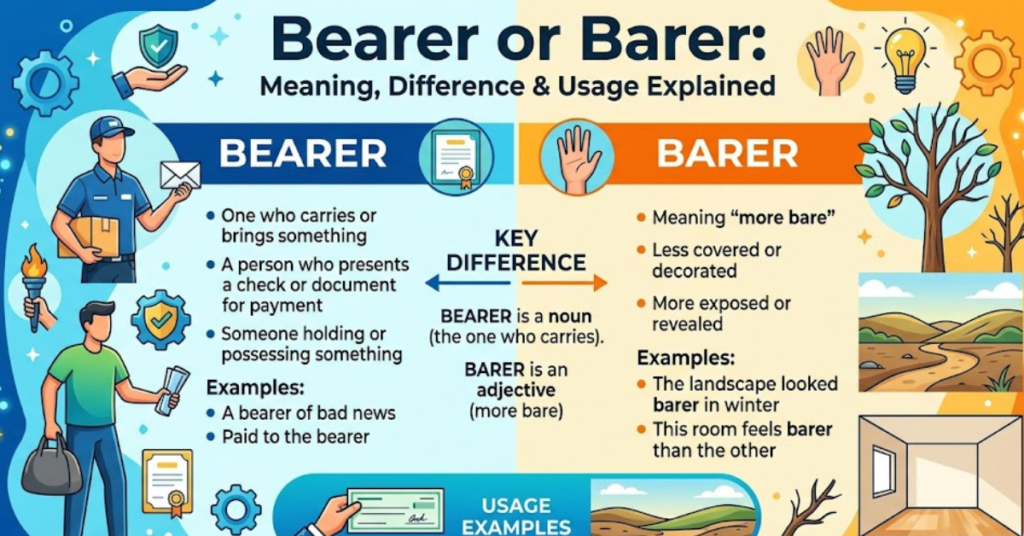
A bearer is someone who carries or delivers something, or something that holds a specific responsibility or title.
Common Uses of “Bearer”
Here are a few real-world examples:
- Bearer of news – someone who brings information
- Bearer of a gift – someone delivering a present
- Bearer cheque – a cheque payable to whoever holds it
- Flag bearer – a person carrying a flag in ceremonies
Example Sentences
- He was the bearer of bad news after the meeting.
- The bearer cheque can be cashed by anyone who has it.
In most professional or formal writing, “bearer” is the correct and widely used term.
What Does “Barer” Mean?
Now let’s talk about barer, which is much less common and often misunderstood.
Meaning of Barer
Barer is the comparative form of bare, meaning something that is more uncovered, exposed, or plain.
Simple Explanation
If something is bare, it has little or no covering. If it is barer, it is even more exposed or empty.
Example Sentences
- The tree looked barer after winter stripped its leaves.
- His room was barer than before after moving out.
However, in everyday writing, “barer” is rarely used, and many people mistakenly use it when they actually mean “bearer.”
Bearer or Barer: Key Differences
Understanding bearer or barer becomes easier when you compare them side by side.
1. Meaning Difference
- Bearer → someone who carries or holds something
- Barer → something more bare or exposed
2. Usage Context
- Bearer → legal, formal, communication, titles
- Barer → descriptive, physical appearance
3. Frequency of Use
- Bearer → very common
- Barer → rarely used in modern English
Quick Tip
If you’re unsure, chances are you need “bearer”, not “barer.”
Common Mistakes with Bearer or Barer
Many errors happen because of pronunciation confusion. Here are the most common mistakes:
Mistake 1: Using “barer” instead of “bearer”
- He is the barer of gifts
- He is the bearer of gifts
Mistake 2: Mixing spelling in formal writing
- Legal or financial documents often require “bearer”, not “barer.”
Mistake 3: Relying only on sound
They sound similar, but their meanings are unrelated.
How to Remember the Difference Easily
Here are simple memory tricks:
- Bearer = Bear (to carry) → Think “someone who carries”
- Barer = Bare (exposed) → Think “more naked or empty”
You can also remember:
“A bearer brings something, a barer shows less of something.”
Why This Confusion Matters in Writing
Using the wrong word in bearer or barer can:
- Change meaning completely
- Look unprofessional in formal documents
- Cause misunderstanding in legal or financial contexts
That’s why clarity matters, especially in emails, exams, and official writing.
FAQs About Bearer or Barer
1. What is the correct spelling: bearer or barer?
Both are correct words, but “bearer” is far more commonly used and usually the intended choice.
2. When should I use “bearer”?
Use bearer when referring to someone who carries or delivers something.
3. Is “barer” a real word?
Yes, but it’s the comparative form of “bare” and is rarely used in modern writing.
4. Why do people confuse bearer and barer?
Because they sound similar when spoken, but have different meanings and origins.
5. Is “bearer cheque” still used?
Yes, though less common today due to banking regulations in many countries.
Conclusion
The confusion between bearer or barer is common, but once you understand the difference, it becomes simple to avoid mistakes.
- Bearer relates to carrying or delivering something
- Barer means more exposed or bare
In most cases, especially in professional writing, “bearer” is the word you’ll need. Keeping this distinction in mind will help you write more clearly, confidently, and correctly.
If you’re interested in improving your grammar further, exploring similar word pairs can make your writing even stronger and more precise.