
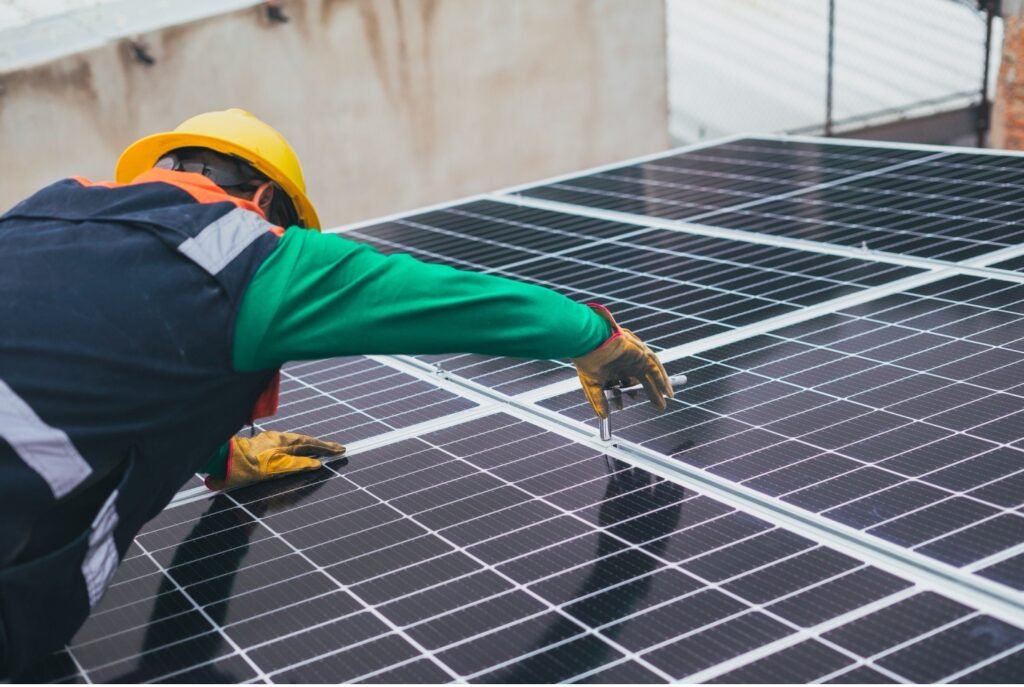

Businesses across different industries are increasingly adopting smart solar and battery solutions to secure consistent power stability in an environment where energy disruptions are becoming more frequent. This shift is driven by the need to reduce downtime, manage rising electricity costs, and improve operational resilience in both small and large enterprises. Modern solar systems combined with advanced battery storage allow organizations to store excess energy and use it during peak demand or outages, ensuring smoother workflows.
These technologies are also becoming more accessible as innovation and digital monitoring tools continue to improve energy management efficiency across commercial environments and overall reliability.
Drivers behind energy stability adoption
-
Rising need for uninterrupted operations
One of the primary reasons companies are investing in smart solar and battery systems is the growing expectation of uninterrupted operations. Many sectors, including retail logistics and digital services, rely heavily on continuous electricity to maintain productivity and customer trust. Even brief outages can lead to financial losses, data disruptions, and damaged equipment. Traditional power grids often struggle with unpredictable demand and aging infrastructure, making reliance on them increasingly risky for modern enterprises. Smart energy systems provide an alternative by integrating solar generation with storage capacity, allowing businesses to continue functioning even when the external supply becomes unstable.
This capability strengthens operational continuity and reduces dependency on external providers, which is increasingly important for companies scaling across multiple locations and managing sensitive digital infrastructure. Reliable energy access also supports long-term planning and helps businesses maintain predictable service delivery across varying operational conditions. Weak grid performance is no longer acceptable for many organizations.
-
Cost control through energy independence
A growing number of organizations are turning to smart solar and battery solutions as a way to reduce exposure to fluctuating electricity prices and improve long-term financial planning. By generating and storing their own power, companies gain more control over operating expenses and reduce reliance on external suppliers that may impose unpredictable rate changes. In some cases, regional branches such as the Los Angeles office benefit significantly from localized energy storage systems that stabilize consumption during peak demand periods. This approach also reduces strain on centralized grids and allows businesses to distribute energy usage more efficiently across multiple facilities.
Over time, this contributes to more stable budgeting and fewer unexpected interruptions that can affect productivity and customer experience. Energy predictability becomes a competitive advantage in industries where uptime directly influences revenue and brand reliability. Smart systems allow decision makers to plan usage with greater confidence and fewer operational risks.
-
Battery storage is transforming energy reliability
Battery storage technology has become a central component of modern energy strategies, allowing businesses to capture excess solar production and use it when demand increases or sunlight is unavailable. This capability helps smooth out inconsistencies in energy supply and ensures that critical systems remain active even during fluctuations in generation. Businesses are increasingly integrating battery units with solar installations to create self-sustaining energy environments that can operate independently for extended periods. This reduces vulnerability to grid disruptions and supports continuous workflows in environments where downtime is costly and disruptive.
Energy storage also improves efficiency by allowing excess production to be shifted to peak usage hours, reducing waste and optimizing available resources across different operational cycles. Organizations that adopt these systems often experience greater predictability in energy usage patterns, which supports both operational planning and long-term infrastructure development decisions. Weaknesses in traditional supply chains have accelerated adoption globally recently.
-
Integration with digital monitoring systems
Modern smart solar and battery systems are often paired with digital monitoring platforms that provide real-time insights into energy production, storage levels, and consumption patterns. This visibility allows organizations to make informed decisions about energy usage and adjust operations based on current conditions. Automation features further enhance system performance by optimizing charging and discharging cycles without manual intervention. Such integration reduces inefficiencies and ensures that stored energy is used in the most effective manner possible throughout daily operations.
Over time, this leads to improved energy forecasting, better alignment between supply and demand, and reduced reliance on external power sources during peak periods. Businesses also benefit from data-driven insights that help identify consumption trends and areas where efficiency can be improved across different departments and facilities. These improvements contribute to lower operational risk and stronger system reliability over extended periods of use. We see consistent performance gains across industries adopting these technologies.
-
Sustainability goals influencing adoption
Environmental considerations are playing an increasingly important role in why organizations choose smart solar and battery solutions for their energy needs. Reducing carbon emissions while maintaining operational efficiency has become a central focus for companies across various industries. Solar generation combined with storage systems provides a cleaner alternative to conventional fossil fuel-based electricity consumption. Many organizations are aligning their energy strategies with broader sustainability targets, aiming to reduce environmental impact while still meeting increasing demand for power reliability. Battery-supported solar systems allow for better utilization of renewable energy sources, minimizing waste and maximizing efficiency in daily operations.
Organizations adopting these systems often report improved alignment between environmental responsibility and operational goals, which strengthens overall strategic positioning in competitive markets. Regulatory pressures and stakeholder expectations are also encouraging a faster transition toward renewable integrated infrastructure. Companies recognize that long-term competitiveness increasingly depends on sustainable energy adoption strategies across global markets.
-
Enhancing resilience in uncertain grids
Energy resilience has become a defining priority for businesses operating in regions where grid instability or demand surges are common. Smart solar and battery systems provide a buffer that allows operations to continue even during external disruptions. This buffering effect is particularly valuable for industries that rely on continuous digital connectivity, manufacturing precision, or time-sensitive services where interruptions can lead to significant operational setbacks. By storing excess solar energy during peak production and releasing it when demand spikes, organizations can maintain stable performance throughout fluctuating conditions. Such systems reduce the likelihood of downtime, improve operational confidence, and help companies manage unexpected grid failures more effectively.
Remote monitoring capabilities further enhance reliability by enabling rapid detection of irregularities and immediate corrective action when required. Businesses benefit from reduced maintenance delays and improved coordination across distributed energy assets. Overall, these systems create a more predictable and secure energy environment for modern enterprises.
The adoption of smart solar and battery solutions continues to reshape how businesses approach energy management and operational stability. Organizations are increasingly recognizing the importance of reliable power systems that can adapt to changing demand and reduce dependency on traditional grids. These technologies provide not only resilience but also long-term efficiency improvements that support both financial and environmental goals. Businesses that integrate such systems often experience improved predictability in operations and greater control over energy-related risks. Continued innovation in storage capacity and solar efficiency will likely expand adoption across more industries in the coming years globally across markets