
Static pressure is one of the most important clues inside a duct system, yet many homeowners never hear about it until comfort problems appear. It measures the resistance air faces as it moves through ducts, filters, coils, grilles, and vents. When pressure is too high, the HVAC system has to push harder to move air through the home. This can lead to weak airflow, noisy operation, uneven rooms, longer run times, and extra strain on equipment. An HVAC contractor checks static pressure to understand whether the duct system is helping comfort or quietly working against it.
What Pressure Readings Reveal
- High Static Pressure Can Restrict Airflow
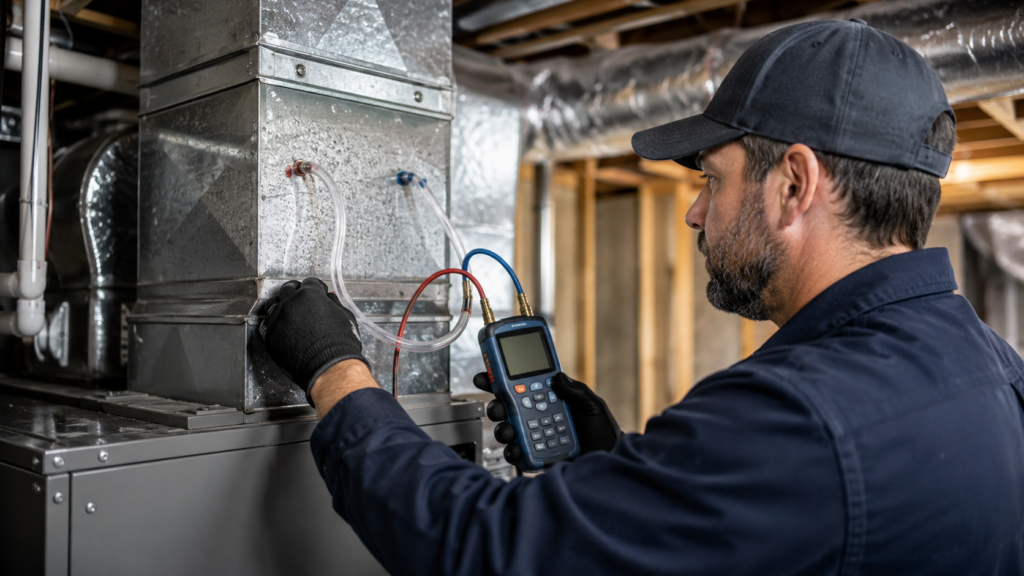
An HVAC system is designed to move a certain amount of air. When static pressure rises too high, the blower has to work harder to push air through the duct system. This often happens because of undersized ducts, dirty filters, blocked returns, tight grilles, crushed duct runs, clogged coils, or poor duct design. The homeowner may notice rooms that never receive enough air, vents that whistle, or a system that seems to run often without making the house feel even. An HVAC contractor can take pressure readings on both the supply and return sides to see where the restriction begins. Homeowners working with the Greenville, SC, office may request static pressure testing when airflow issues recur after filter changes. These readings help identify whether the issue is inside the equipment, in the return path, or somewhere in the supply ductwork. Without testing, airflow problems are often blamed on the unit when the ducts may be the real cause.
- Comfort Problems Become Easier to Diagnose
Uneven temperatures can come from several causes, but static pressure testing helps narrow the search. A room may feel warm in summer or chilly in winter because air cannot flow properly through the duct system. If the return side is restricted, the system may struggle to pull enough air back to the equipment. If the supply side is restricted, conditioned air may not reach certain rooms with enough force. An HVAC contractor can compare pressure readings with airflow at vents, filter condition, duct size, and room complaints. This creates a clearer picture than simply raising or lowering the thermostat. High static pressure may also explain why some vents feel loud while others barely move air. When the contractor understands how air is being restricted, repairs can be directed toward the actual problem. That may include duct sealing, added return air, grille changes, filter adjustments, or duct corrections. Accurate diagnosis saves time and helps avoid repairs that do not solve the comfort issue.
- Equipment Wear Can Increase When Pressure Is Ignored
Static pressure affects more than just comfort. It can also affect how long the HVAC system lasts. When the blower motor has to fight heavy resistance, it may draw more power, run hotter, or wear faster. In cooling mode, poor airflow can affect the indoor coil and may contribute to freezing, weak cooling, or longer run times. In heating mode, restricted airflow can cause the furnace to run hotter than intended, which may trigger safety limits or shorten component life. An HVAC contractor checks pressure to see whether the system is operating within a reasonable range. This matters because a newer unit can still struggle if it is connected to a duct system that is too tight or poorly balanced. Ignoring static pressure may cause homeowners to replace equipment sooner than needed while the duct issue remains. Testing helps protect motors, coils, heat exchangers, controls, and overall system performance by reducing strain caused by hidden airflow resistance.
- Filter and Duct Choices Affect Pressure
Many homeowners choose filters based on how clean they want indoor air to feel, but not every filter works well with every duct system. A dense filter can capture more particles, yet it can also increase resistance if the return duct and blower are not designed to handle it. Static pressure testing indicates whether a filter is allowing sufficient air to flow through the system. An HVAC contractor can also review the duct layout, return grille size, supply register placement, and the condition of flexible duct. Long duct runs, sharp bends, sagging flex duct, and closed vents can all raise pressure and reduce performance. This is why testing should be part of a full airflow review instead of a quick visual check. The goal is not only to make air cleaner or quieter, but to keep it moving at the right rate. When filter selection and duct design work together, the system can run more smoothly, and rooms can feel more consistent.
Pressure Testing Supports Better System Planning
An HVAC contractor should check static pressure because it reveals how hard the system is working to move air through the home. High pressure can point to blocked returns, weak duct design, poor filter fit, clogged coils, or supply restrictions that affect comfort and equipment life. Testing provides the contractor with real measurements rather than guesses, leading to more useful repair decisions. It can also guide future upgrades, duct changes, or airflow improvements. A heating and cooling system depends on clear air movement to perform well. Static pressure testing helps protect that movement and keeps the system from working harder than it should.