
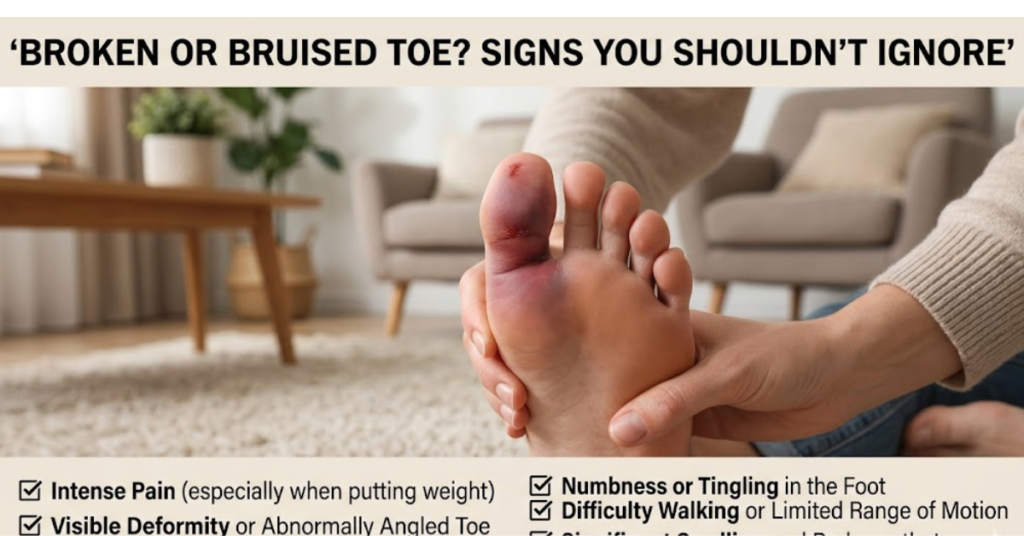

You stub your toe on the edge of the bed, and suddenly you’re hopping around in pain—now what? It’s a common question: how do I know if my toe is broken or just bruised? While both injuries can hurt a lot, knowing the difference matters because the treatment—and recovery time—can vary significantly. In this guide, we’ll break down the telltale signs, symptoms, and next steps so you can make an informed decision without second-guessing your pain.
How Do I Know If My Toe Is Broken or Just Bruised?
At first glance, a broken toe and a bruised toe can look and feel similar. Both may involve pain, swelling, and discoloration. However, a few key differences can help you tell them apart.
Common Signs of a Bruised Toe
A bruised toe (also called a contusion) happens when small blood vessels break under the skin without damaging the bone.
Typical symptoms include:
- Mild to moderate pain
- Swelling that improves within a day or two
- Skin discoloration (blue, purple, or black)
- Tenderness when touched
- Ability to move the toe, even if uncomfortable
In most cases, a bruised toe heals on its own within a week or two.
Common Signs of a Broken Toe
A broken (fractured) toe involves actual damage to the bone, which often leads to more severe symptoms.
Watch for these signs:
- Intense, sharp pain immediately after injury
- Severe swelling that doesn’t improve quickly
- Deep bruising or dark discoloration
- Difficulty or inability to walk
- A crooked or deformed toe
- A cracking sound at the time of injury
- Pain that worsens when putting weight on the foot
If you’re asking yourself, how do I know if my toe is broken or just bruised, these symptoms strongly suggest a fracture.
Key Differences Between a Broken and Bruised Toe
Here’s a quick comparison to make things clearer:
| Symptom | Bruised Toe | Broken Toe |
| Pain Level | Mild to moderate | Severe, sharp |
| Swelling | Temporary | Persistent or severe |
| Movement | Limited but possible | Very painful or impossible |
| Shape | Normal | May look crooked |
| Healing Time | 1–2 weeks | 4–6 weeks or more |
When Should You See a Doctor?
Sometimes it’s hard to be sure, and guessing wrong can delay healing. Seek medical attention if you notice:
- Severe pain that doesn’t improve
- Visible deformity in the toe
- Numbness or tingling
- Open wounds or bleeding
- Inability to walk properly
- Symptoms lasting more than a few days
A doctor may recommend an X-ray to confirm whether your toe is broken.
What to Do Right After a Toe Injury
Whether it’s broken or bruised, first aid can help reduce pain and swelling.
Follow the R.I.C.E Method
- Rest: Stay off your foot as much as possible
- Ice: Apply ice for 15–20 minutes every hour
- Compression: Use light wrapping if needed
- Elevation: Keep your foot raised above heart level
Additional Tips
- Wear comfortable or open-toe shoes
- Avoid putting pressure on the injured toe
- Use over-the-counter pain relievers if necessary
Recovery Time: What to Expect
- Bruised toe: Usually heals within 1–2 weeks
- Broken toe: May take 4–6 weeks or longer
In some cases, broken toes are treated with “buddy taping” (taping the injured toe to a neighboring one) or a stiff-soled shoe. Severe fractures may require more advanced care.
FAQs
1. Can I walk on a broken toe?
You might be able to, but it will likely be painful. Walking on a broken toe can worsen the injury, so it’s best to limit movement.
2. How can I test if my toe is broken at home?
There’s no foolproof home test. However, severe pain, deformity, and inability to move the toe are strong indicators of a fracture.
3. Will a broken toe heal on its own?
Many minor fractures heal without surgery, but proper care is still important to avoid complications.
4. How long does bruising last on a toe?
Bruising typically fades within 1–2 weeks, depending on the severity.
5. Should I tape a bruised toe?
Taping is usually not necessary for a bruise, but it may help provide support if there’s mild discomfort.
Conclusion
So, how do I know if my toe is broken or just bruised? The answer lies in the severity of your symptoms. Mild pain and quick recovery point to a bruise, while intense pain, swelling, and deformity suggest a fracture. When in doubt, it’s always safer to get checked by a healthcare professional.
Taking the right steps early can speed up healing and prevent complications—so listen to your body and don’t ignore persistent pain. If you found this guide helpful, consider exploring more health-related resources to stay informed and prepared.