
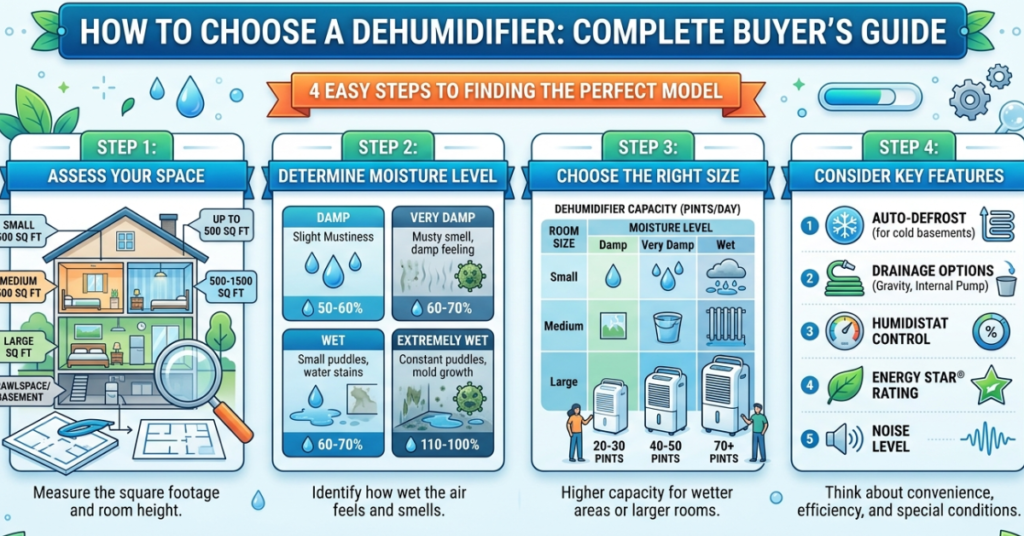

Ever walked into a room that feels damp, musty, or sticky no matter how clean it is? That’s excess humidity at work. Knowing how to choose a dehumidifier can make a huge difference in your comfort, health, and even the lifespan of your home.
Whether you’re dealing with a humid bedroom, a mold-prone basement, or condensation on windows, the right unit can help balance moisture levels quickly. In this guide, we’ll break down how to choose a dehumidifier for basement spaces, living areas, and everything in between — in simple, practical terms.
Why You Might Need a Dehumidifier
Before diving into specs, it’s helpful to know what problems a dehumidifier solves:
- Reduces mold and mildew growth
- Eliminates musty odors
- Protects furniture and electronics
- Improves air quality
- Reduces dust mites and allergens
- Prevents condensation on walls and windows
If you notice peeling paint, damp walls, or persistent humidity, it’s time to learn how to choose a dehumidifier that fits your space.
Step 1: Choose the Right Dehumidifier Size
The most important factor is capacity — measured in pints of moisture removed per day.
General Size Guide
| Room Condition | Room Size | Recommended Capacity |
| Slightly damp | Up to 500 sq ft | 20–30 pints |
| Moderately damp | 500–1,000 sq ft | 30–40 pints |
| Very damp | 1,000–1,500 sq ft | 40–50 pints |
| Wet areas | 1,500+ sq ft | 50–70 pints |
Tip: When in doubt, go slightly bigger. An undersized unit will run constantly and waste energy.
Step 2: How to Choose a Dehumidifier for Basement Use
Basements usually need stronger units because they’re cooler, darker, and more humid.
When deciding how to choose a dehumidifier for basement areas, look for:
Must-Have Basement Features
- Higher capacity (50–70 pints)
- Built-in pump for drainage
- Low-temperature operation
- Continuous drain option
- Auto-restart after power outage
Basements often require continuous moisture removal, so models with a drain hose connection are especially useful. No one wants to empty a bucket every few hours.
Step 3: Consider Humidity Level in Your Space
Different humidity levels require different approaches.
Quick Humidity Guide
- 50–60%: Mild humidity → small unit
- 60–70%: Moderate humidity → mid-size unit
- 70%+: High humidity → large capacity unit
Using a hygrometer (humidity meter) can help you determine exactly what you need.
Step 4: Look at Energy Efficiency
Dehumidifiers run for long hours, so energy efficiency matters.
Choose:
- ENERGY STAR certified models
- Auto shut-off features
- Adjustable humidistat
- Sleep mode or eco mode
Energy-efficient models reduce electricity bills while maintaining comfort.
Step 5: Decide on Drainage Options
There are three common drainage types:
1. Manual Bucket
- Requires emptying water tank
- Good for small rooms
2. Gravity Drain
- Uses a hose
- Needs floor drain
3. Built-in Pump Best for Basements
- Pumps water upward
- Ideal for how to choose a dehumidifier for basement use
- Most convenient option
Step 6: Check Noise Levels
If you plan to use it in bedrooms or living rooms, quieter models are better.
Look for:
- Units under 50 dB
- “Quiet mode” option
- Variable fan speeds
Basements are more forgiving, but noise still matters if the unit runs constantly.
Step 7: Important Features to Consider
When learning how to choose a dehumidifier, these features can make life easier:
Helpful Extras
- Digital humidity display
- Auto defrost (for cold areas)
- Washable air filter
- Timer function
- Wheels for portability
- Smart Wi-Fi control
You don’t need everything — but choose what matches your needs.
Types of Dehumidifiers
Understanding the types can help narrow your choice.
Refrigerant (Compressor) Dehumidifiers
- Best for warm, humid areas
- Most common type
- Good for basements and large rooms
Desiccant Dehumidifiers
- Better for colder spaces
- Quiet operation
- Usually smaller capacity
For most homes, refrigerant models are the best choice.
Quick Checklist: How to Choose a Dehumidifier
Use this simple checklist:
- Measure room size
- Check humidity level
- Choose proper pint capacity
- Decide drainage type
- Look for energy efficiency
- Consider noise level
- Add useful features
Common Mistakes to Avoid
When figuring out how to choose a dehumidifier, avoid these:
- Buying too small for the space
- Ignoring basement humidity needs
- Forgetting drainage options
- Overlooking energy efficiency
- Placing unit in wrong location
FAQs
What size dehumidifier do I need for a basement?
Most basements require 50–70 pint capacity units. Larger or very damp basements may need even higher capacity.
How do I know if my dehumidifier is big enough?
If it runs constantly without lowering humidity, it’s too small. Aim for a unit that cycles on and off.
Are dehumidifiers expensive to run?
Energy-efficient models cost around the same as running a fan or small appliance, especially ENERGY STAR units.
Where should I place a dehumidifier?
Place it:
- Near moisture source
- Away from walls
- On flat surface
- With proper airflow space
Do I need a dehumidifier year-round?
Not always. Many people use them during:
- Rainy seasons
- Summer humidity
- Basement damp months
Conclusion
Knowing how to choose a dehumidifier comes down to matching capacity, features, and room conditions. For living areas, mid-sized units work well, while understanding how to choose a dehumidifier for basement spaces usually means opting for larger capacity and continuous drainage.
Focus on size first, then energy efficiency, and finally convenience features. With the right choice, you’ll reduce moisture, prevent mold, and make your home far more comfortable.