
Learning how to use chopsticks might look tricky at first, but it’s actually a skill anyone can master with a little practice. Whether you’re enjoying sushi, noodles, or ramen, chopsticks are a big part of Asian dining culture—and once you get the hang of them, they feel surprisingly natural.
In this guide, you’ll learn how to use chopsticks step by step, including easy techniques for beginners, kids, and even how to handle slippery foods like ramen.
How to Use Chopsticks for Beginners Step by Step
If you’re completely new, don’t worry—this is the simplest breakdown of how to use chopsticks for beginners.
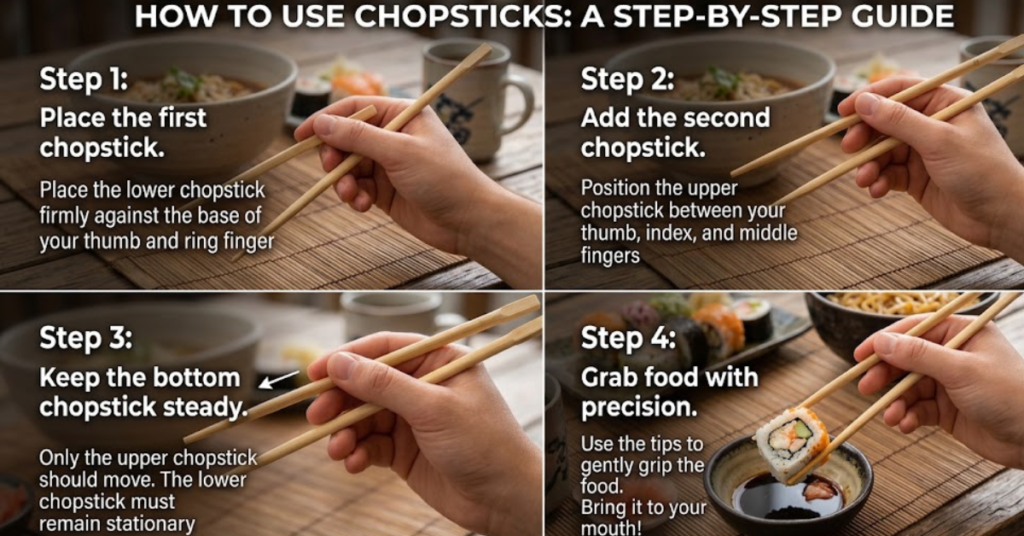
Step 1: Hold the first chopstick (the base stick)
Place one chopstick between your thumb and ring finger. Let it rest comfortably against the base of your thumb. This stick stays mostly still.
Step 2: Position the second chopstick
Hold the second chopstick like a pencil, using your thumb, index, and middle finger. This is the “moving” stick.
Step 3: Practice opening and closing
Move only the top chopstick up and down while keeping the bottom one steady. This creates a pinching motion.
Step 4: Try picking up simple items
Start with larger foods like:
- Bread cubes
- Vegetables
- Sushi rolls
Once comfortable, move to smaller or slippery foods.
How to Use Chopsticks Easy Grip Technique
If you’re searching for how to use chopsticks easy, the grip is everything. A relaxed hand makes a huge difference.
Proper grip tips:
- Don’t squeeze too hard—keep your hand loose
- Rest the bottom chopstick securely
- Use your index and middle finger for movement
- Keep wrists relaxed, not stiff
A good grip feels stable, not forced. If your hand hurts, adjust your positioning.
How to Use Chopsticks for Ramen and Noodles
Learning how to use chopsticks for ramen is slightly different because noodles are slippery and long.
Helpful techniques:
- Lift small portions instead of large bundles
- Twirl noodles gently around the chopsticks
- Use a spoon in the other hand for support (common in Japan and Korea)
- Don’t be afraid to slurp—it’s normal in many cultures
Ramen becomes much easier once you stop trying to control every noodle at once.
How to Use Chopsticks for Kids
Teaching how to use chopsticks for kids should be fun, not frustrating.
Kid-friendly tips:
- Start with training chopsticks (connected at the top)
- Use snacks like marshmallows or fruit chunks
- Turn practice into a game
- Encourage short practice sessions
Kids usually learn faster when it feels like play instead of instruction.
Common Mistakes Beginners Make
When learning how to use chopsticks step by step, avoid these common errors:
- Holding both sticks too tightly
- Moving both chopsticks instead of just one
- Placing fingers too high up
- Giving up too quickly
Small adjustments can make a big difference in control and comfort.
Chopstick Etiquette Basics
Understanding etiquette is part of learning chopsticks properly:
- Don’t stick chopsticks upright in rice (it resembles funeral rituals in some cultures)
- Avoid pointing or waving them around
- Don’t pass food directly from chopsticks to chopsticks
These small habits show respect when dining.
FAQs About How to Use Chopsticks
1. How long does it take to learn chopsticks?
Most beginners can get basic control in a few days with regular practice.
2. What are the easiest foods to practice with?
Start with larger, dry foods like vegetables, tofu cubes, or sushi rolls.
3. Are chopsticks hard to use?
Not really. Once you learn the grip, it becomes a natural hand movement.
4. Can kids learn chopsticks easily?
Yes, especially with training chopstick and fun practice foods.
5. What material is best for beginners?
Wooden or bamboo chopstick are best because they provide better grip than metal or plastic.
Conclusion
Mastering how to use chopsticks is all about patience and practice. Once you understand the simple grip and movement, everything from noodles to sushi becomes easier to enjoy.
If you’re just starting out, focus on the basics—steady grip, slow movement, and simple foods. Over time, your hands will naturally adapt, and using chopsticks will feel effortless.
Keep practicing, try different foods like ramen, and soon you’ll be using chopsticks like a pro without even thinking about it.