

Thinking about how to disenroll or unenroll from school can feel overwhelming, especially if you’re not sure where to start or what rules apply. Whether it’s due to moving, switching schools, homeschooling, or personal reasons, the process is more common than many people think.
In this guide, we’ll break down everything you need to know about how to disenroll or unenroll from school, including steps, requirements, and key things to avoid so you don’t run into problems later.
What Does Disenroll or Unenroll from School Mean?
The terms disenroll or unenroll from school simply mean officially removing a student from a school’s registration list. Once completed, the student is no longer considered an active attendee.
This process is often used when:
- Transferring to another school
- Moving to a different city or country
- Switching to homeschooling or online education
- Taking a break from formal education (where allowed)
Reasons People Disenroll or Unenroll from School
There are many valid reasons families choose to disenroll or unenroll from school, including:
- Relocation: Moving to a new area or country
- School transfer: Switching to a better academic environment
- Homeschooling: Choosing flexible education at home
- Health reasons: Physical or mental health needs
- Financial challenges: Seeking more affordable education options
Whatever the reason, schools usually have a formal process to ensure records are properly transferred.
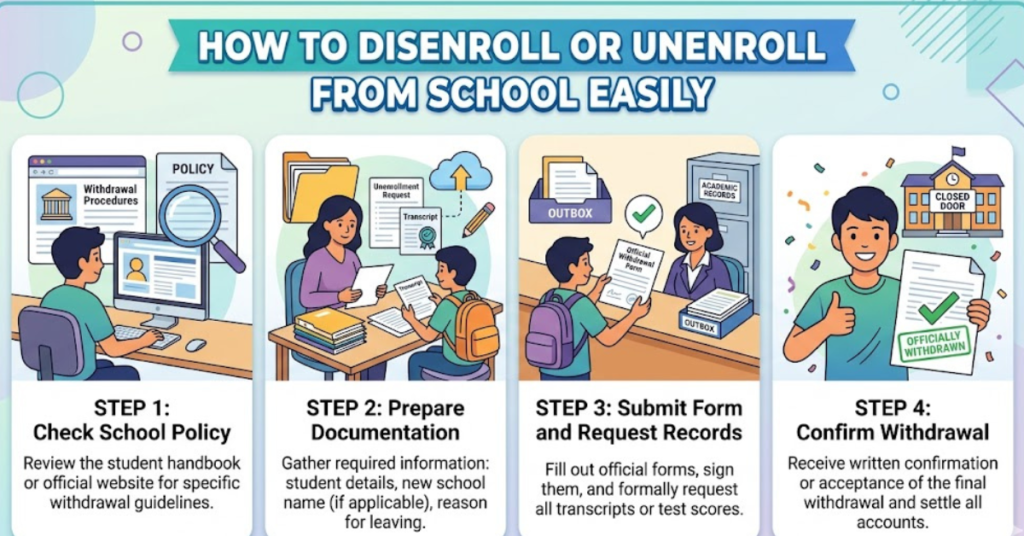
Step-by-Step Guide to Disenroll or Unenroll from School
If you’re wondering how to actually proceed, here’s a simple breakdown:
1. Gather Required Documents
Before starting the process, prepare:
- Student ID or enrollment number
- Parent/guardian identification
- Transfer request form (if required)
- Any pending school documents
2. Notify the School Administration
Inform the school office or principal about your decision to disenroll or unenroll from school. Some schools require advance notice.
3. Submit Official Withdrawal Form
Most schools have a formal withdrawal or disenrollment form that must be completed and signed.
4. Request Academic Records Transfer
Ask for:
- Report cards
- Attendance records
- Transfer certificates
These documents are important for enrolling in a new school.
5. Return School Property
Make sure to return:
- Library books
- ID cards
- Devices or uniforms (if provided by school)
Important Things to Consider Before You Disenroll or Unenroll
Before you finalize the decision, keep these points in mind:
- Legal requirements: Some regions have compulsory education laws
- Timing matters: Mid-year withdrawal may affect grades or credits
- Future enrollment: Keep records safe for re-enrollment if needed
- Alternative education options: Online or homeschooling may require approval
Common Mistakes to Avoid
Many parents and students make avoidable errors when they disenroll or unenroll from school, such as:
- Not collecting official transfer documents
- Leaving without written confirmation
- Forgetting to check attendance or fee clearance
- Not informing the new school in advance
Avoiding these mistakes ensures a smooth transition.
FAQs About Disenrolling or Unenrolling from School
1. Is it legal to disenroll or unenroll from school anytime?
It depends on your local education laws. Some regions require mandatory schooling until a certain age.
2. How long does the disenrollment process take?
Usually between a few days to a couple of weeks, depending on school policies.
3. Do I need a reason to disenroll from school?
Most schools ask for a reason, but they typically allow withdrawal if procedures are followed.
4. Can I reenroll in the same school later?
Yes, but it depends on seat availability and school policies.
5. What happens if I don’t officially disenroll?
You may face attendance issues, record problems, or administrative penalties.
Conclusion
Understanding how to disenroll or unenroll from school is important for ensuring a smooth educational transition. Whether you’re switching schools, moving, or choosing a different learning path, following the correct process helps protect your academic records and avoids future complications.