

You turn the key, and instead of the engine roaring to life, you hear a weak click… or nothing at all. A dead battery can happen to anyone, whether you left the lights on or your battery is simply aging. Knowing how to jump start a car is one of the most useful roadside skills you can have.
In this guide, you’ll learn how to jump start a car with cables, how to use a battery pack, and the safety tips that prevent costly mistakes. By the end, you’ll feel confident handling a dead battery without stress.
What You Need Before Jump Starting a Car
Before you begin, gather the essentials. Having the right tools makes the process faster and safer.
- Jumper cables (heavy-duty preferred)
- Another vehicle or a portable battery jump starter
- Safety gloves (optional but recommended)
- Owner’s manual (for battery location and warnings)
Tip: Make sure both vehicles are turned off before connecting anything.
How to Jump Start a Car With Cables
This is the most common method. Follow these steps carefully and in order.
Step-by-Step Instructions
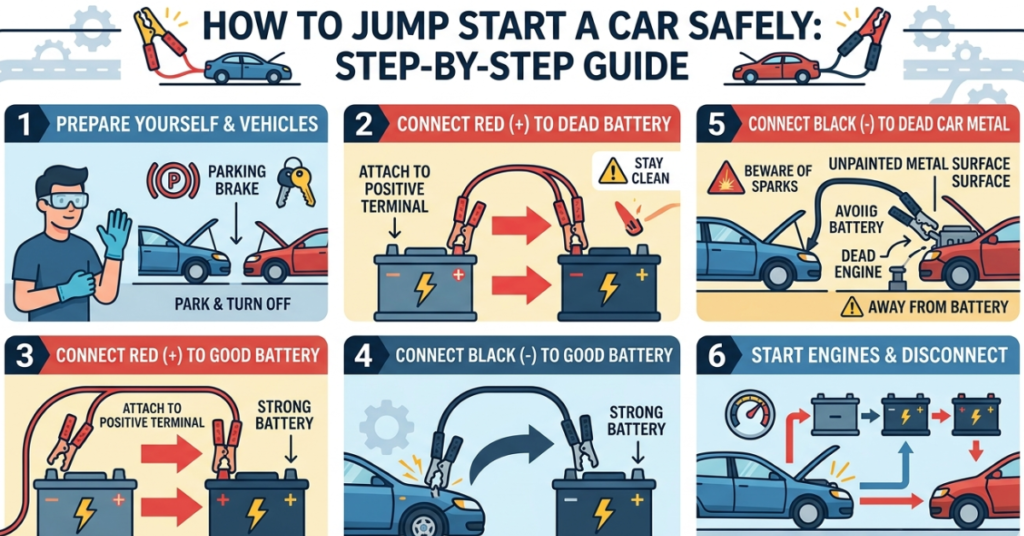
- Park the cars close together
Position them so the batteries are within reach, but don’t let the vehicles touch. - Turn off both engines
Put both cars in Park (automatic) or Neutral (manual) and engage the parking brake. - Connect the red (positive) cable
- Attach one red clamp to the dead battery’s positive (+) terminal
- Attach the other red clamp to the good battery’s positive (+) terminal
- Connect the black (negative) cable
- Attach one black clamp to the good battery’s negative (-) terminal
- Attach the other black clamp to an unpainted metal surface on the dead car (not the battery)
- Start the working vehicle
Let it run for 1–2 minutes to transfer power. - Start the dead car
Try turning the ignition. If it doesn’t start, wait another minute and try again. - Remove cables in reverse order
- Black clamp from dead car
- Black clamp from good battery
- Red clamp from good battery
- Red clamp from revived battery
Important: Keep the revived car running for at least 15–20 minutes to recharge the battery.
How to Jump Start a Car With a Battery Pack
Portable jump starters are safer and easier, especially if you’re alone.
Steps to Use a Battery Pack
- Turn off your car completely
- Connect the red clamp to the positive (+) terminal
- Connect the black clamp to the negative (-) terminal or metal ground
- Turn on the battery pack
- Start your vehicle
- Remove clamps once the engine starts
Pro Tip: Many modern jump starters include built‑in safety protection to prevent reverse polarity.
Safety Tips When Jump Starting a Car
Avoid damage and injuries by following these precautions:
- Never let cable clamps touch each other
- Double-check positive and negative terminals
- Don’t jump start a frozen or leaking battery
- Avoid smoking or sparks near batteries
- Remove metal jewelry before working
Signs Your Battery Might Be Failing
If you frequently need to jump start your car, the battery may be dying.
Common warning signs include:
- Slow engine crank
- Dim headlights
- Clicking sound when starting
- Electrical issues
- Dashboard battery warning light
Most car batteries last 3–5 years.
Common Mistakes to Avoid
Even experienced drivers sometimes make these errors:
- Connecting negative clamp to the dead battery
- Starting both cars at the same time
- Using damaged jumper cables
- Disconnecting cables too quickly
- Forgetting to drive afterward
Avoiding these mistakes can save you from costly repairs.
FAQ: How to Jump Start a Car
1. How long should I run my car after a jump start?
Drive for at least 15–30 minutes to recharge the battery.
2. Can I jump start a car in the rain?
Yes, but be extra careful. Avoid standing in water and ensure connections are secure.
3. What if my car won’t start after jump starting?
Your battery may be dead, or the issue could be the alternator or starter.
4. Is it safe to jump start a hybrid or electric car?
Some hybrids can jump start like regular cars, but fully electric vehicles usually cannot. Check the manual.
5. Can I jump start a car without another car?
Yes — use a portable battery pack or jump starter.
6. How often can I jump start a car?
Occasional jump starts are fine, but frequent ones indicate a failing battery.
Conclusion
Learning how to jump start a car is a simple skill that can save you time, money, and frustration. Whether you use jumper cables or a portable battery pack, following the correct steps ensures safety and success.