
Language evolves quickly, and new slang appears almost daily. One term that has sparked curiosity online is Nonse meaning. Whether you’ve seen it on social media, in chats, or memes, you may be wondering what it actually means and how to use it correctly.
In simple terms, “nonse” is usually a misspelling or variation of the word “nonce” or “nonsense,” depending on context. Understanding the intended meaning is important because the interpretation can change significantly. Let’s break it down clearly so you can use it confidently.
What Does Nonse Mean?
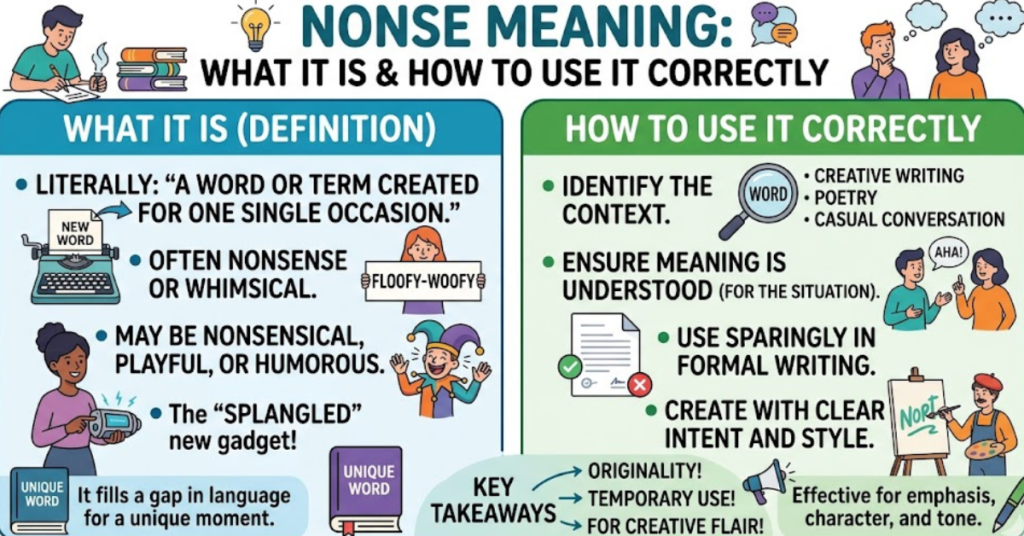
The Nonse meaning depends on how it’s used. Typically, it refers to one of the following:
- Misspelling of “Nonsense”
- Used casually to describe something silly or untrue
- Example: “That’s total nonse.”
- Misspelling of “Nonce” (UK slang)
- In British slang, “nonce” has a sensitive and negative meaning
- It’s often used as an insult (should be used carefully)
- Internet slang or typo
- Many users type “nonse” accidentally when they mean “nonsense”
- Context usually clarifies the intended meaning
Origin of the Word Nonse
The Nonse meaning doesn’t have a formal dictionary origin. Instead, it evolved through:
- Typographical errors in online conversations
- Informal texting habits
- Social media slang trends
- Meme culture
Because of this, the meaning isn’t fixed, and you should always rely on context.
How Nonse Is Used in Conversations
Here are some common ways people use “nonse” online:
Example 1: Casual disagreement
“What you’re saying is complete nonse.”
This usually means “nonsense.”
Example 2: Playful teasing
“Stop talking nonse and get to work.”
Again, this suggests something silly or untrue.
Example 3: Slang misunderstanding
In some cases, people use “nonse” thinking it’s “nonce,” which can create confusion.
Nonse vs Nonsense vs Nonce
Understanding the difference helps avoid awkward situations:
- Nonse – Informal typo or slang variation
- Nonsense – Something meaningless or silly
- Nonce – British slang (can be offensive)
Tip: If you’re unsure, it’s safer to use “nonsense” instead.
When Should You Use Nonse?
You can use “nonse” in:
- Casual texting
- Informal social media comments
- Friendly conversations
Avoid using it in:
- Professional emails
- Academic writing
- Formal communication
Related Words LSI Keywords
To better understand the Nonse meaning, here are related terms:
- Nonsense meaning
- Slang words online
- Internet abbreviations
- Texting slang
- Typo slang terms
- Modern internet language
These related phrases help search engines understand the topic naturally without keyword stuffing.
Why People Search for Nonse Meaning
Many users look up Nonse meaning because:
- They saw it on TikTok or Instagram
- It appeared in chats or memes
- They’re unsure if it’s offensive
- They want to use it correctly
Understanding context prevents misunderstandings.
Common Mistakes to Avoid
Here are a few things to keep in mind:
- Don’t assume it’s always harmless
- Avoid using it in formal settings
- Check context before interpreting
- When in doubt, use “nonsense”
FAQs About Nonse Meaning
What does Nonse mean in texting?
In texting, Nonse meaning usually refers to “nonsense,” meaning something silly or untrue.
Is Nonse a real word?
No, “nonse” is not officially recognized in dictionaries. It’s mostly slang or a typo.
Is Nonse offensive?
It depends on context. If used as a misspelling of “nonce,” it may be offensive in British slang.
How do you use Nonse in a sentence?
Example: “Stop talking nonse and tell me the truth.”
Should I use Nonse in professional writing?
No. It’s better to use “nonsense” in formal communication.
Conclusion
Understanding the Nonse meaning is simple once you look at the context. Most of the time, it’s just a casual misspelling of “nonsense,” used in informal conversations online. However, because it can sometimes be confused with other slang, it’s best to use it carefully.
If you want to keep your communication clear, stick to proper spelling in formal situations and save “nonse” for relaxed chats. Want to learn more about modern slang? Explore related language guides and stay updated with evolving internet terms.